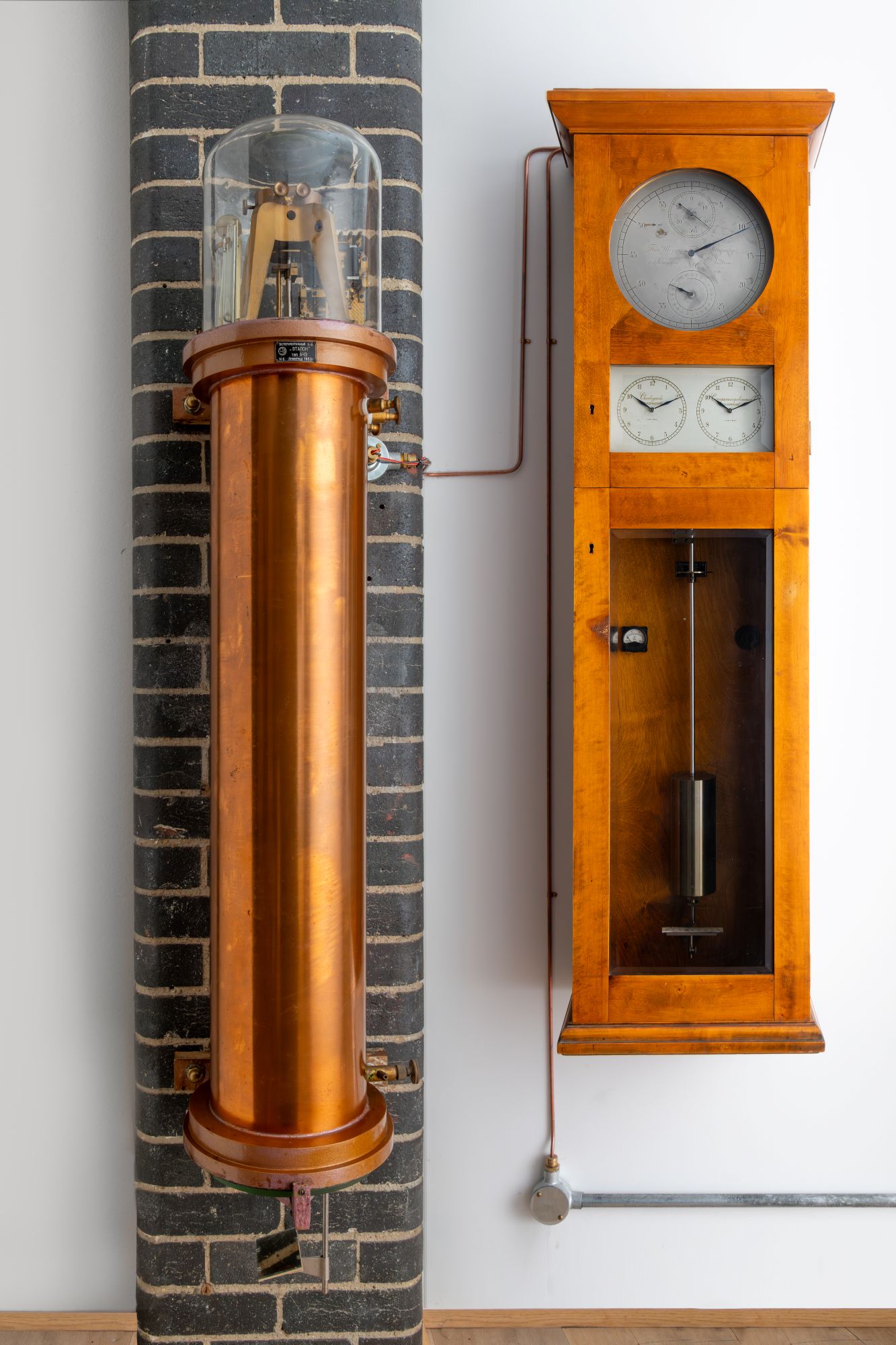
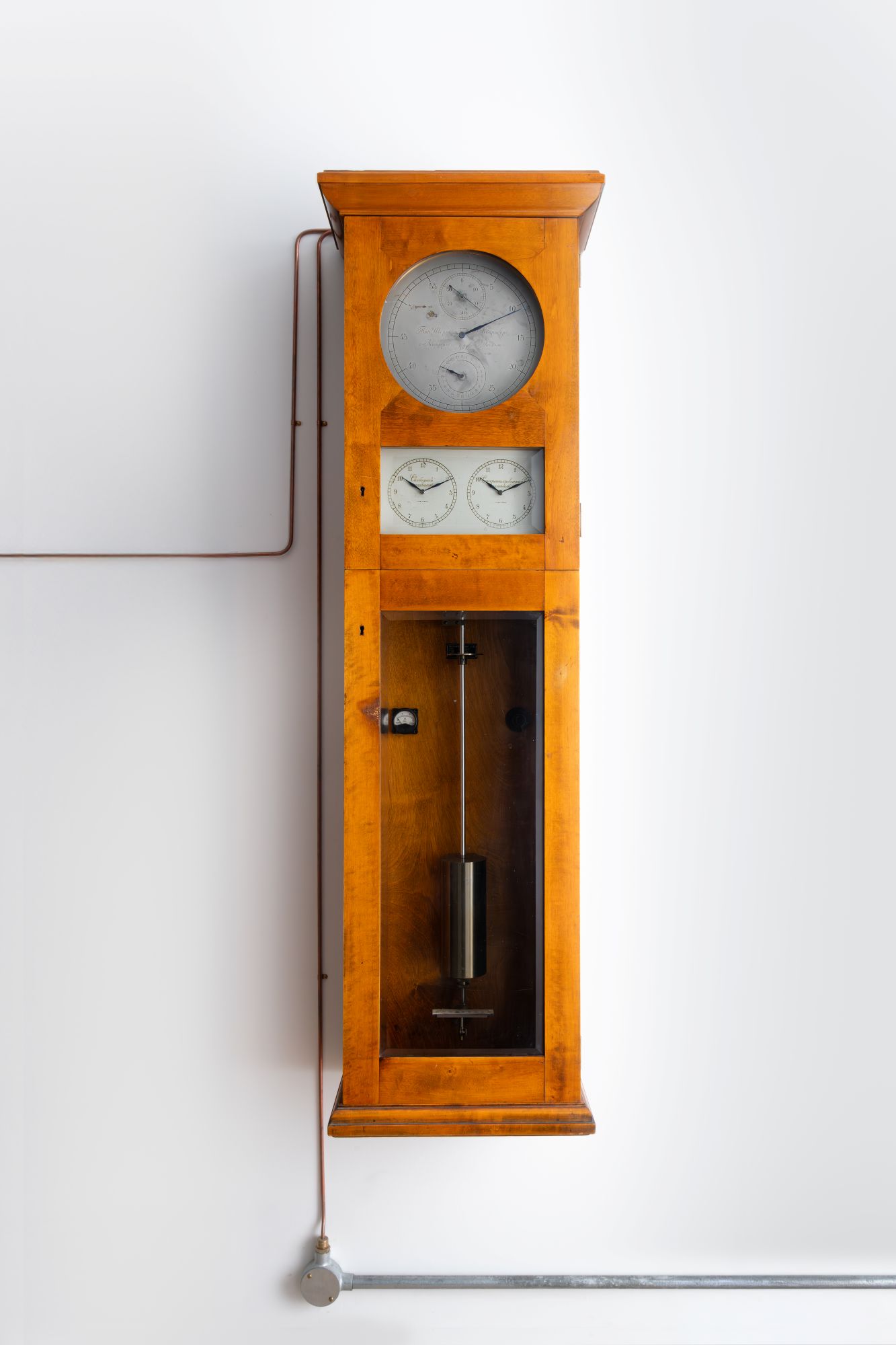
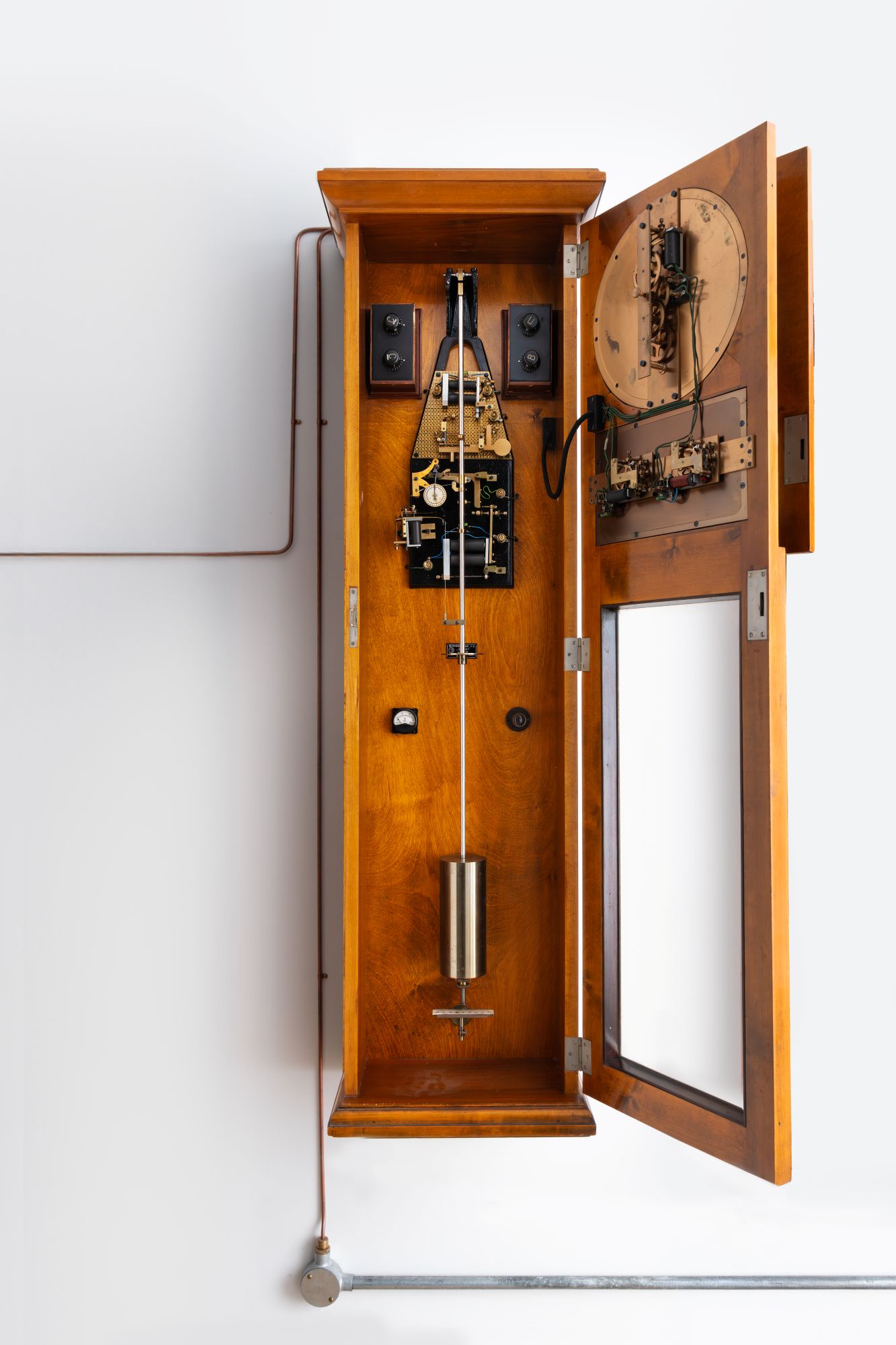
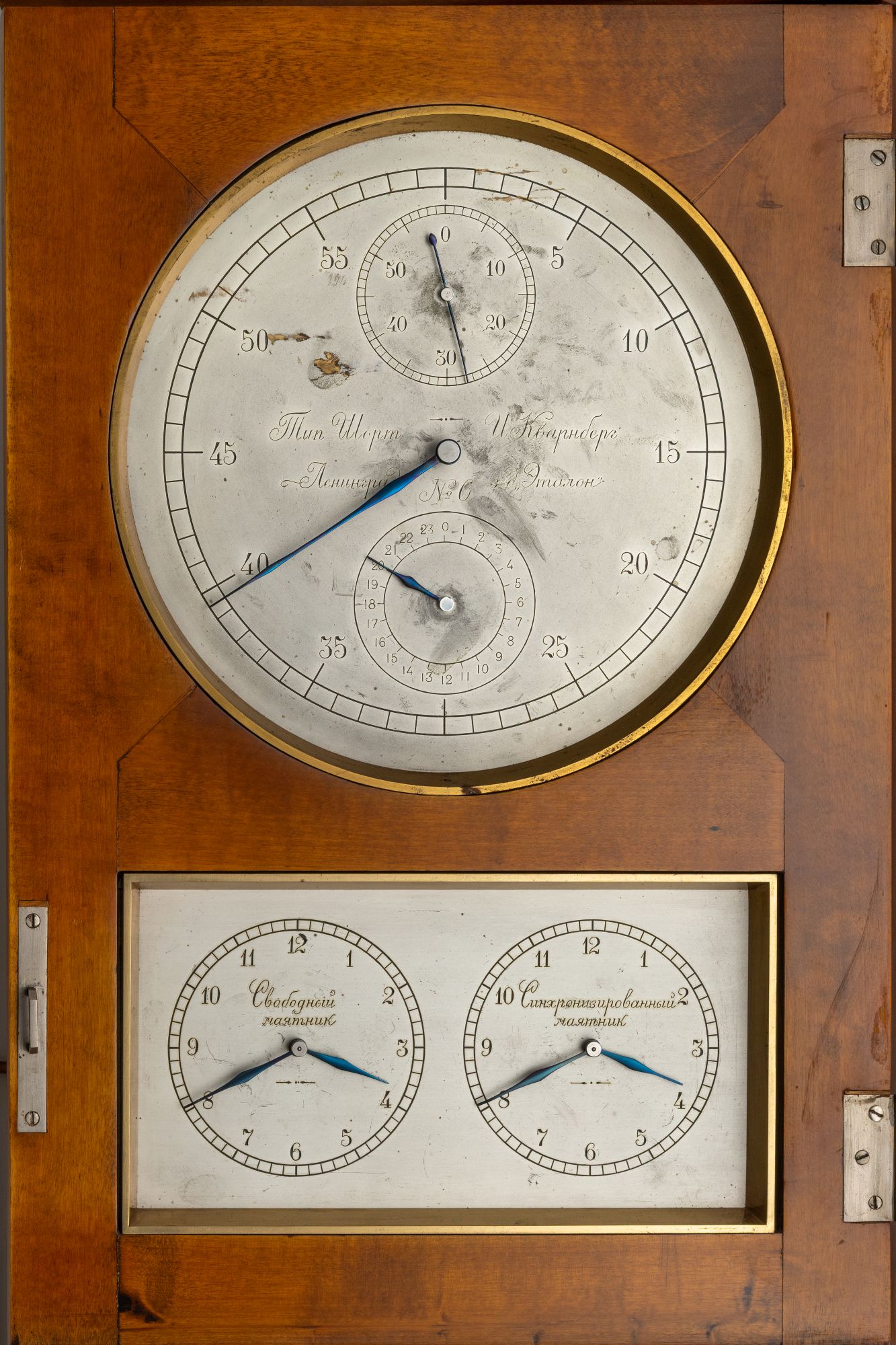
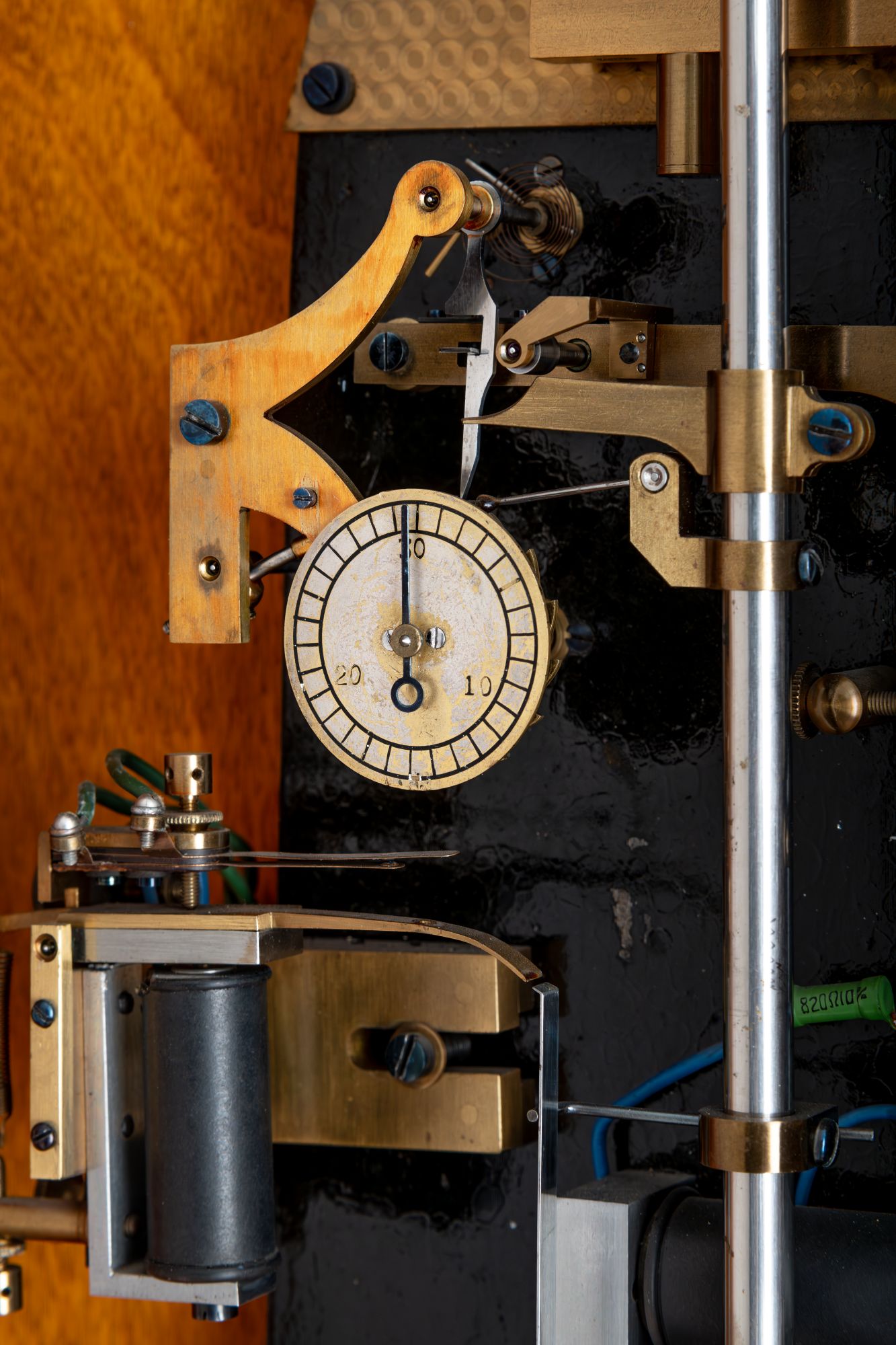
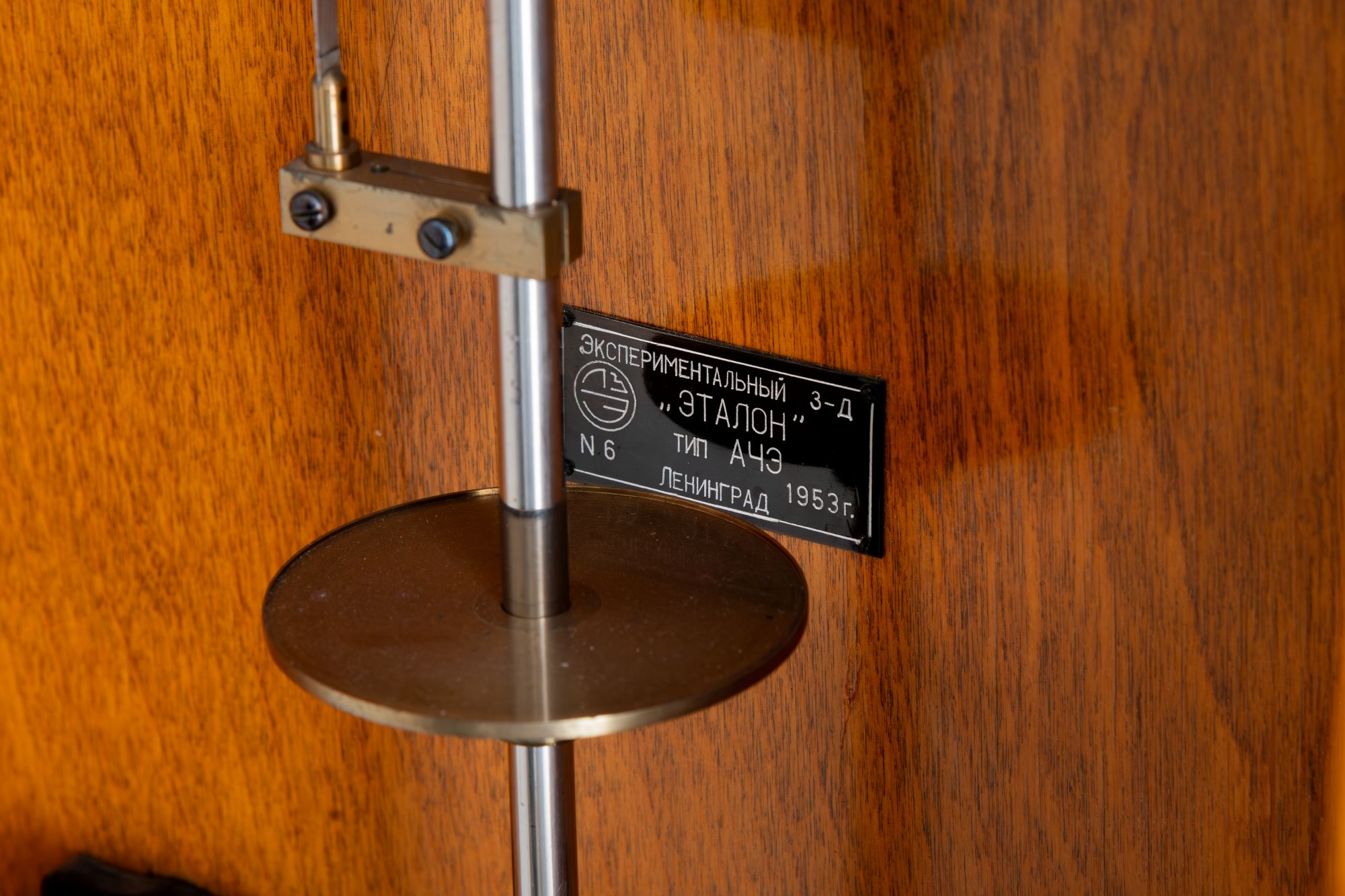
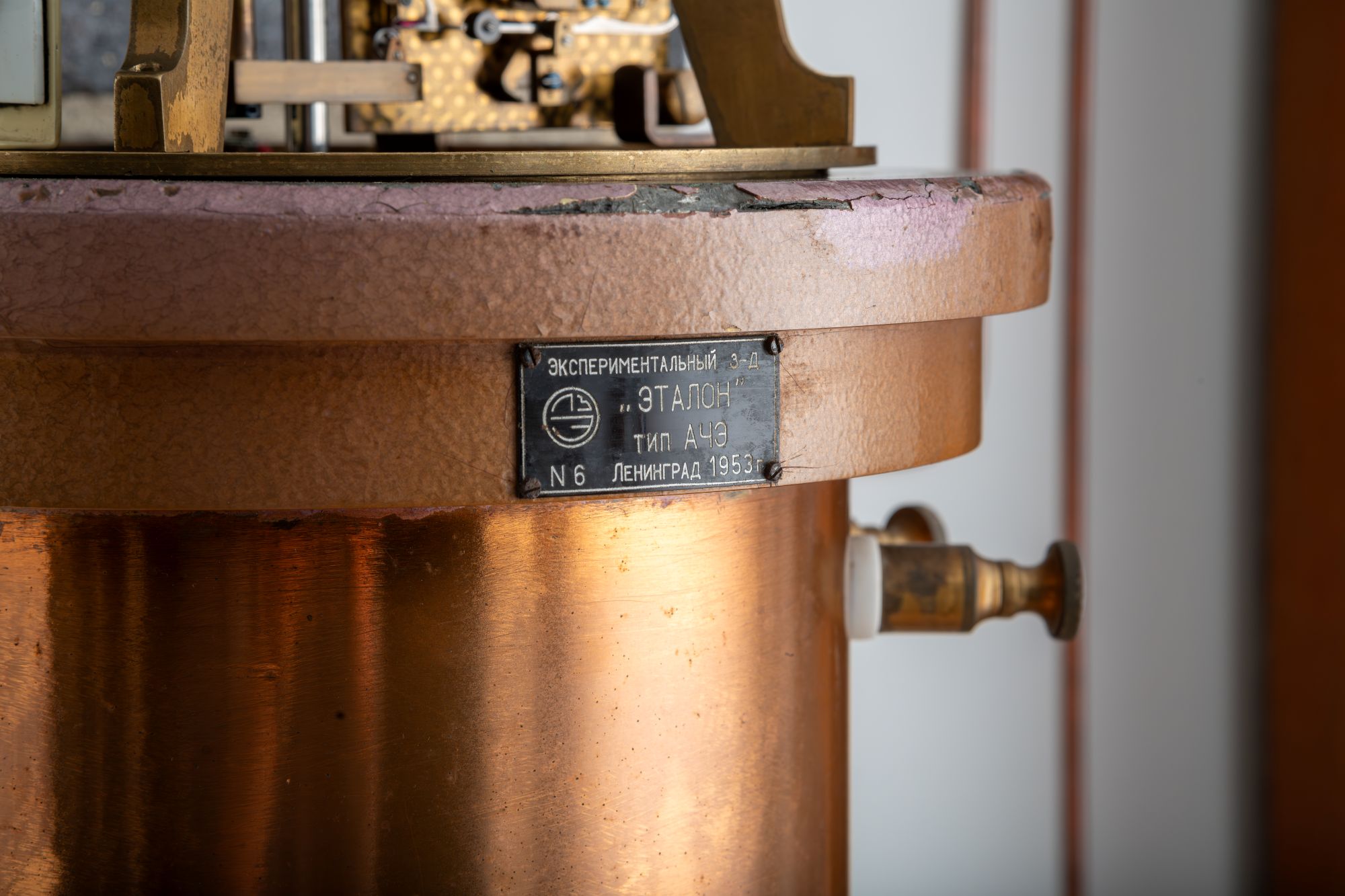
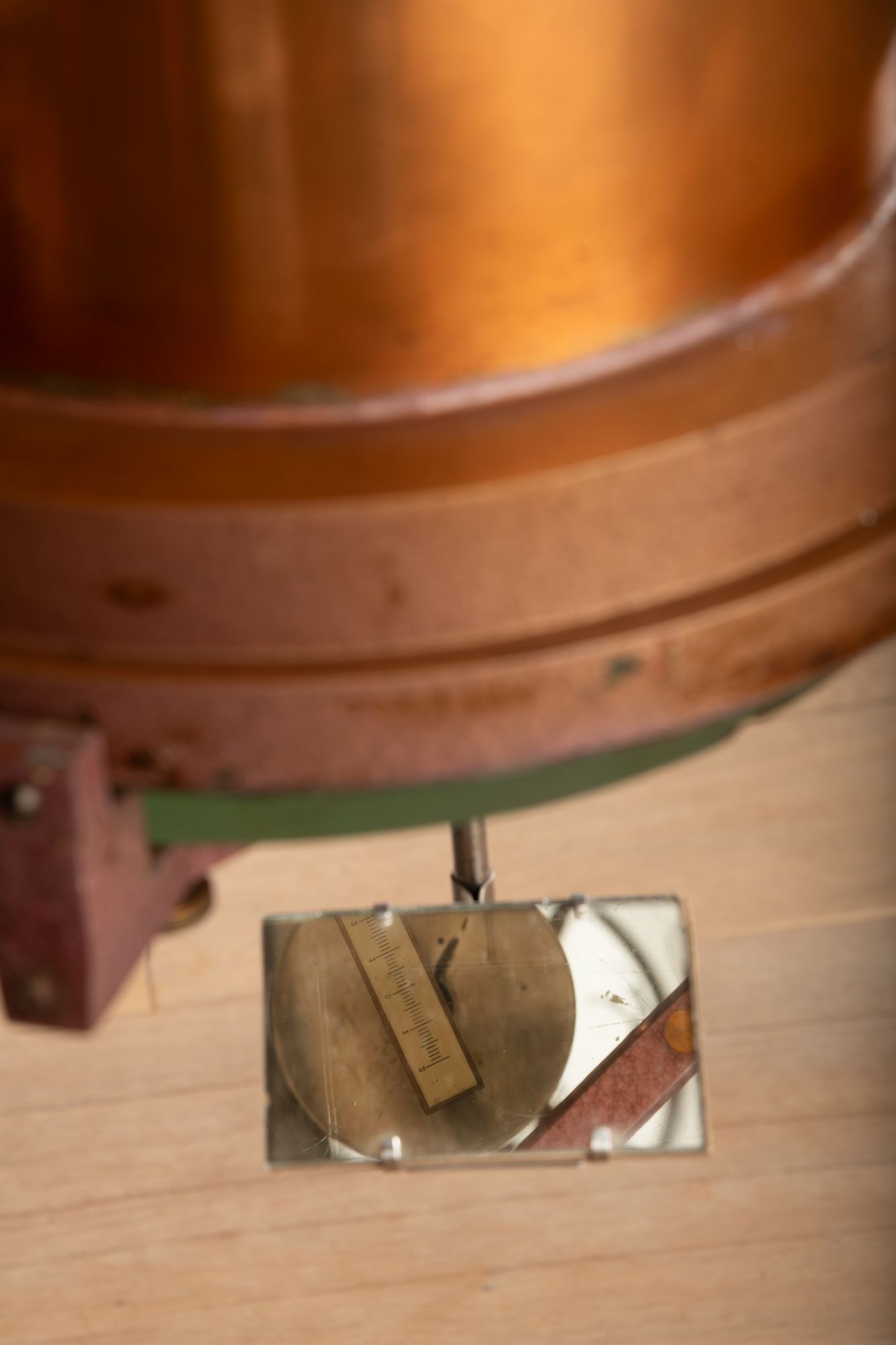
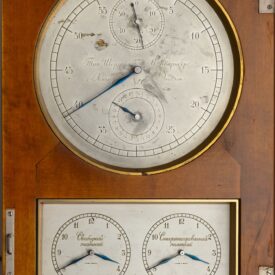
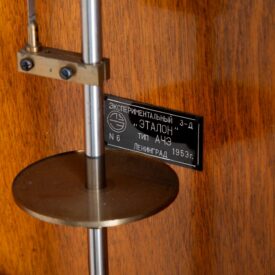
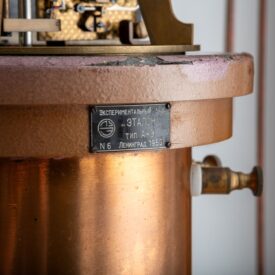
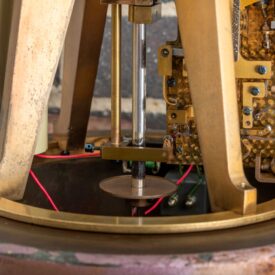
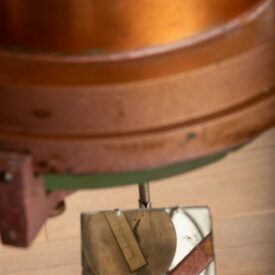
On regulator: 3КСЛЕРИМЕНТАЛЪНЫЙ | ЛЪНЫЙ 3-Д | ЗТАЛОН | ТИПА43 | N6 1953г | ЛЕНИНГРАД On subsidiary dial: Plaque on case: '3КСЛЕРИМЕНТАЛЪНЫЙ | ЛЪНЫЙ 3-Д | ЗТАЛОН | ТИПА43 6 1953г | ЛЕНИНГРАД'
Provenance
Acquired for The Clockworks with the William Scolnik collection in 2011.
In depth
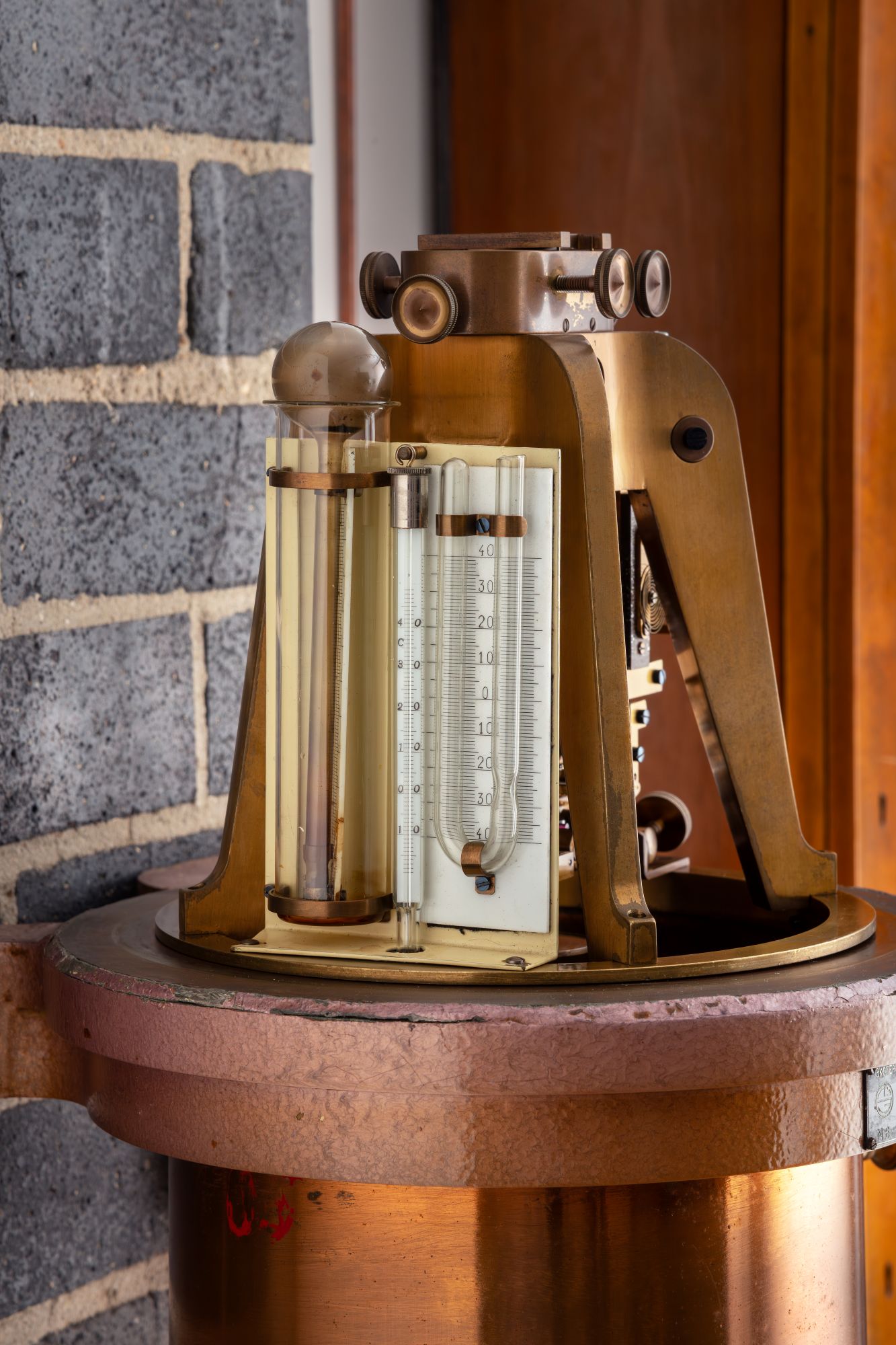
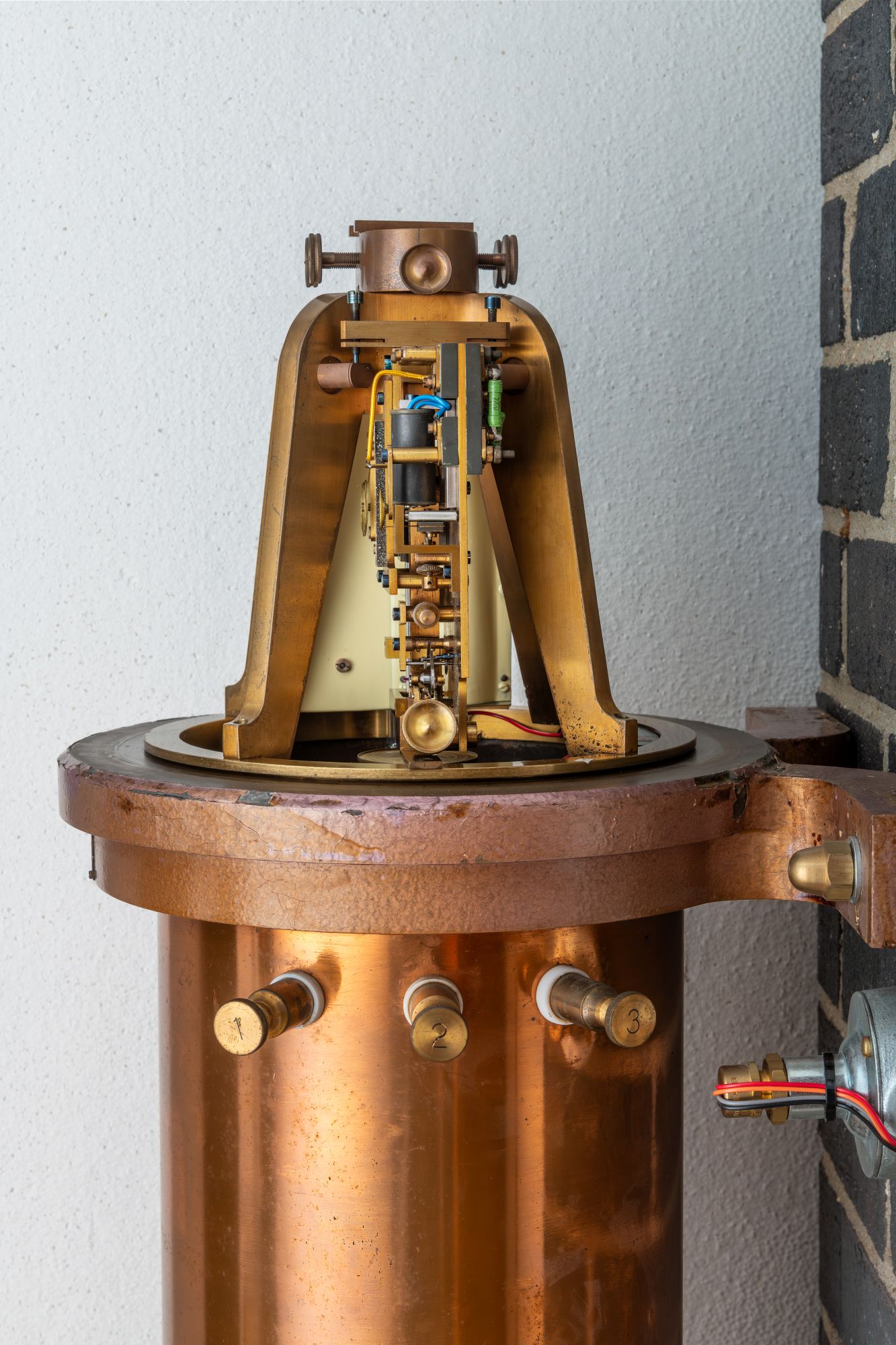
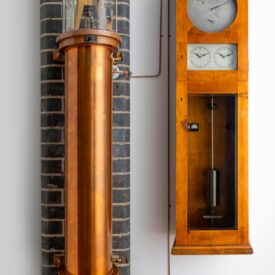
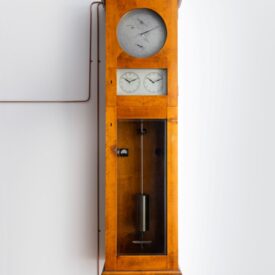
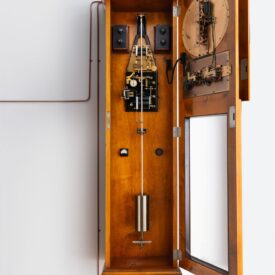
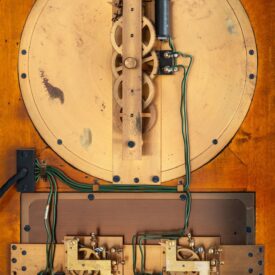
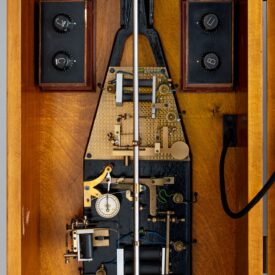
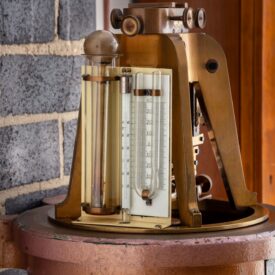
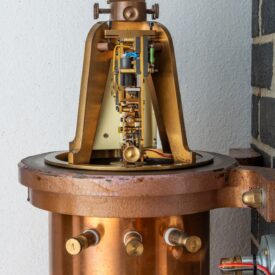
A precision observatory clock made by the Etalon Factory in the Soviet Union in 1953.
The development of William Hamilton Shortt’s ‘Free Pendulum’ in 1921 ushered in a new era of precision timekeeping, and Shortt’s clocks were installed in observatories and laboratories around the world. Several Shortt clocks – including no. 47 (TCW 1073) were bought by Russian clients, and formed the basis not just for scientific experimentation, but also for concerted research into timekeeping technology, much of it led by Il Kvarnberg and N. Kh Preipich under the auspices of the All-Union Scientific Research Institute of Metrology (VNIIM). Kvarnberg and Preipich’s first independent clocks were ready by 1936, when they were manufactured and tested by the Etalon Factory in Leningrad (now St Petersburg). A final design was finalised in 1952, although it is believed as few as thirty were made. This is number 6.
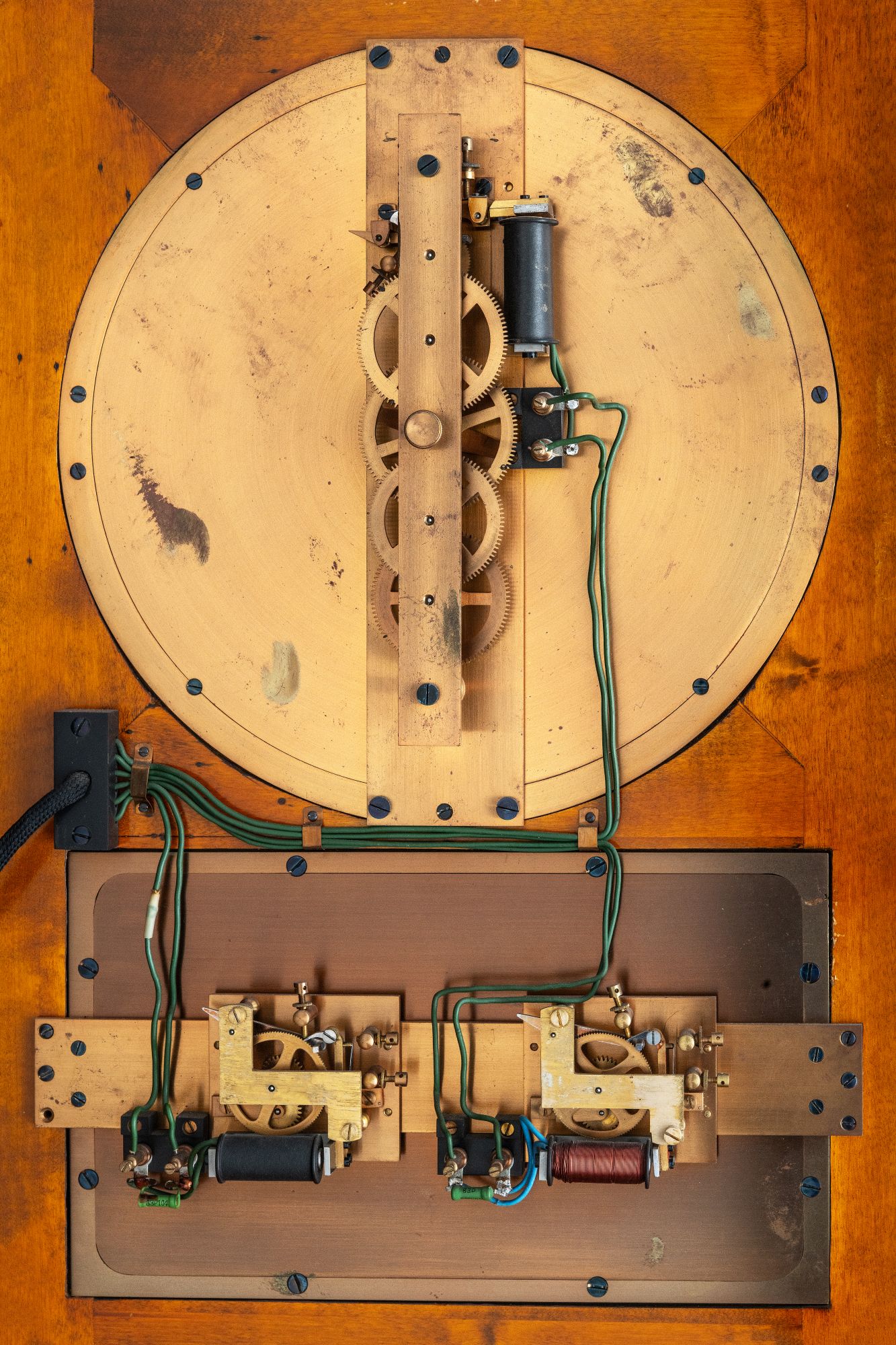
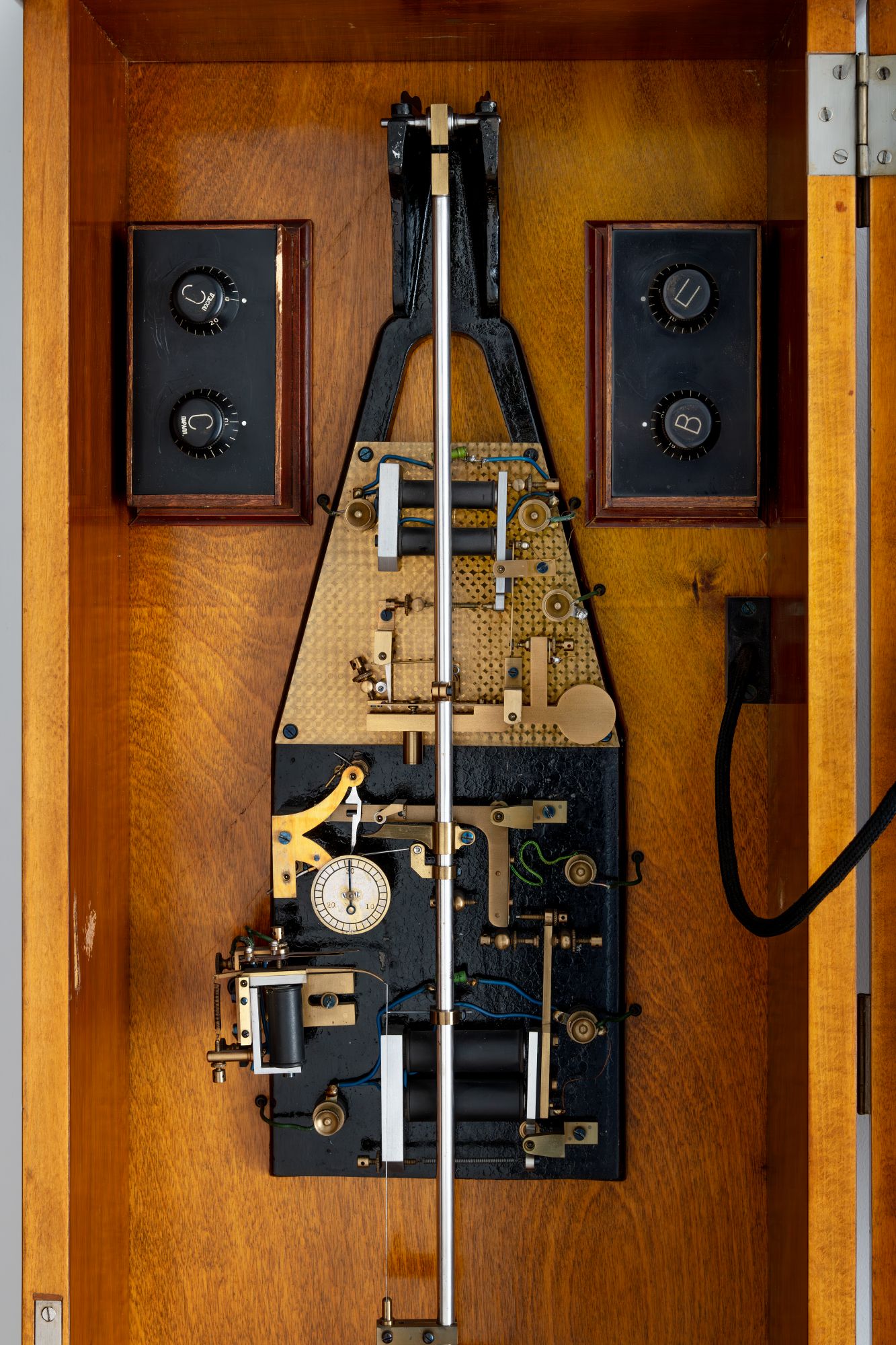
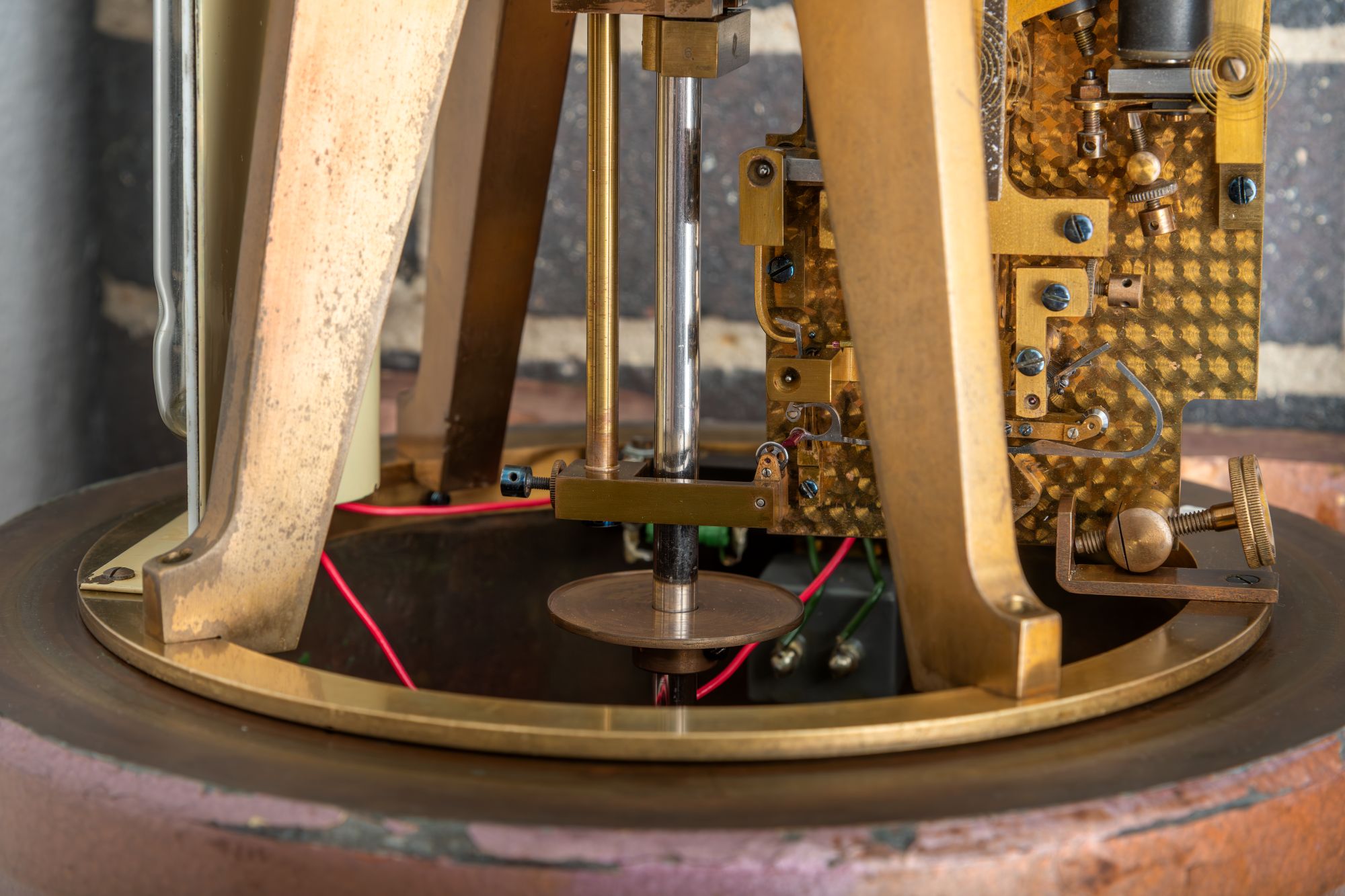
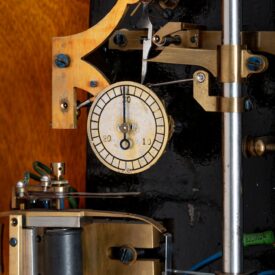
The ‘Russian Shortt’ follows the principles of the British original quite closely, with a ‘free pendulum’ in a tank which is electrically connected to a ‘slave’ clock which displays the time and also generates periodic impulses to the pendulum – impulses that are sent by the ‘slave’ but received by the pendulum at a time dictated by the pendulum’s own precise geometry. Etalon did, however, make certain improvements to Shortt’s design, particularly to the jewelling in the free pendulum and to the delivery of the impulse. The result was a variation of about 1/3 of a second a year – an extraordinary achievement for a pendulum clock of this date. Nonetheless, Soviet research continued unstinted, ultimately resulting in the AChf-3 clocks designed by former Etalon collaborator Feodosii Fedchenko – believed to be the most accurate pendulum clocks ever to have entered production (see TCW 1011 and 1012).