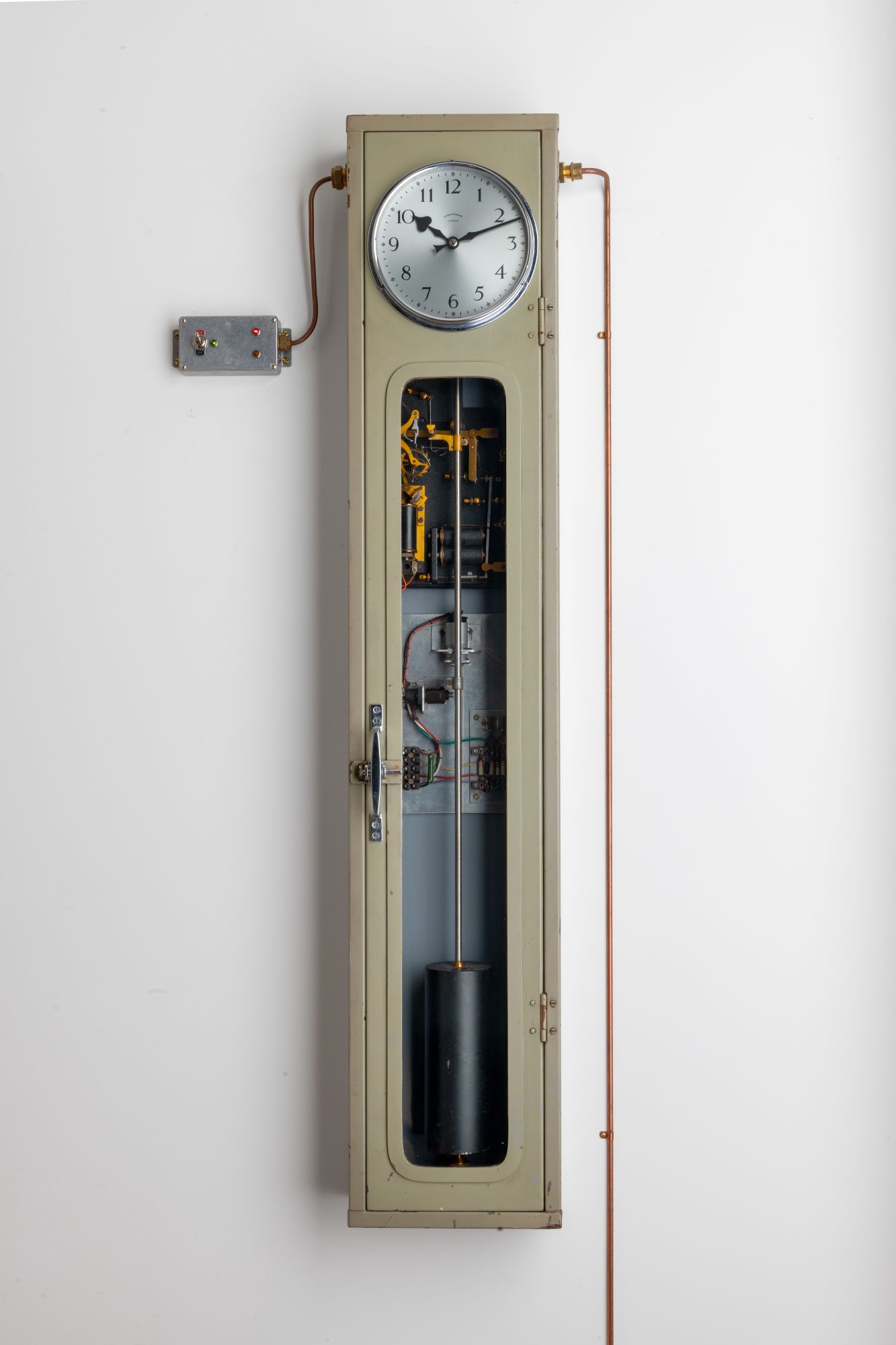
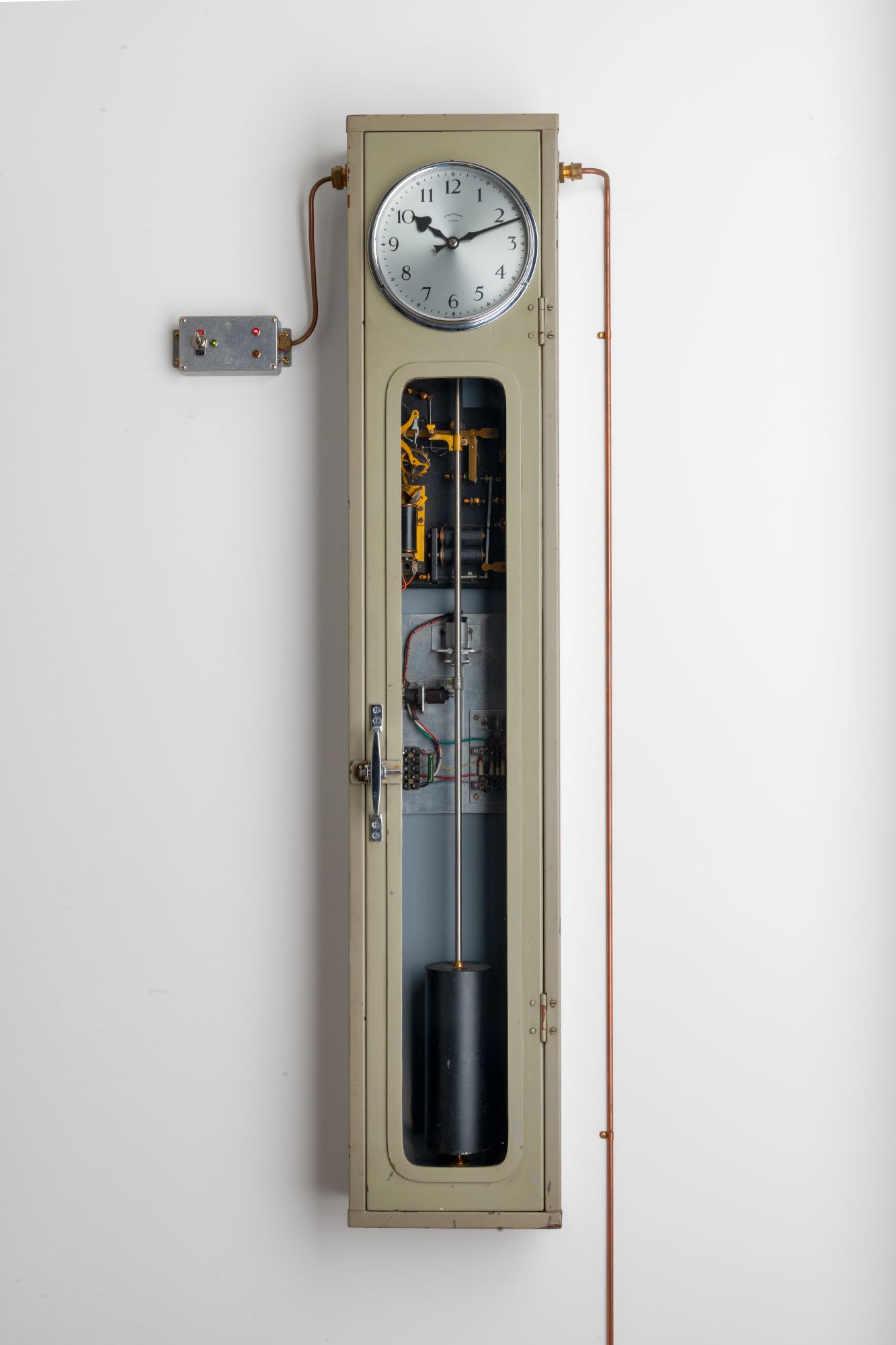
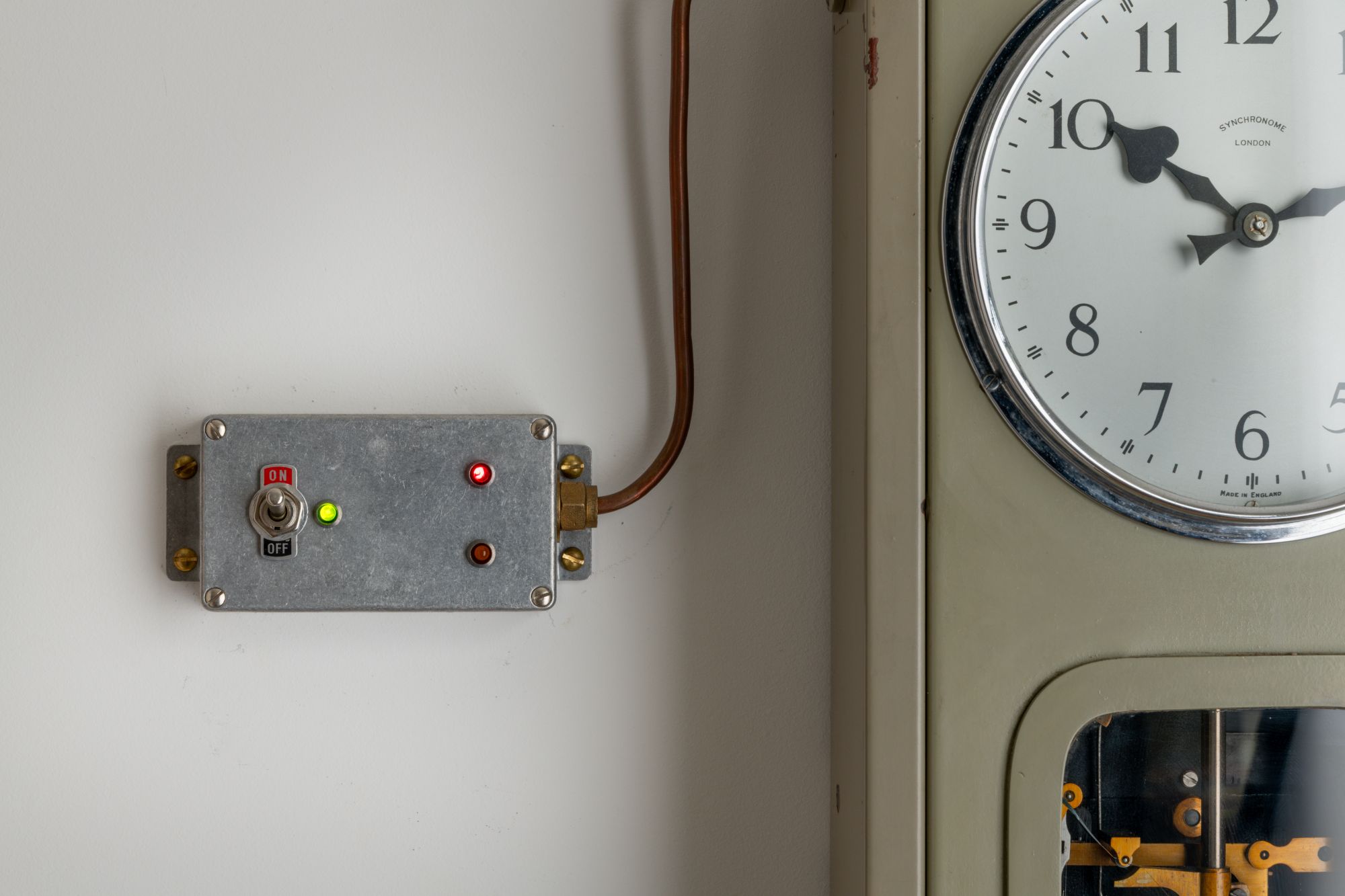
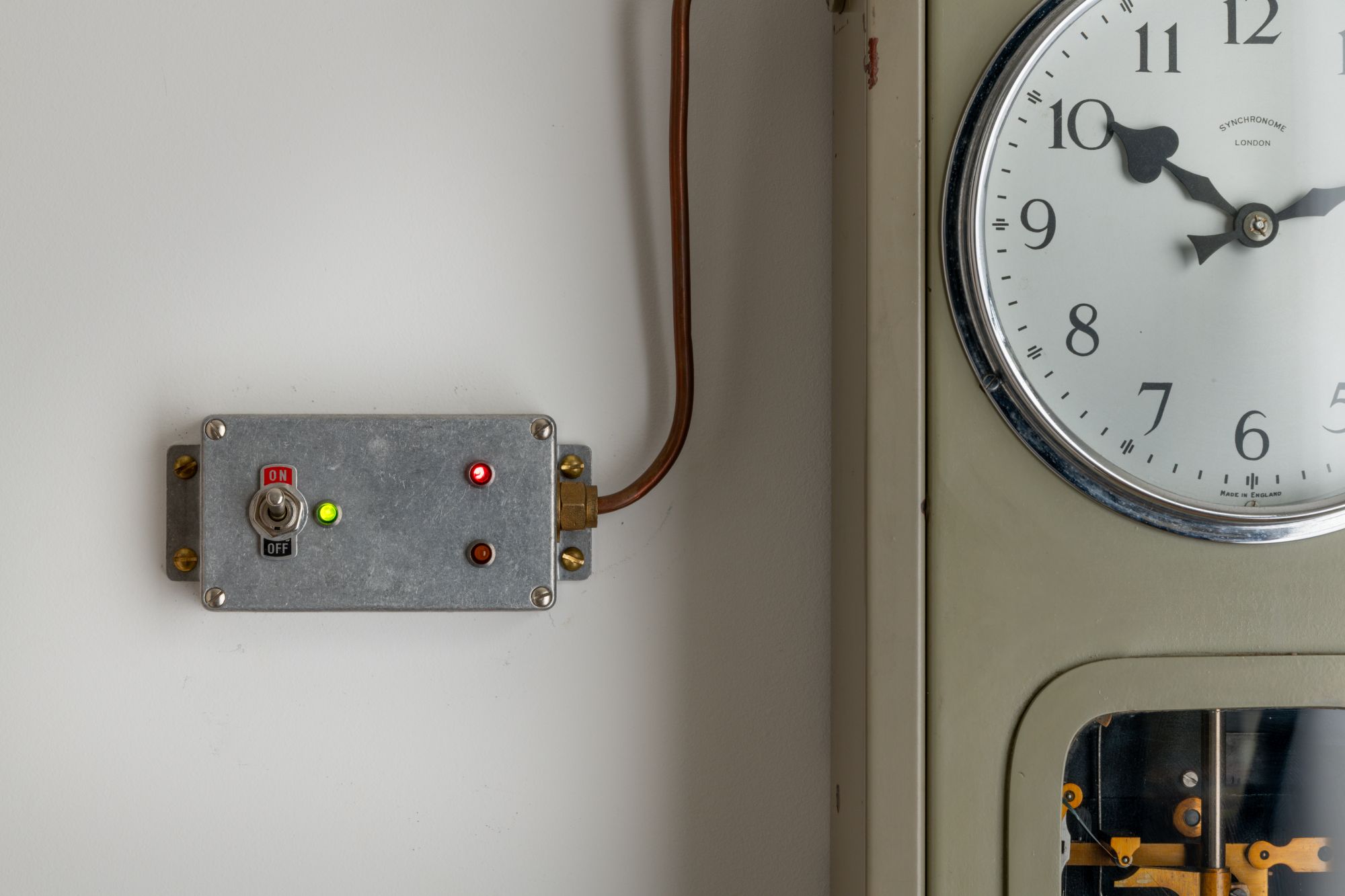
on dial: 'SYNCHRONOME | LONDON | MADE IN ENGLAND'. Serial number: 5289.
Provenance
Made by the Synchronome Company for the London Underground; installed between June-August 1957 at North End (Bull & Bush) station, where recorded in 1962. Retired from the London Underground in the 1980s, when acquired by a London Transport engineer; by descent; Jim Kelly collection, 2006, subsequently purchased from Kelly for The Clockworks.
Overview
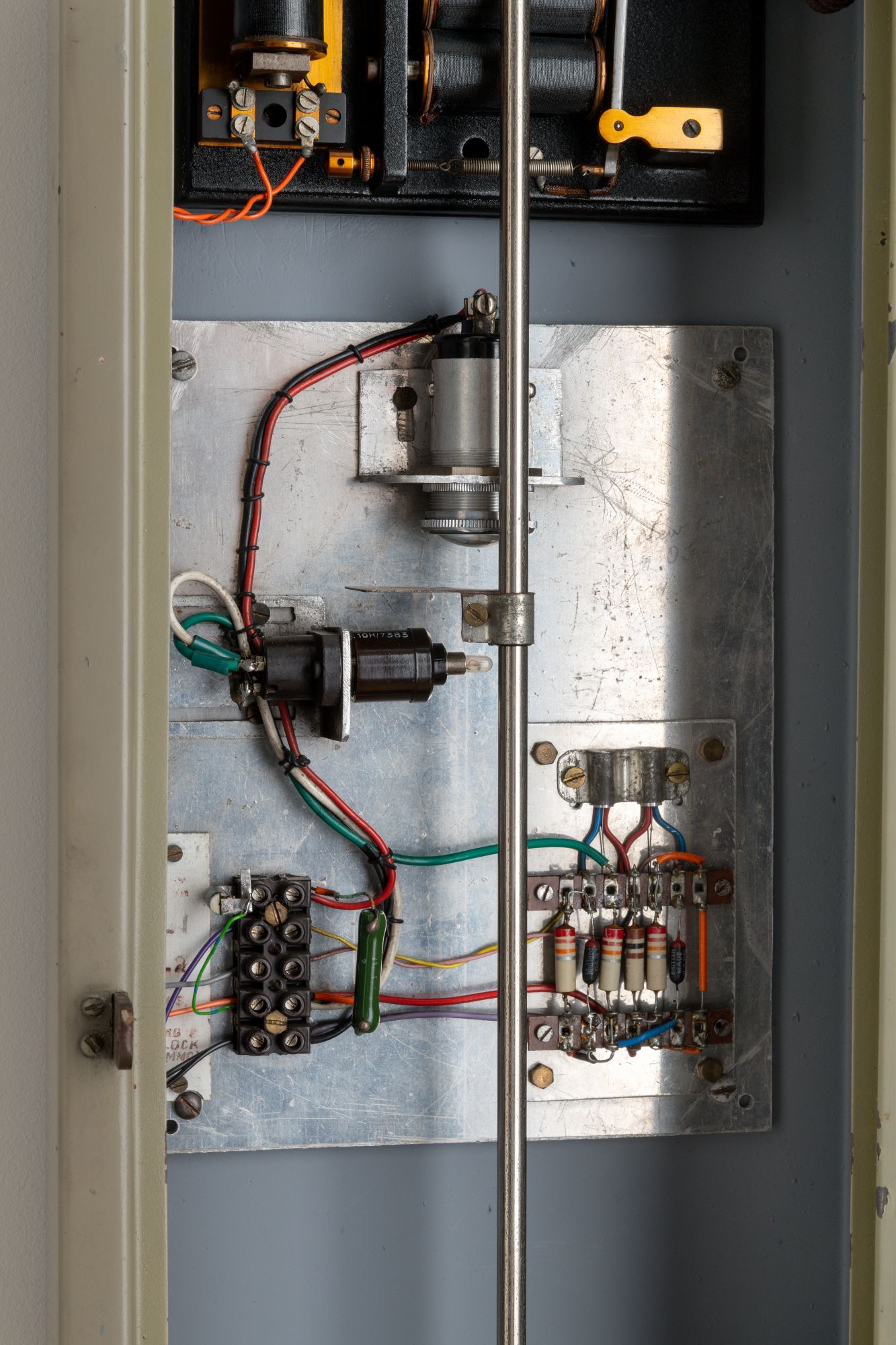
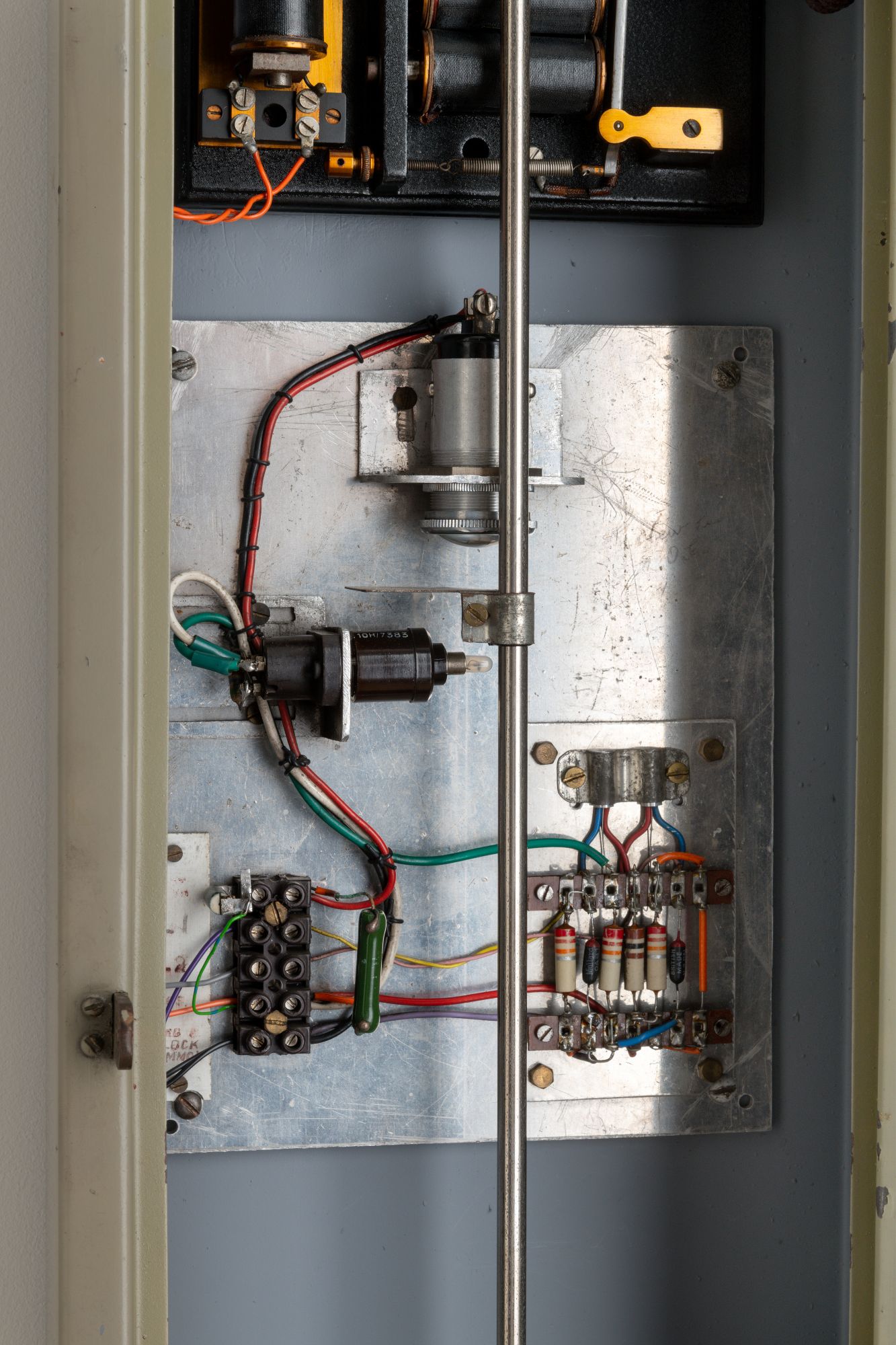
Manufactured for the London Underground, and fitted in their standard fire-retardant metal case, this clock was intended for Marble Arch but ultimately installed at the Northern Line’s ‘ghost station’, North End (‘Bull & Bush’) in 1957. North End had been abandoned midway through construction, in 1906, but later became the control centre for the London Underground’s flood gates. When it arrived, this clock was retrofitted with an experimental opto-electronic seconds generator.
In depth
This Synchronome controlling clock was formerly used on the London Underground. Originally intended for the signal cabin at Marble Arch (Central Line), it was ultimately installed at North End (popularly known as Bull & Bush), a ‘ghost station’ on the Northern Line between Hampstead and Golders Green.
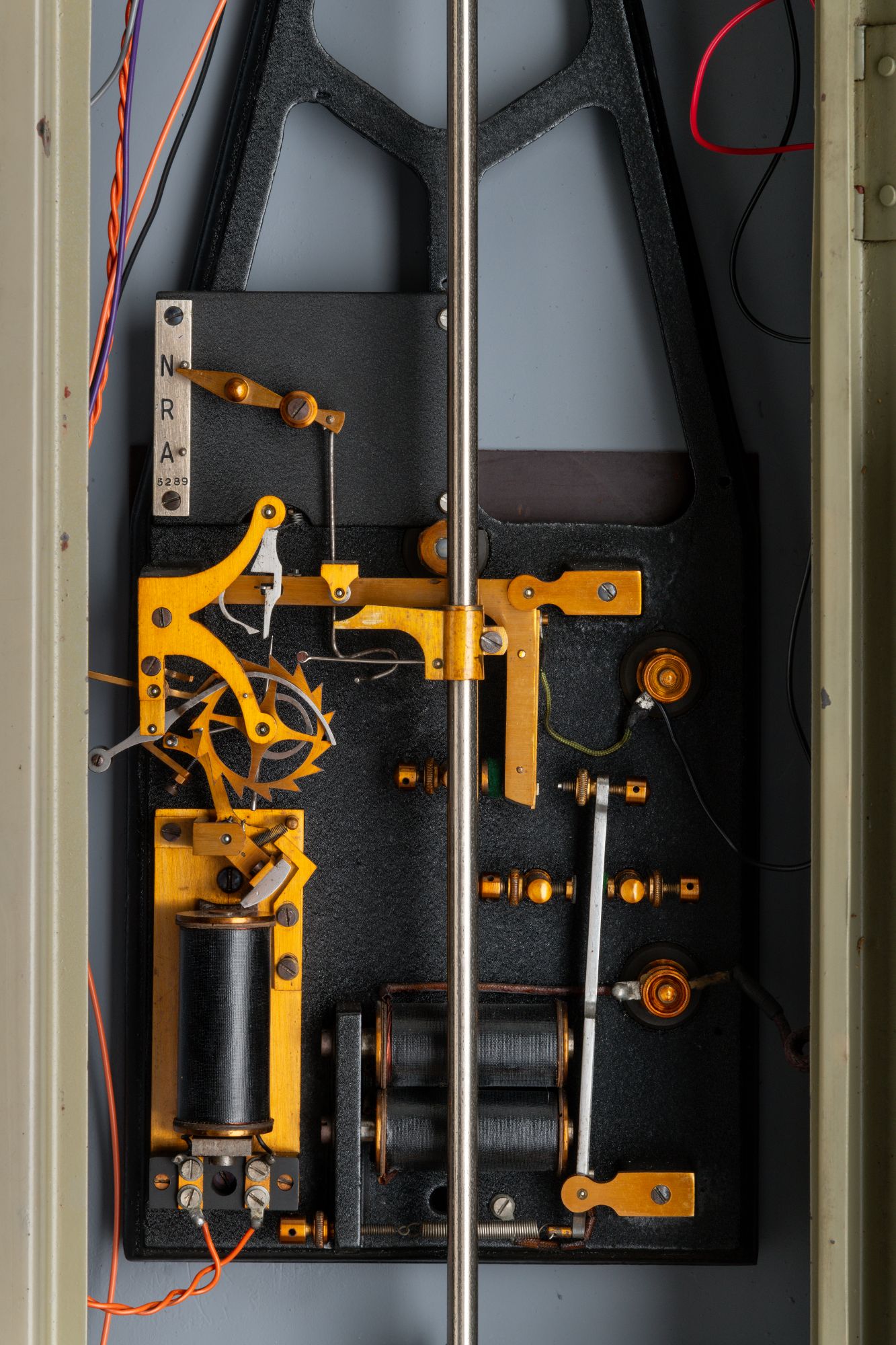
North End was built from the track up between 1903–5, but abandoned before street access was installed. Later, it was used as a bunker and control centre for the Underground’s flood gates, installed during the Second World War. This clock was installed at the station between June-August 1957 and it was presumably at this point that it was retrofitted with an experimental opto-electronic seconds generator, probably to enable it to drive an alternate polarity T&N impulse dial with seconds presentation on the floodgate control panel. It is believed these generators were manufactured in-house by London Underground engineers in the network’s own workshops, and possibly ‘free issued’ to Synchronome.
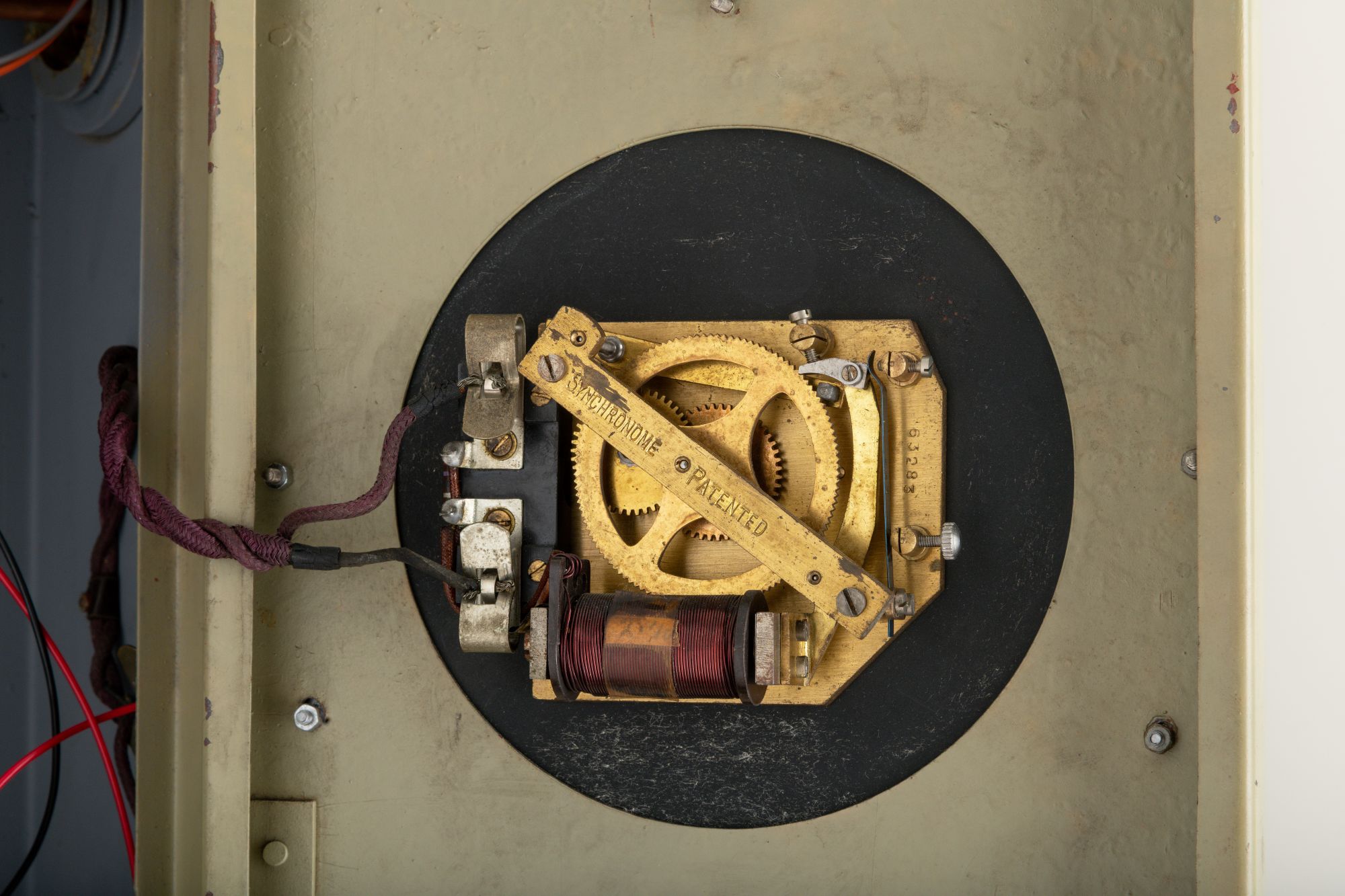
The movement in the clock is typical of the controlling clocks manufactured by Synchronome from the 1920s, including the Synchronome ‘switch’ (patented 1895), which provides a clean break in the electrical circuit. It was clearly intended to present precise time, as it has a cam-shaped synchroniser fitted to the frame, allowing it to be corrected by a superior timekeeper, if necessary. The clock is in the fire-retardant metal case that the London Underground specified to suppliers following a fire in the Colindale signal box in 1935. Synchronome’s metal cases were glazed from 1945.
Electrically synchronised clocks began to appear on the London Underground from about 1900, and networked electric clock systems soon followed. However, because the various underground lines were privately operated, different lines were supplied by different clock companies, and the existing stock was (loosely) pooled after nationalisation in 1933. Broadly speaking, Synchronome clocks seem to have become particularly abundant on the Northern and Central lines, and it is estimated that somewhere in the region of 80–120 were supplied across the network.
Inventory number
TCW 1060
Date
c.1956
Bibliography
David J. Boullin, ‘The Clocks of the London Underground – Part I’, Watch & Clock Bulletin 56:4, 410 (July- August 2014), pp.348-364
David Burton, ‘Timekeeping on the London Underground’, NAWCC Bulletin, 41:4, 321 (August 1999), pp.455-468