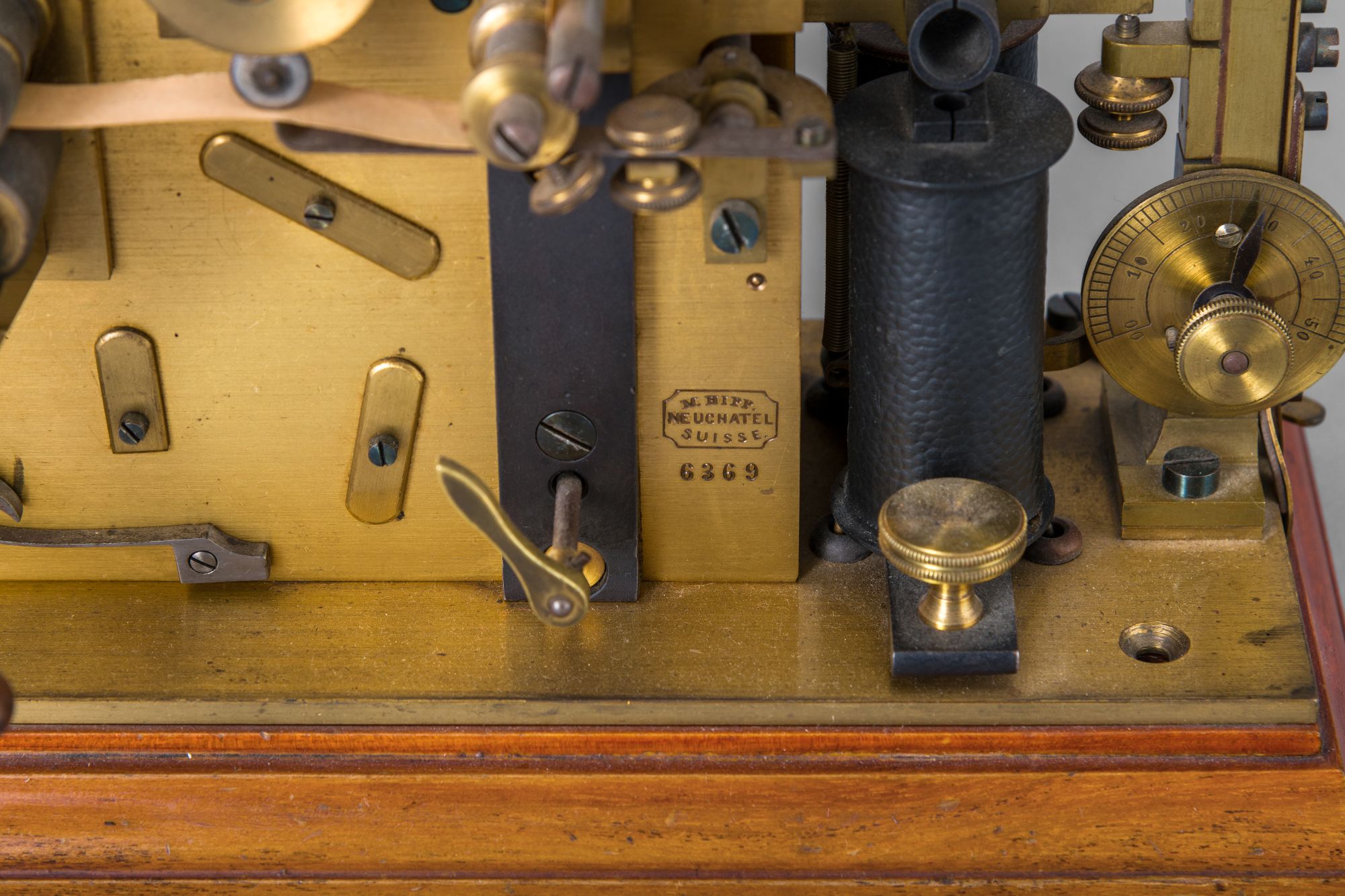
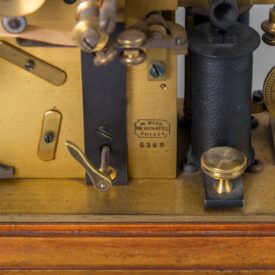
Markings and inscriptions: on plate: M. HIPP. | NEUCHATEL | SUISSE | 6369
Overview
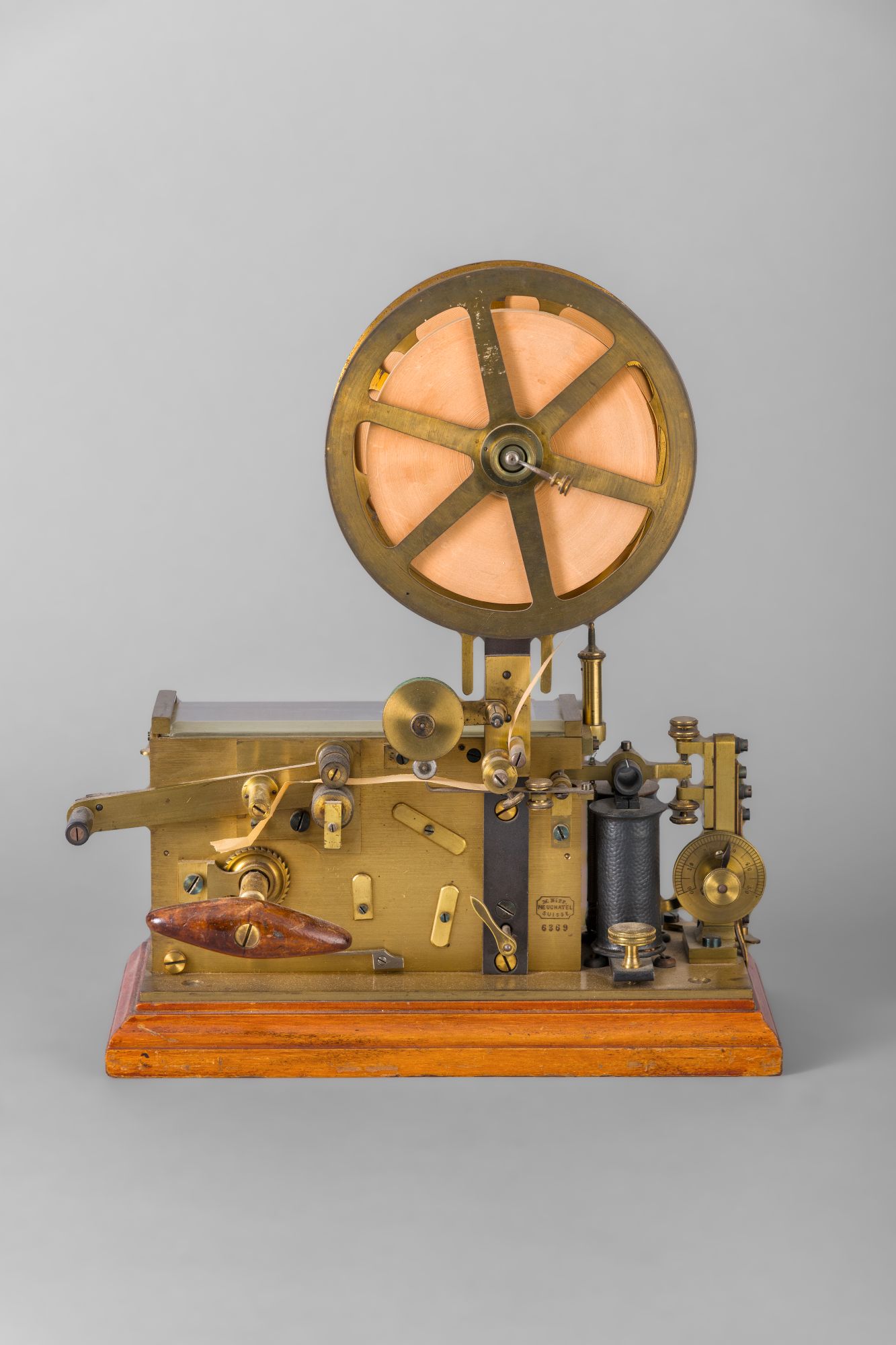
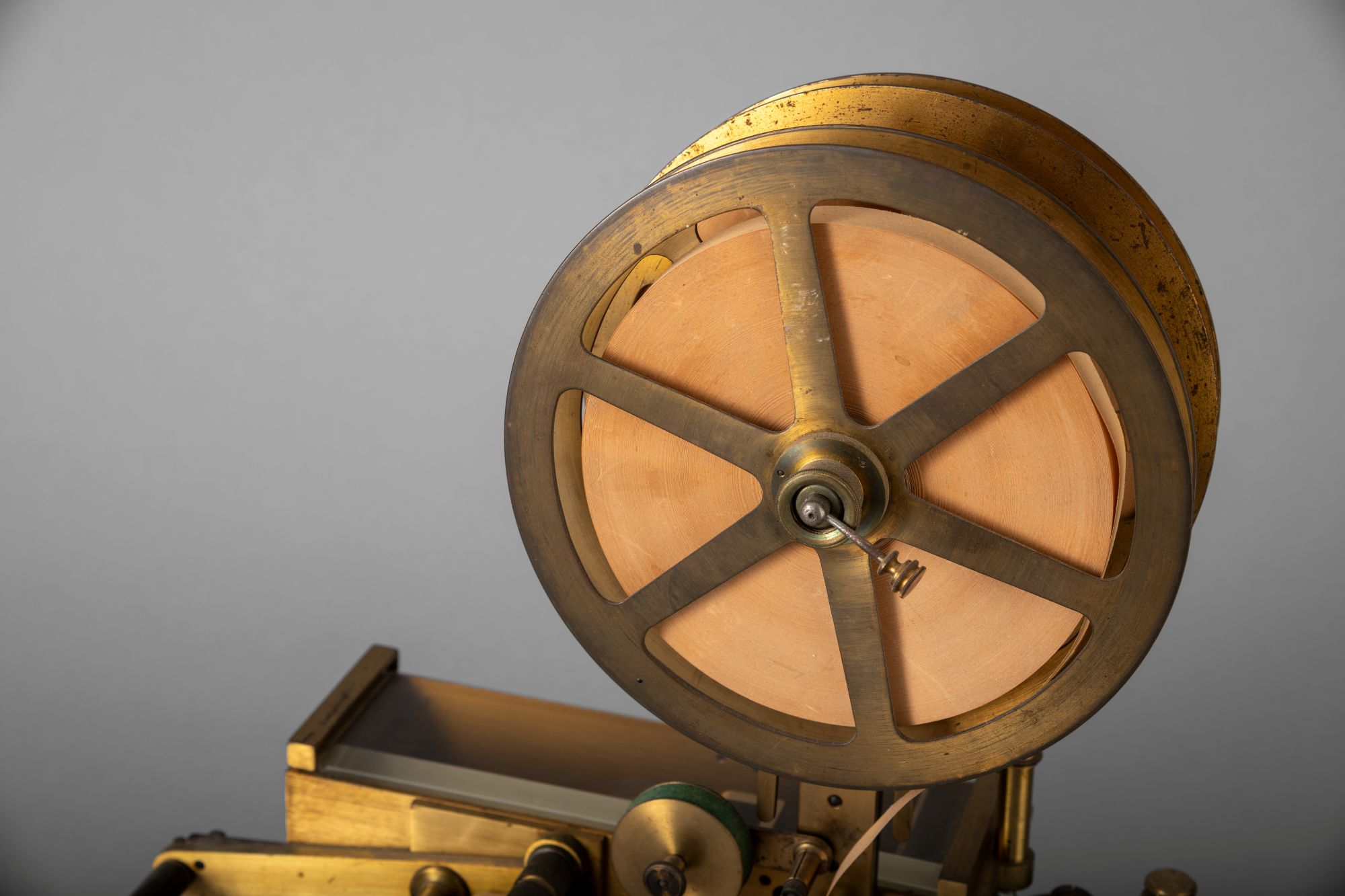
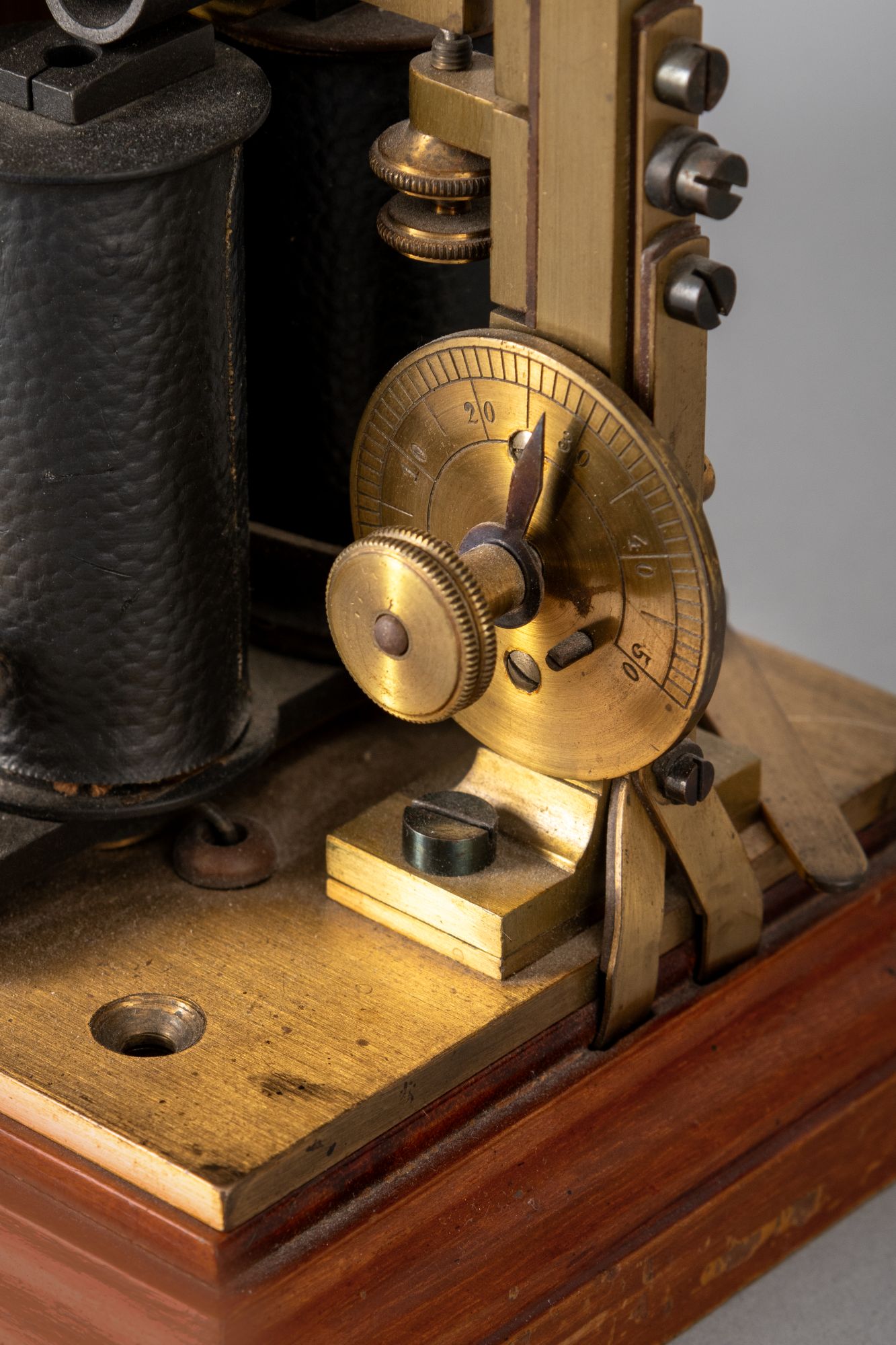
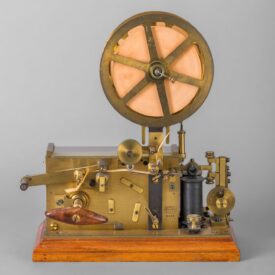
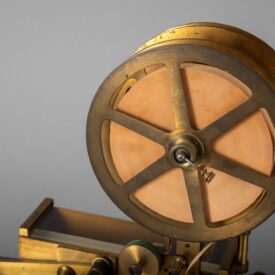
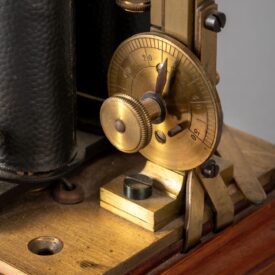
There was a close relationship between early telegraphy and timekeeping: telegraph equipment often deployed elements from clockmaking, and time signals were distributed through telegraph lines almost from the technology’s inception in the 1840s. As a result, many telegraph pioneers also branched into electrical clocks and time distribution, and vice versa. One of the most influential of these was Swiss-German inventor Matthӓus Hipp, inventor of the ‘Hipp Toggle’ (see TCW 1035), and this is an example of a spring-wound telegraph register made to one of his designs. When the electromagnets at the right are energised, they attract an iron plate attached to a pivoted arm, which brings a stylus or pen into contact with the paper. The result is a string of dots and dashes, corresponding respectively to short and long pulses, which could be read and decoded by a telegraph operator.
Hipp designed several telegraph registers; this example is probably from the 1870s, after he had established an electric clock and telegraphy business in Neuchâtel.