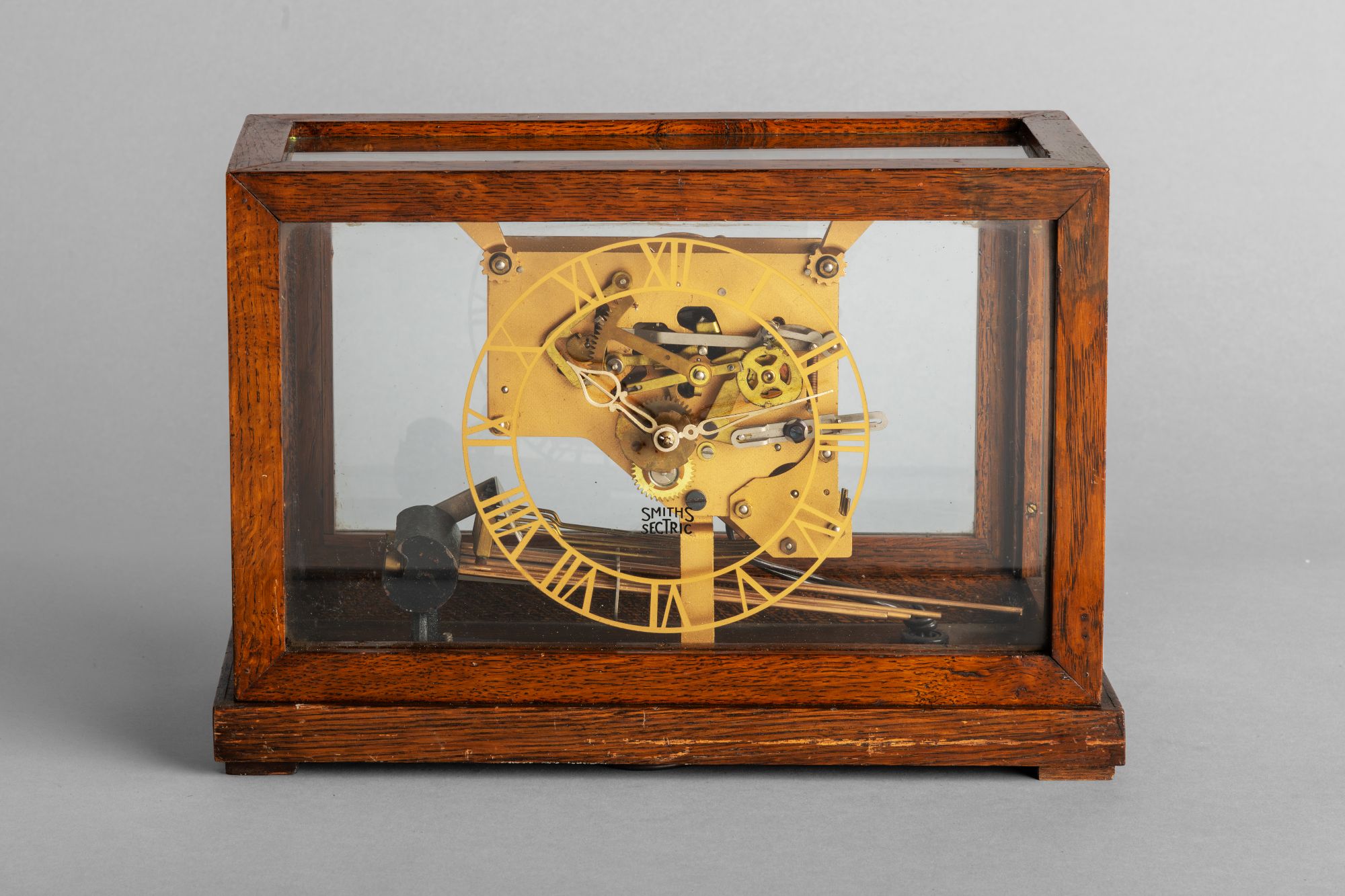
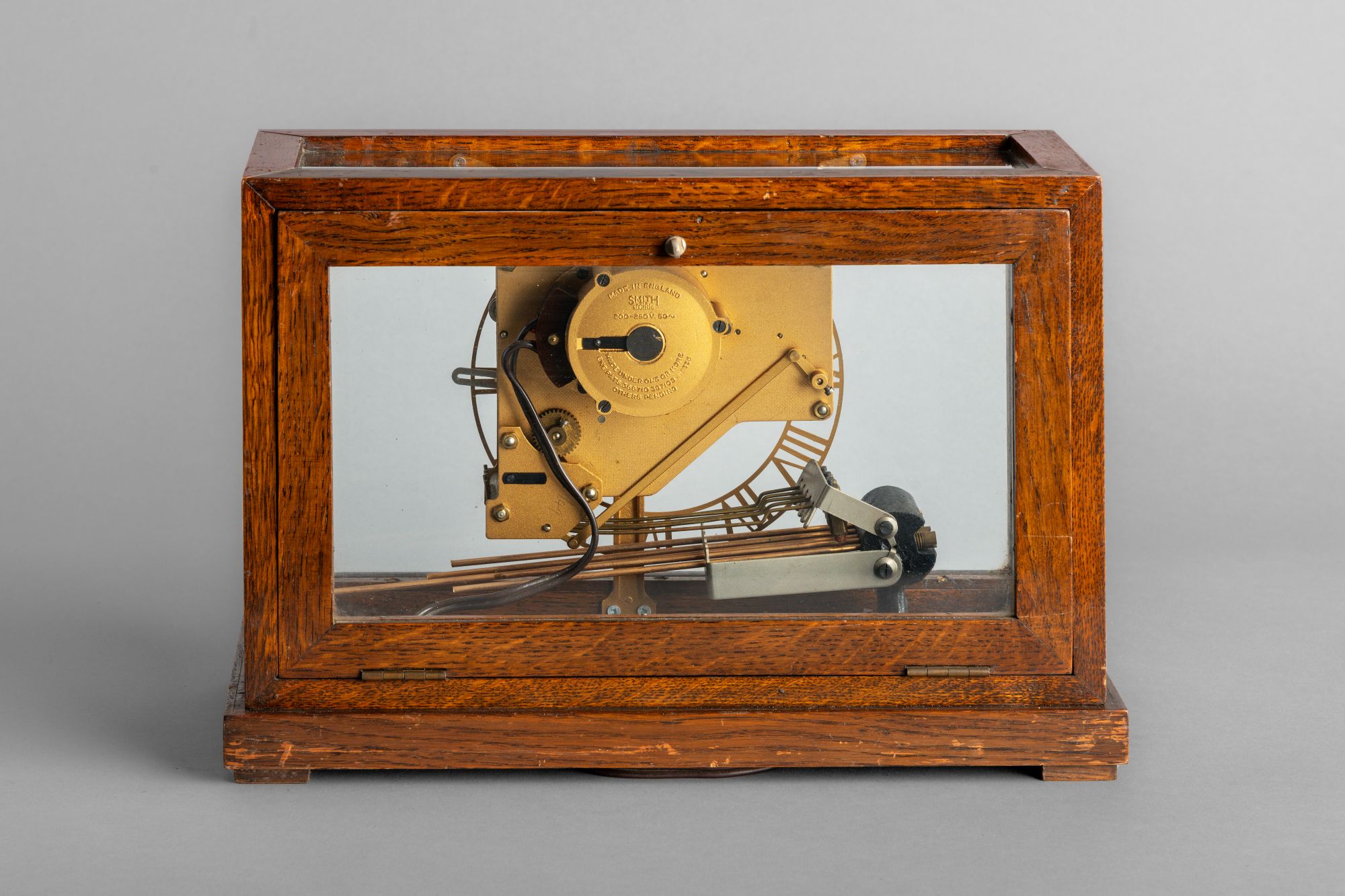
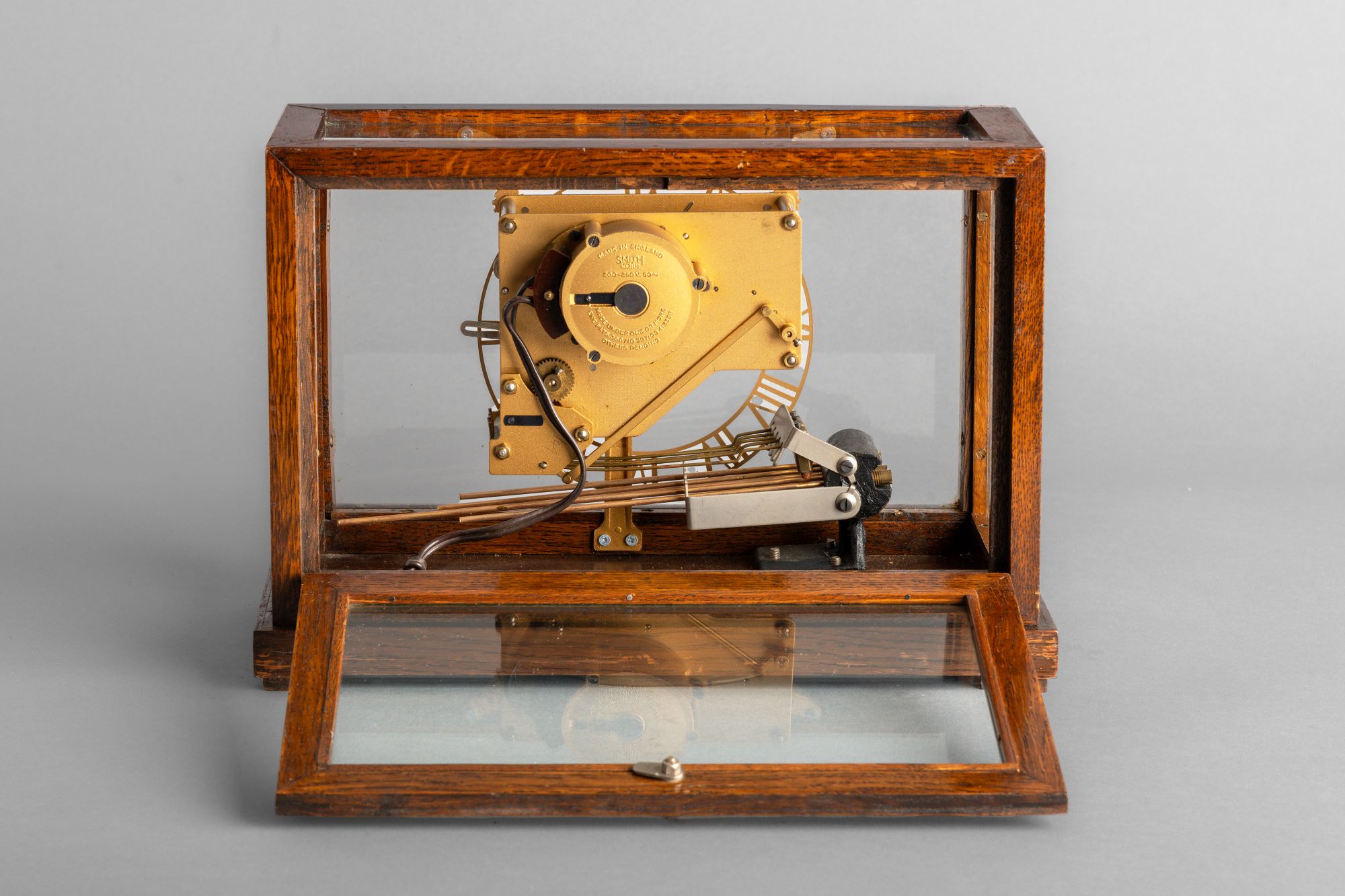
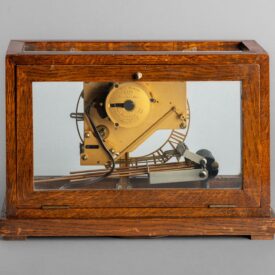
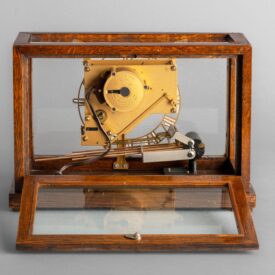
on glass: SMITHS SECTRIC On reverse of motor: ‘MADE IN ENGLAND | SMITHS | SECTRIC | 200-250v 50~ | MADE UNDER ONE OR MORE | ENG. PATENTS 366710 387108 412336 | OTHERS PENDING
Overview
The development of the National Grid in the later 1920s quickly gave rise to a new type of clock: the synchronous motor clock, which took its timebase as well as its power from the steady rotation of the mains turbines. Smiths rapidly cornered this market in the UK; by December 1931, Watch and Clockmaker was reporting that they were producing 1,000 synchronous clocks a week from their Cricklewood factory.
This object functions as a synchronous clock, with a motor and a chiming mechanism, but it is actually a demonstration model, issued to salesmen as they travelled around potential stockists. By the late 1930s, such stockists included not just traditional clock retailers such as jewellers, but also electrical appliance shops. While modelling the efficacy of the movement, salesmen would have been expected to emphasise the huge range of potential designs and cases available for this rapidly expanding market.
Inventory number
TCW 3062
Date
1949
Bibliography
James Nye, A Long Time In Making; The History of Smiths (Oxford: OUP, 2014)
‘British-made clocks and escapements’, The Watch and Clock maker (December 15 1931), pp.334-335