
-
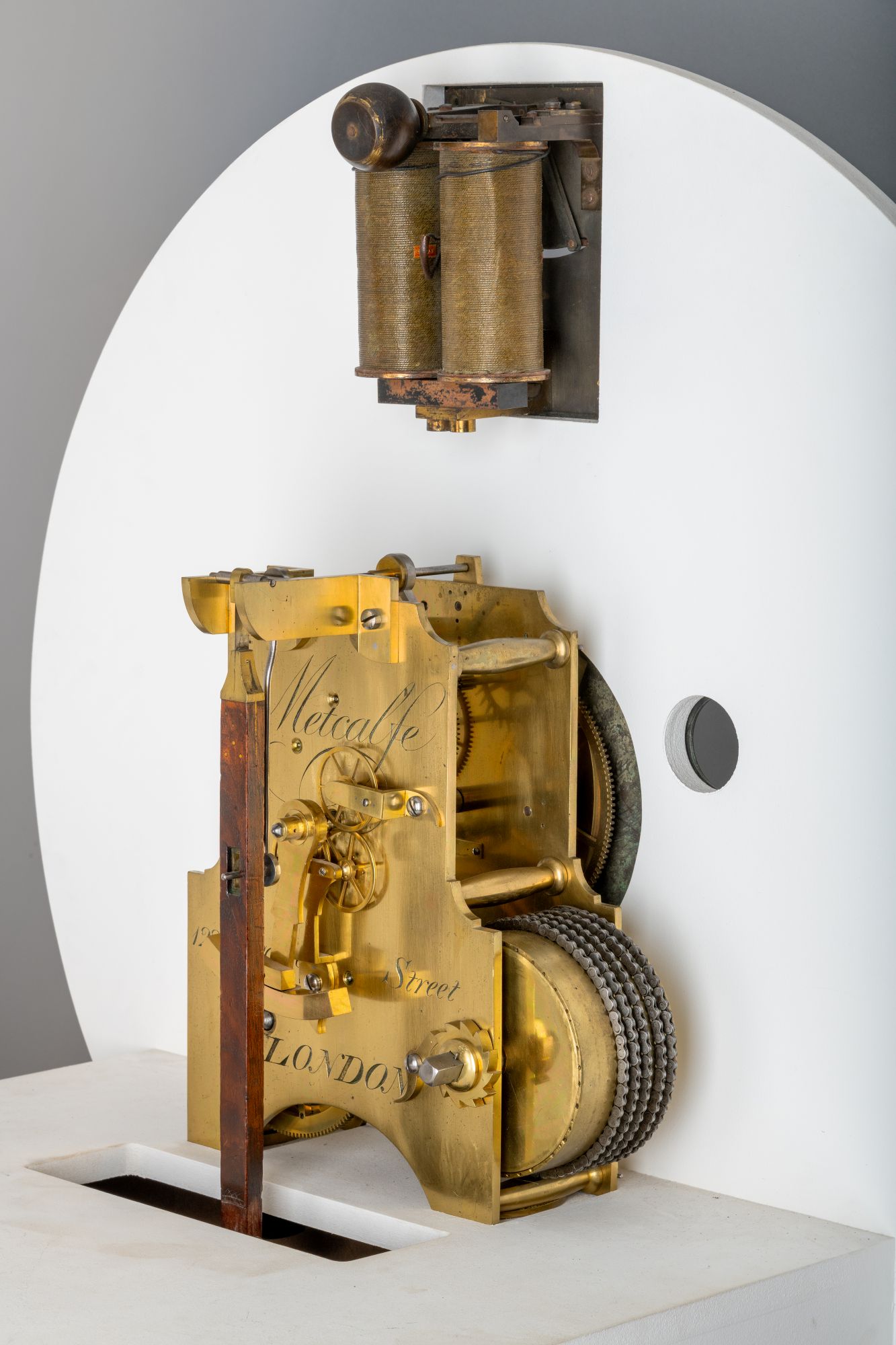
 Thwaites / Standard Time Company, Synchronised dial clock, TCW 2004. Image available for non-commercial use via Creative Commons under a CC BY-NC 4.0 license. TCW_2004_01Download
 -
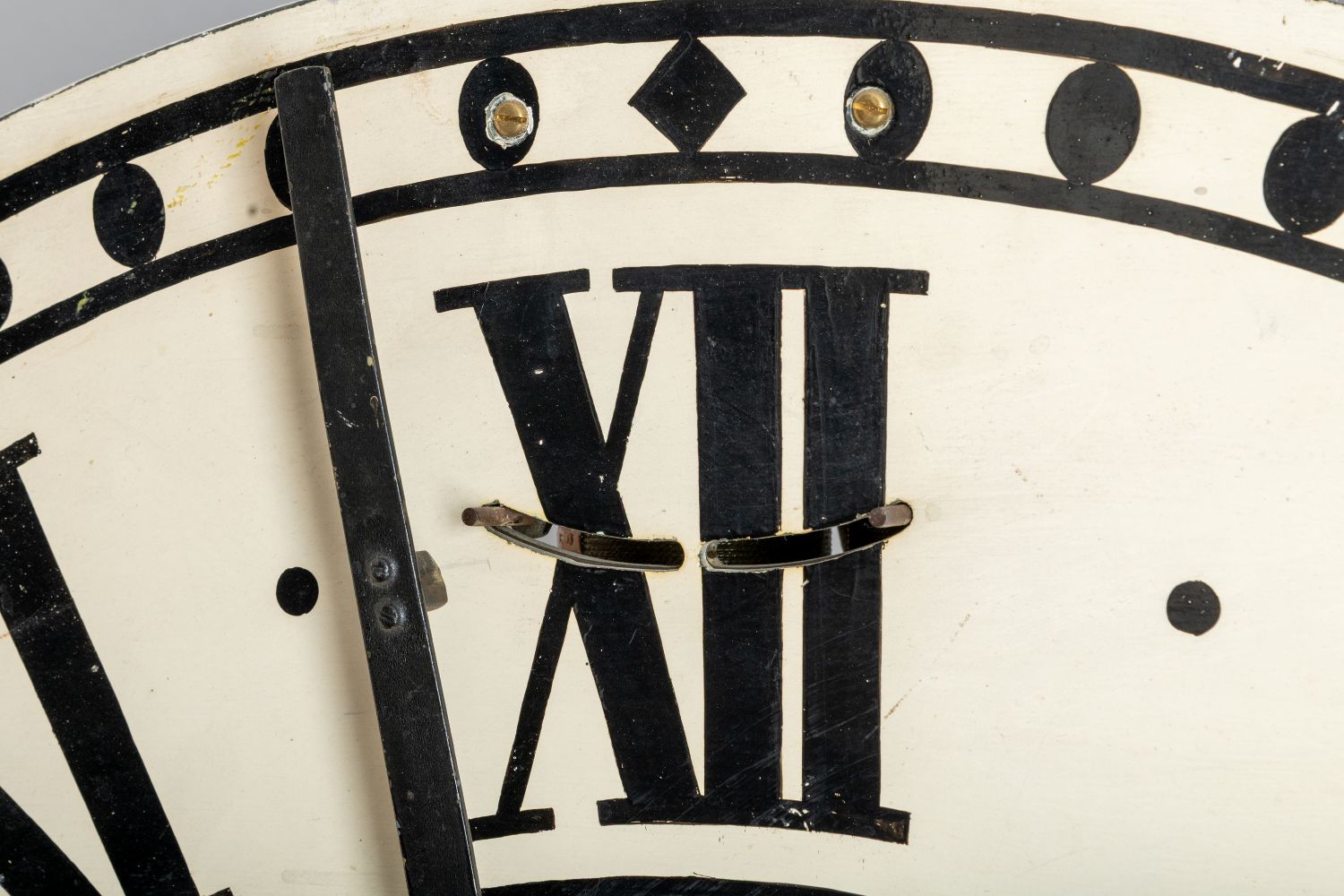
 Thwaites / Standard Time Company, Synchronised dial clock, TCW 2004. Image available for non-commercial use via Creative Commons under a CC BY-NC 4.0 license. TCW_2004_08Download


-
 Thwaites / Standard Time Company, Synchronised dial clock, TCW 2004. Image available for non-commercial use via Creative Commons under a CC BY-NC 4.0 license. TCW_2004_01
 -
 Thwaites / Standard Time Company, Synchronised dial clock, TCW 2004. Image available for non-commercial use via Creative Commons under a CC BY-NC 4.0 license. TCW_2004_08
 -
 TCW_2004_11
Creator
Thwaites, with synchroniser by John Alexander Lund / The Standard Time Company
Title
Synchronised dial clock
Category
Inscriptions and markings
on reverse plate of movement: Metcalfe | 122 Newgate Street | LONDON. On winding crank: PROPERTY OF LONDON STOCK EXCHANGE
Provenance
Presumably London Stock Exchange; with Strike One, Camden Passage, November 1981; purchased 19 November 1981 and bought privately from this owner for The Clockworks in 2014.
Overview
This spring-wound dial clock was installed in the London Stock Exchange in the early 1800s. However, it had a second life as an electromechanical timekeeper, after intervention in the 1870s. The ‘Standard Time Company’ installed solenoids and an iron armature behind the dial, allowing the clock to receive an hourly electric synchronising pulse. When this happened, the pins would ‘zero’ the hands to the 12 position. This device overcame the problem of cumulative error, while extending the life of many mechanical clocks.
In depth
At an impressive 33 inch (84 cm) diameter, this mechanical clock was once placed prominently in the London Stock Exchange – attested by its badged winding crank (which, unusually, it retains). Apart from its size, the movement is a standard version of the type used in an ‘English dial’: it is spring-wound with a winding arbor to the front for its eight-day movement, and has a deadbeat escapement and short (20 inch) pendulum (originally concealed by a wooden case). The plate is badged ‘Metcalfe, 122 Newgate Street, London’, but the movement has a number from Thwaites, who frequently supplied clocks to other retailers. English dial clocks proliferated from the late eighteenth century, in response to demand for cost-effective, practical timekeepers in public buildings such as banks, pubs, coffee houses, offices and – later – railways.
From 1801, London’s ‘New Stock Exchange’ operated from a purpose-built neoclassical building at the upper end of Capel Court. This signalled a new era of professionalism for a market that had grown substantially since its beginnings in nearby Jonathan’s coffee-house in 1698. The Stock Exchange building would evolve several times – in 1884, it was expanded and remodelled to designs by J. J. Cole – until the Exchange finally moved to 125 Old Broad Street in 1972. However, contemporary depictions of the earlier building, such as Auguste Charles Pugin and Thomas Rowlandson’s 1808 watercolour view of ‘New Stock Exchange’, make it clear that clocks were always a prominent feature of the interior, time – then as now – remaining a governing principle on the trading floor.
This mechanical clock had a second career as an electro-mechanical timekeeper. At some point, probably between 1876-86, it was retrofitted with an electric synchroniser by the firm of Barraud & Lund – originally chronometer makers, but from 1868 increasingly operating as a time synchronisation service under the leadership of John Alexander Lund. As part of this alteration, a slot was cut through the dial at the ‘12’ position, and two solenoids fitted on the reverse. This would have allowed the clock to receive hourly time signals – either directly from Barraud & Lund themselves, over wires rented from the Post Office Telegraph Department, or through a third party ‘local accredited time-keeper’, again over Post Office wires. The electric signal, for which clients paid an annual subscription of £5 5s 0d, would activate the electromagnets, in turn attracting the soft iron armature above, arranged to move cranked levers carrying two pins which emerge through a sector in the dial, either side of the minute hand, allowing forcible correction of the hands – ‘zeroing’ them to the hour.
Lund’s system kept all the clocks in his subscriber network to the same time, whilst also overcoming the problem of cumulative error (whereby a clock becomes progressively more inaccurate over several days). He was sufficiently enthused by his commercial prospects to establish a dedicated new company, the Standard Time and Telephone Company, in 1882 (abridged to the Standard Time Company in 1886). By this point, Lund had 308 clients, in 336 locations, including the Stock Exchange, but also telegraph and telephone companies, banks, department stores, railways, newspapers and – perhaps surprisingly – pubs (a result of the innovation of ‘closing time’, introduced by the 1872 Licensing Act). At this stage, Lund bowed out and the business was taken forward by venture capitalists Back & Manson. They floated the business on the stock market in 1886, but the venture never reached critical mass, though it continued providing a time service in various permutations until the middle of the twentieth century. The Lund synchroniser on the reverse of this clock therefore testifies to an early, but ultimately abandoned, innovation in the development of networked time.
This clock was purchased from a private seller in 2014, having previously been purchased from Strike One in Camden Passage – formerly a major retailer of antique clocks – in November 1981. Presumably the Stock Exchange had been gradually decommissioning their clocks; they had offered another clock of a similar size to the Science Museum in 1972 (they accepted: the clock is 1972-104, Parts 1-4).
Dimensions
84 cm circumference; 24 cm depth
Inventory number
TCW 2004
Date
c.1805, adapted c.1870-80
Bibliography
Rudolf Ackermann, The Microcosm of London, 3 vols (London: Ackermann, 1808-10), III. Plate 75.
James Nye and David Rooney, ‘“Such Great Inventors as the Late Mr Lund”: An introduction to the
Ronald E. Rose, English Dial Clocks (Woodbridge: Antique Collectors’ Club, 1978)
Standard Time Company, 1870-1970’, Antiquarian Horology, 30:4 (December 2007), pp.501-523
Cedric Jaggger, Paul Philip Barraud: The Supplement (Ticehurst: The Antiquarian Horological Society, 1979), pp.211-212.
Science Museum Photographic Negatives: No. 707/22, 705/72
Strike One Archive: AHS STR / 01/004, inv. 1181.574