
-
 AChF3 tank clock, TCW 1012. Image available for non-commercial use via Creative Commons under a CC BY-NC 4.0 license. TCW_1012_18Download
 -
 AChF3 tank clock, TCW 1012. Image available for non-commercial use via Creative Commons under a CC BY-NC 4.0 license. TCW_1012_05 - CopyDownload
 -
 AChF3 tank clock, TCW 1012. Image available for non-commercial use via Creative Commons under a CC BY-NC 4.0 license. TCW_1012_10 - CopyDownload
 -
 AChF3 tank clock, TCW 1012. Image available for non-commercial use via Creative Commons under a CC BY-NC 4.0 license. TCW_1012_14 - CopyDownload


-
 AChF3 tank clock, TCW 1012. Image available for non-commercial use via Creative Commons under a CC BY-NC 4.0 license. TCW_1012_18
 -
 AChF3 tank clock, TCW 1012. Image available for non-commercial use via Creative Commons under a CC BY-NC 4.0 license. TCW_1012_05 - Copy
 -
 AChF3 tank clock, TCW 1012. Image available for non-commercial use via Creative Commons under a CC BY-NC 4.0 license. TCW_1012_10 - Copy
 -
 AChF3 tank clock, TCW 1012. Image available for non-commercial use via Creative Commons under a CC BY-NC 4.0 license. TCW_1012_14 - Copy
Creator
Feodosii Fedchenko
Title
Astronomical Regulator Model AChF-3, No. 10, with subsidiary dial
Category
Inscriptions and markings
On plaque on front of tank: А4Ф-3 | N10 | А4Ф-3 ВНИИѲТРИ | 1965 On subsidiary dial: ЭТАЛОН | ЛЕНИНГРАД [Etalon | Leningrad] Supplied with its original Wallace & Tiernen Precision Mercurial Manometer Type FA-173, inscribed: ПОЛЯРНОТЪ | ЧАСЬ1 [Polyarnost | Chast 1]
Provenance
Retired from unidentified scientific observatory, Ukraine; purchased in 1996 by William Scolnik, and acquired for The Clockworks with the Scolnik collection in 2011.
Overview
In 1955, Feodosii Fedchenko devised an isochronous pendulum, and created the most accurate pendulum clock ever to enter production. The precision of Fedchenko’s model ‘AChF-3’ exemplifies the importance Soviet leaders placed on technology, but it would be several decades before word travelled beyond the USSR (where the world had, in any case, moved on to quartz). It is estimated that around 30 clocks were manufactured to Fedchenko’s design; this one, number 10, was probably produced under his personal supervision. It is one of two AChF-3s in the Clockworks’s collection.
In depth
The AChF3 is the most accurate pendulum clock ever to have entered production, boasting precision in the range of quartz clocks. It was designed in the Time Laboratory of the Kharkov State Institute of Measures and Measuring Instruments by former Physics teacher Feodosii Fedchenko in 1958, following extensive research into the isochronous suspension pendulum (the AChF1 had been built in 1953).
Soviet scientists had been following international developments in pendulum technology since the beginning of the twentieth century, recognising the need for a robust and reliable timekeeper that would function in the most inhospitable regions of the country. Experimentation on home soil stepped up after communication between the Soviet Union and the West was effectively severed in 1939 – incidentally also blocking Soviet access to information about quartz and atomic timekeeping technology, both of which began to supersede pendulum clocks from the 1950s onwards. Since several examples of the ‘Free Pendulum’ created in 1921 by William Hamilton Shortt and the Synchronome Company (see TCW 1073) had been sent to Russian laboratories, the Etalon Company were able to devise their own version of Shortt’s clock shortly afterwards (TCW 1009).
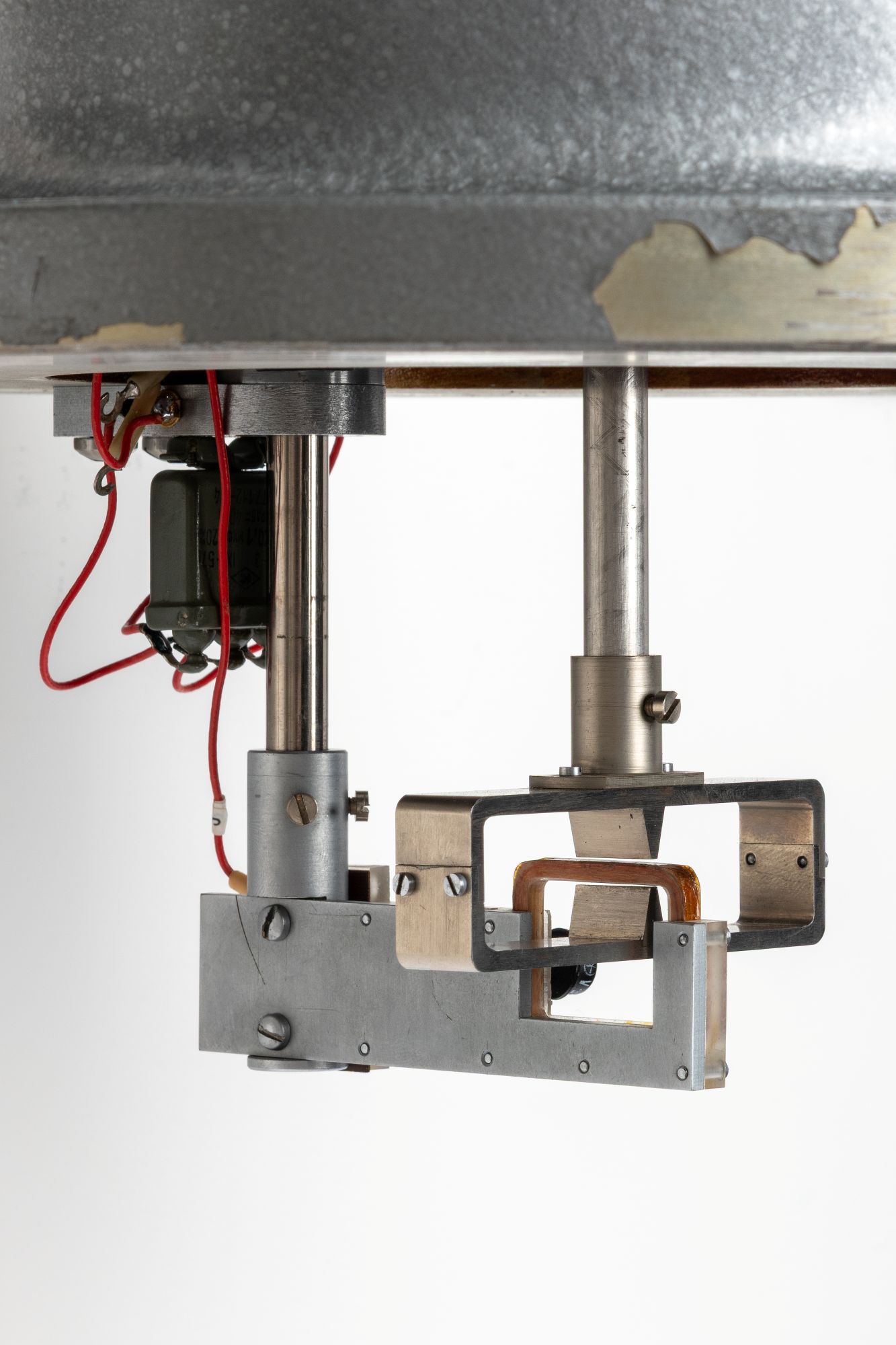
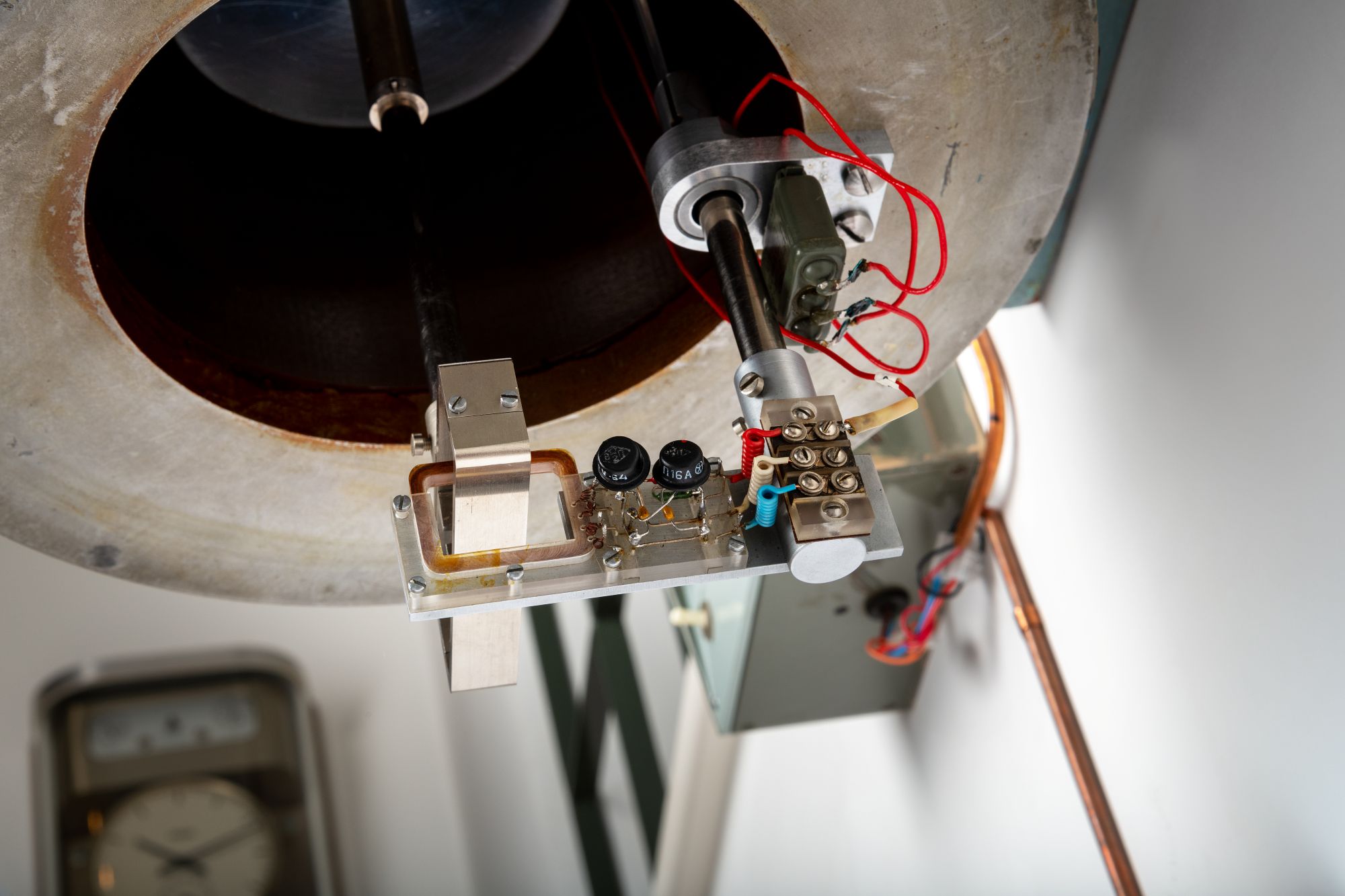
However, the AChF3 works on an entirely different principle: where Shortt and Etalon had sought to eliminate interference with the pendulum, Fedchenko’s design acts constantly on it, electro-magnetically, delivering a precisely timed impulse at the midpoint of the pendulum’s arc to maintain amplitude with minimal disturbance and correct for circular error. This is effected through a permanent magnet fixed at the base of the Invar pendulum, which passes through two coils on the same former – one is a sense coil; the other a drive coil. As the pendulum swings through the midpoint, the magnet induces a small voltage in the sense coil; this pulse is fed into the drive coil, creating a magnetic field which interacts with the pendulum’s magnet. It is an effective innovation, but Fedchenko’s early experiments on these principles were disappointing until he accidentally left the centre spring of the pendulum’s suspension under slight tension. In so doing, he discovered he had made the suspension tuneable and isochronous, meaning the period of the pendulum remained constant even if the arc of the swing changed. The clock he designed to these specifications runs on a small battery, keeps time to within a few thousandth of a second per day, and was widely used in Soviet observatories, broadcasting centres and transport networks from the 1950s onwards.
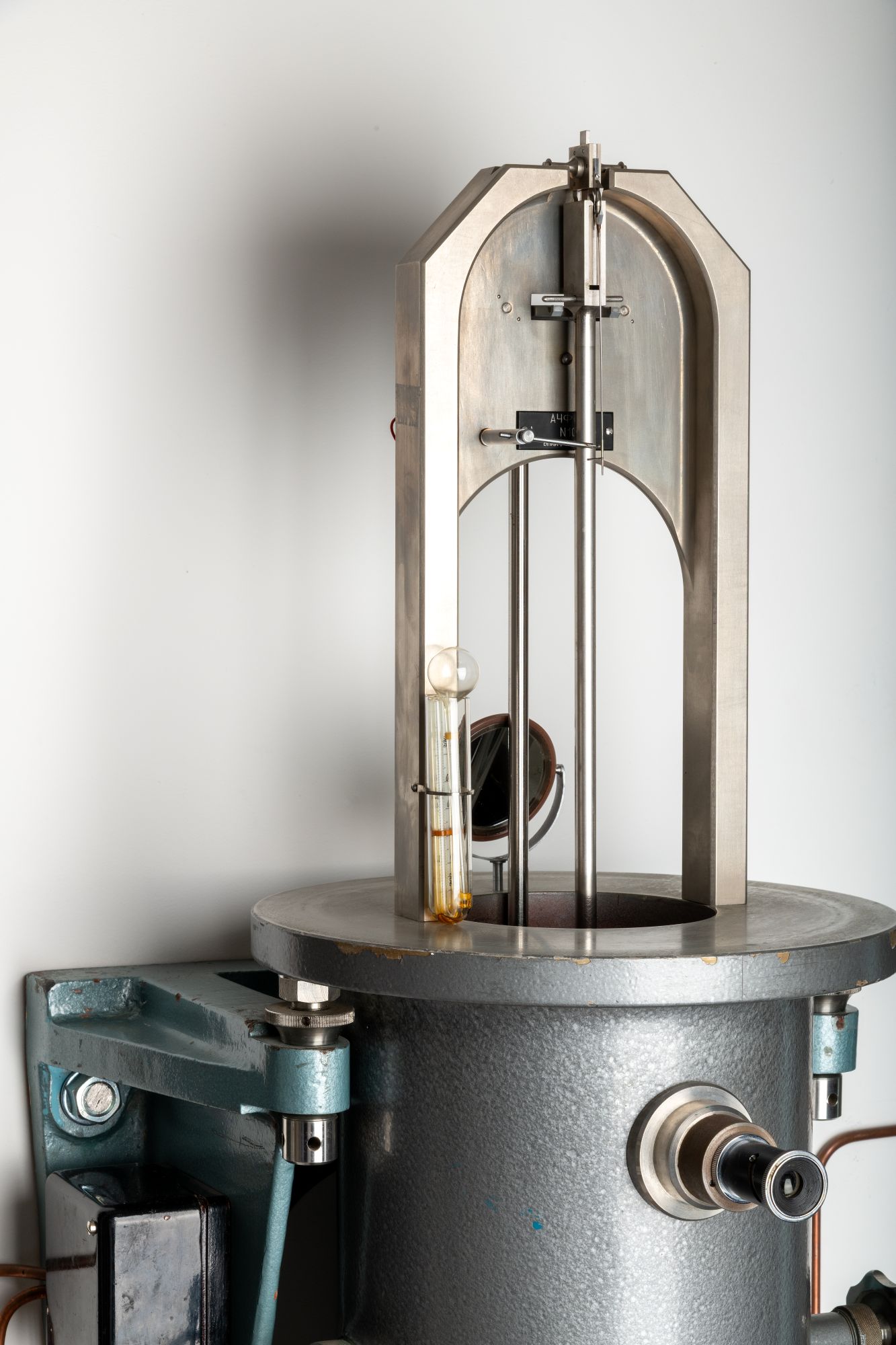
It is estimated that only 30 or so ACfH3 clocks were made; this clock is identified on its plate as number 10, from 1965, and it was almost certainly produced under the personal supervision of Fedchenko himself. It is in a dark grey tank, with blown glass bell jar to the top and sealed glass dome to the bottom and it retains its original precision mercurial manometer, type FA-173, and subsidiary dial with astronomical presentation – the fact that the latter is badged ‘ETALON’ testifies both to the early collaboration between Soviet time measurement researchers, and to the relative paucity of resources in the Soviet Union during this time. Number 10 was installed in a scientific observatory in Ukraine (possibly the Mykolaiv Observatory or the Crimean Astrophysical Observatory, both in operation during the 1960s) and, after being retired, was purchased in 1996 by William Scolnik, a prominent collector of precision timepieces. It is believed that this purchase made number 10 the first Fedchenko clock to enter the United States – certainly, news of Fedchenko’s innovation took several decades to percolate beyond the Soviet Union. It was purchased with the Scolnik Collection in 2011, and is now one of two Fedchenko clocks in the collection at The Clockworks (see TCW 1011).
Born to a peasant family in Kiev, Feodosii Fedchenko originally taught school Physics and Maths, before going to work at the Institute of Measurements and Measurement in 1946. He began experiments with the concept of the free pendulum in 1949, and received a certificate of recognition for the isochronous pendulum on 18 March 1955. He died in Mandeleev in 1989.
Video
Dimensions
subsidiary dial: 34 cm circumference x 12 cm; Manometer: 17 x 12.5 x 9 cm
Inventory number
TCW1012
Date
1965
Bibliography
George Feinstein, F. M. Fedchenko and his Pendulum Astronomical Clocks, NAWCC Bulletin, April 1995
Kenneth James, ‘Precision Pendulum Clocks – Circular Error and the Suspension Spring’, Antiquarian Horology (September 1974), pp.868-883
Leslie Paton, ‘The Fedchenko Isochronous Pendulum Suspension’, The Antiquarian Horological Society, EHG Paper No. 55
Myron Pleasure, ‘The Fedchenko Clock’, Horological Journal, September 1973, pp.3-5