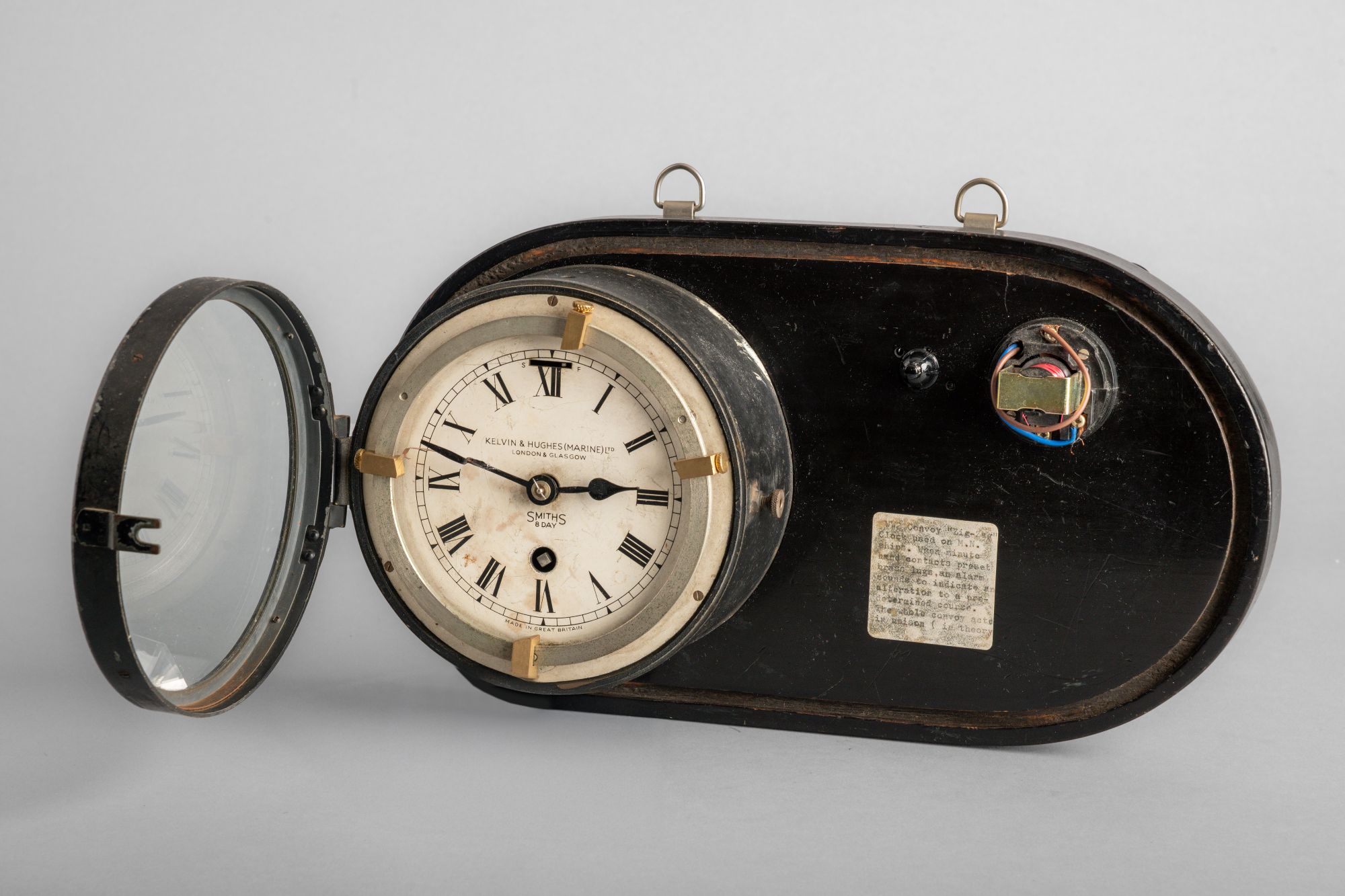
on dial: 'KELVIN & HUGHES (MARINE) LTD | LONDON & GLASGOW | SMITHS | 8 DAY'. Sticker on base (typewritten) - 'WW2 Convoy "Zig-Zag" Clock used on M. N. ships. When minute hand contacts preset brass lugs, an alarm sounds to indicate an alteration to a predetermined course. The whole convoy acts in unison (in theory)'
Overview
This clock was made during the Second World War, and was intended to protect Allied naval convoys from U-Boat attacks. It was an established strategy for these convoys to change course – or ‘zig zag’ – every ten to twenty minutes, making it harder for their position to be traced. These changes were planned in advance, after which this clock would act as an alarm. The clock’s contacts could be adjusted using the brass lugs around the outside of the dial: once these were activated, the clock would trigger a bell on the bridge, telling the crew when to alter course.
This ‘zig zag’ clock is a very rare survivor, especially so since it retains its moveable contact pieces. At some point in its history it was mounted on a dark wood base with an on-off push button for ease of display and demonstration.