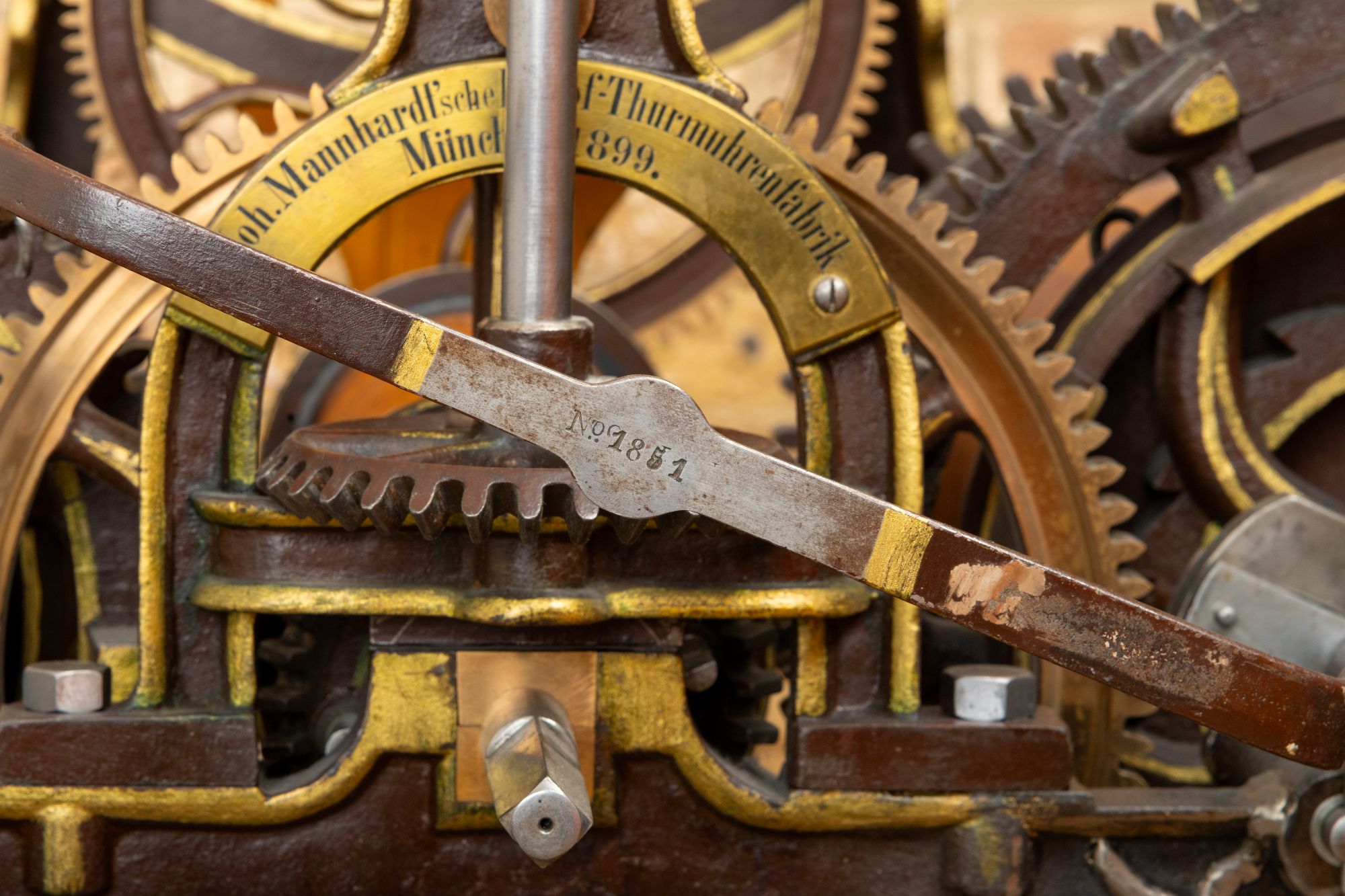
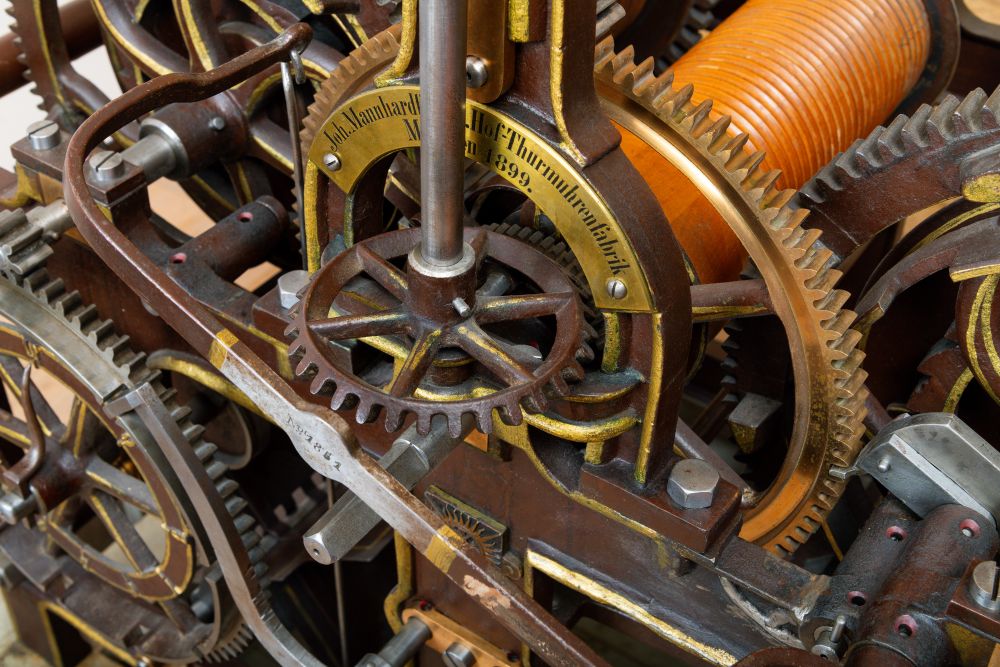
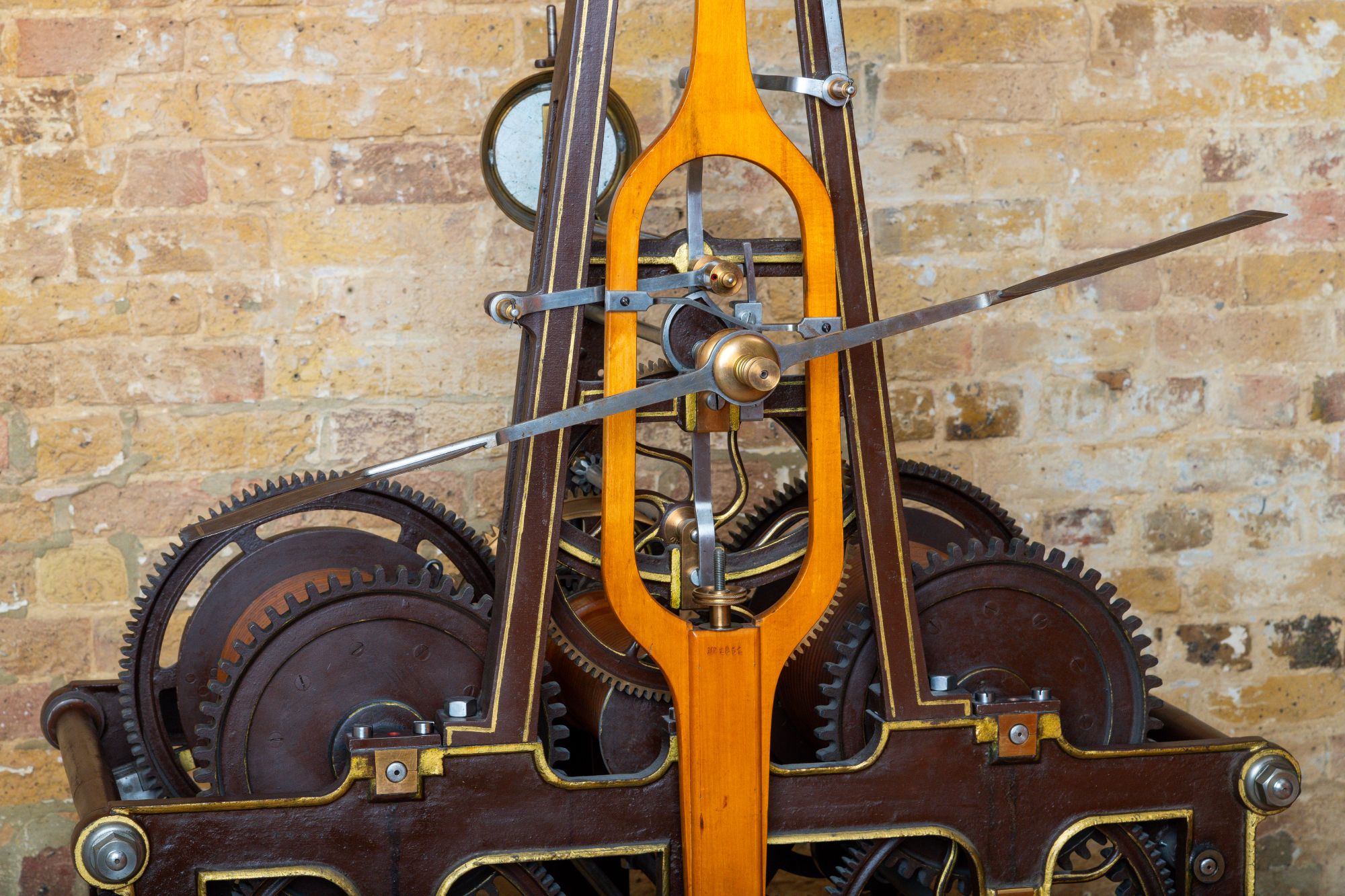
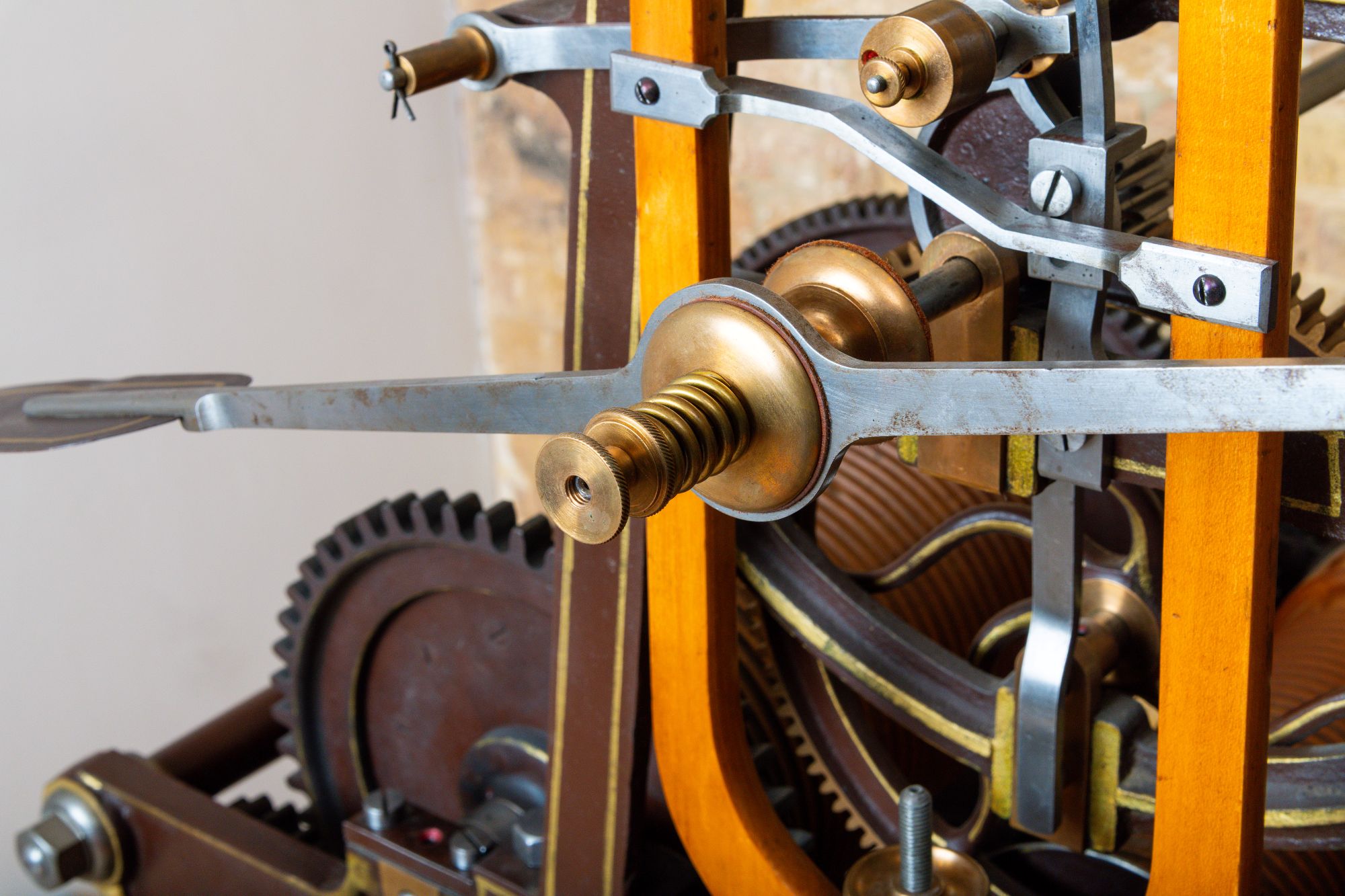
on brass plaque: 'Joh. Mannhardst'sche K. Hof-Thurmuhrenfabrik | Munchen 1899' on handle 'No.1851. Plaque on plate with maker's logo and 'J. MANNHARDT | MUNCHEN | EING. FABRIK-MARKE'
In depth
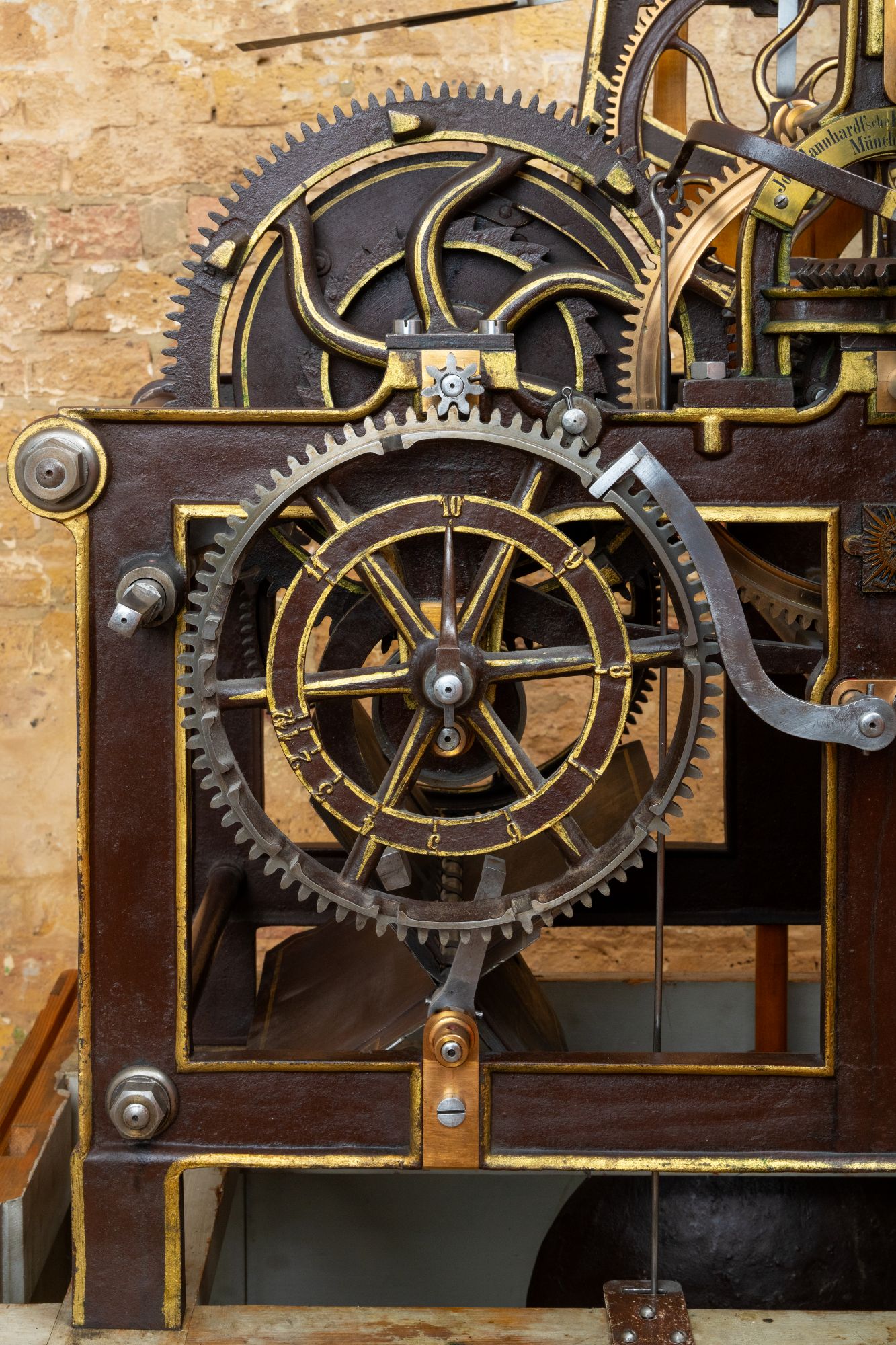
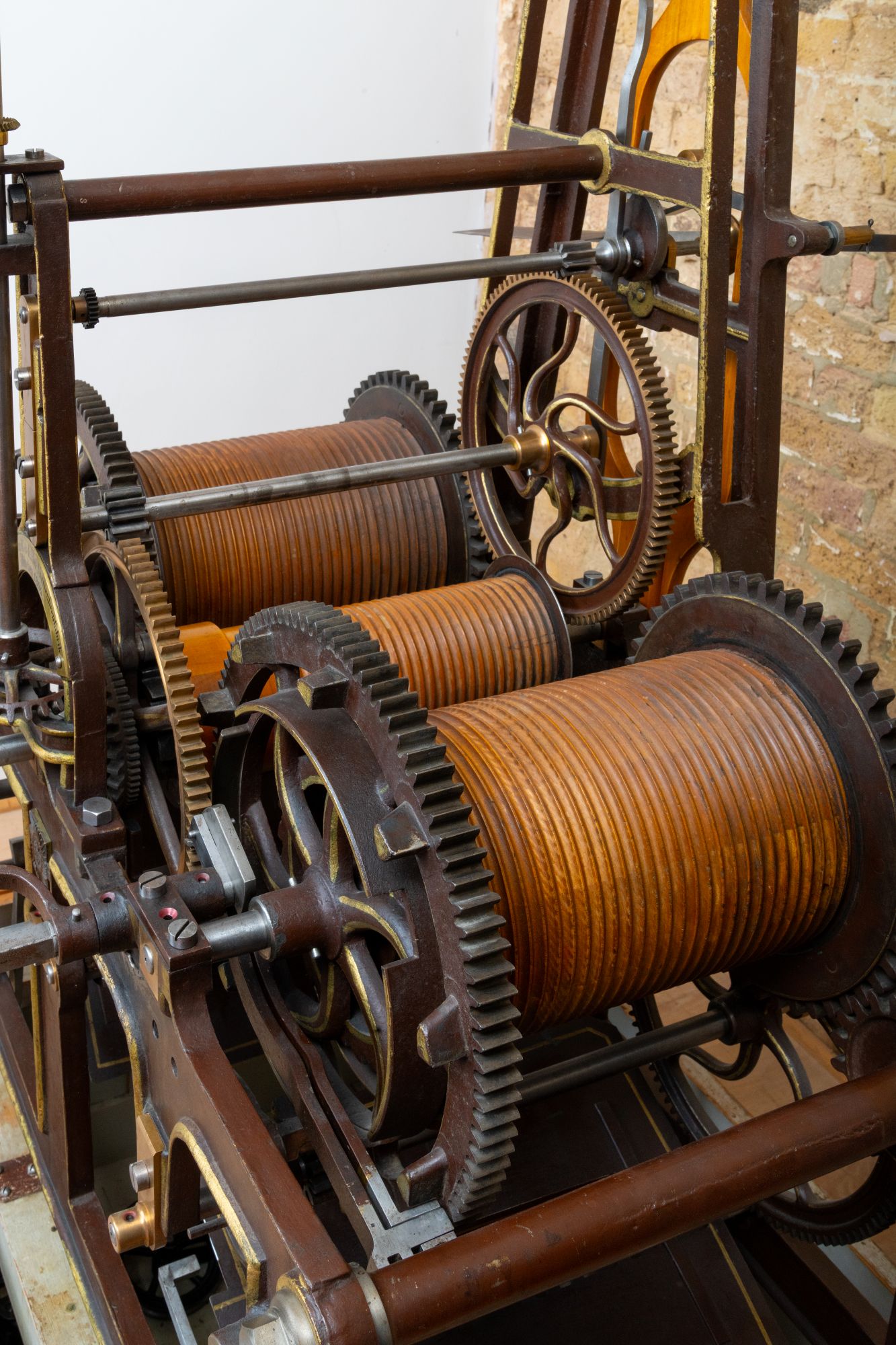
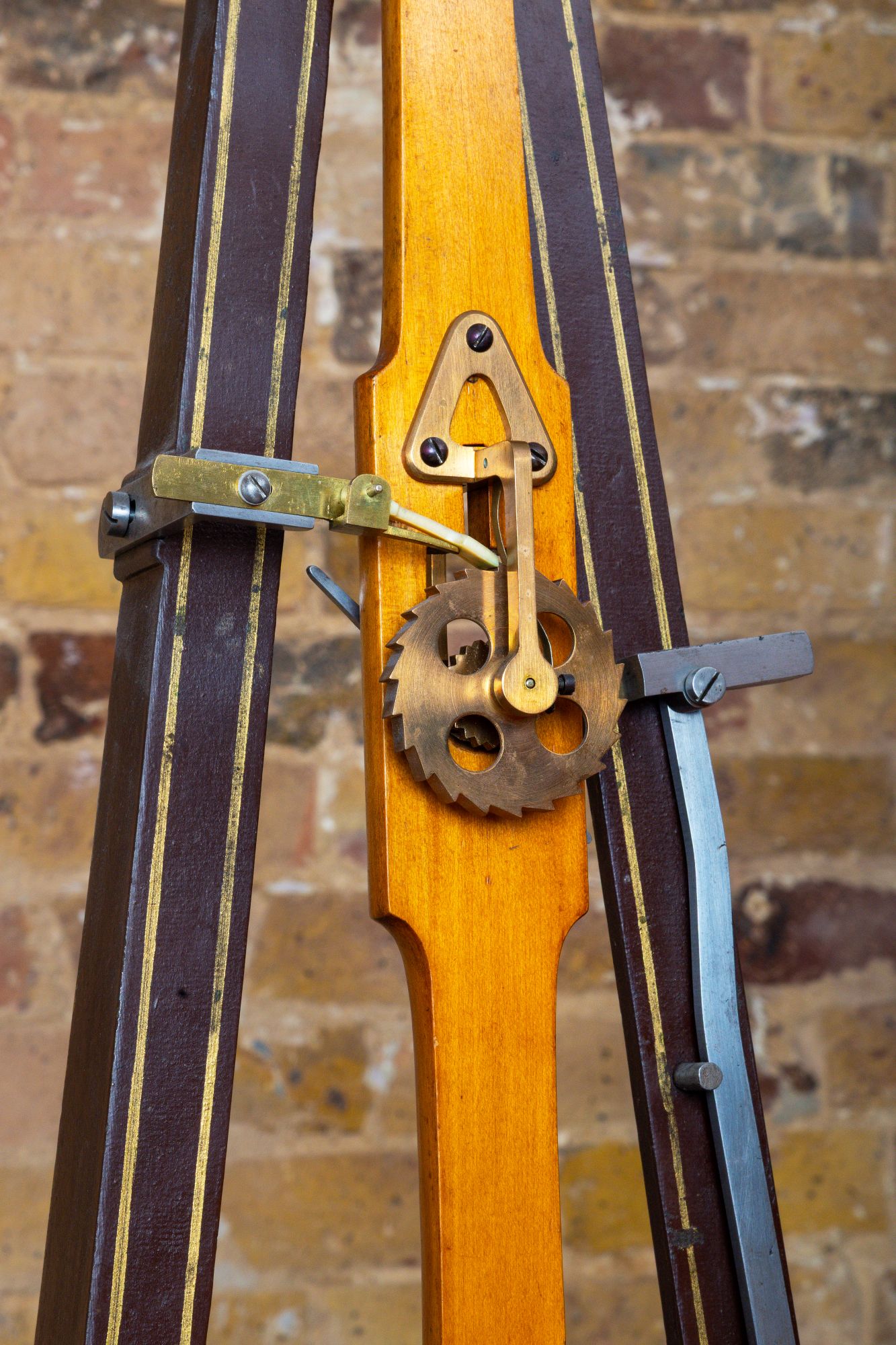
A turret clock made by German inventor and clockmaker Johan Mannhardt in 1899. Mannhardt was a prolific inventor was well as a clockmaker and this movement was designed for minimal interference with the pendulum. As the pendulum oscillates, a countwheel is pushed, one tooth at a time, by a small pivoted pawl mounted on the frame. Every thirty seconds, this countwheel releases a latch which allows the going train (the mechanism that drives the hands) to run freely through one full cycle before starting again. The hands then advance by half a minute. When the latch releases, a gravity arm is allowed to fall, and as it does so, a roller travels down an inclined plane mounted directly on the pendulum. This action transfers energy, providing the right impulse to keep the pendulum swinging. The principle used here is found in many electric clocks, notably those designed in Britain by Synchronome and Gent.