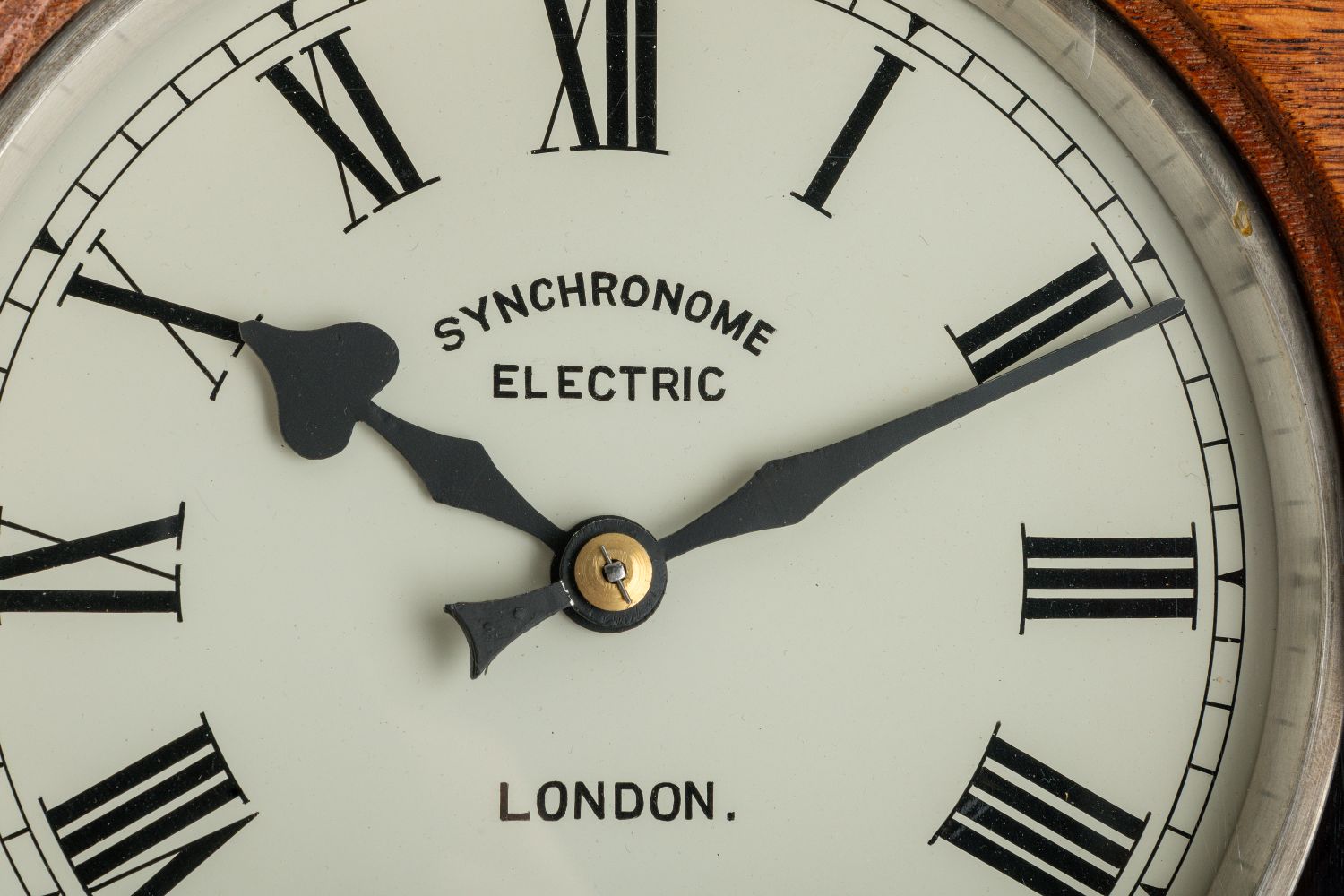
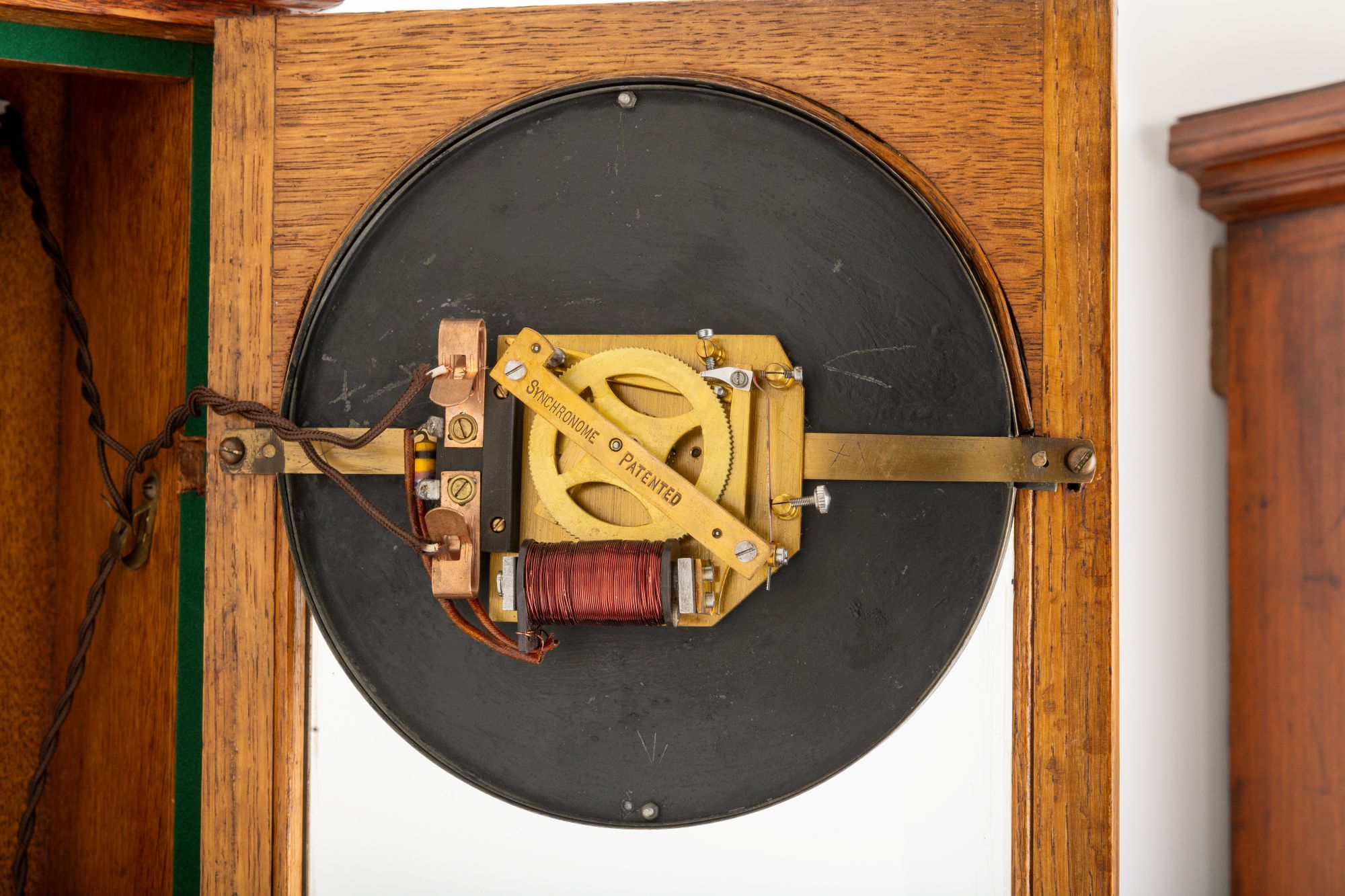
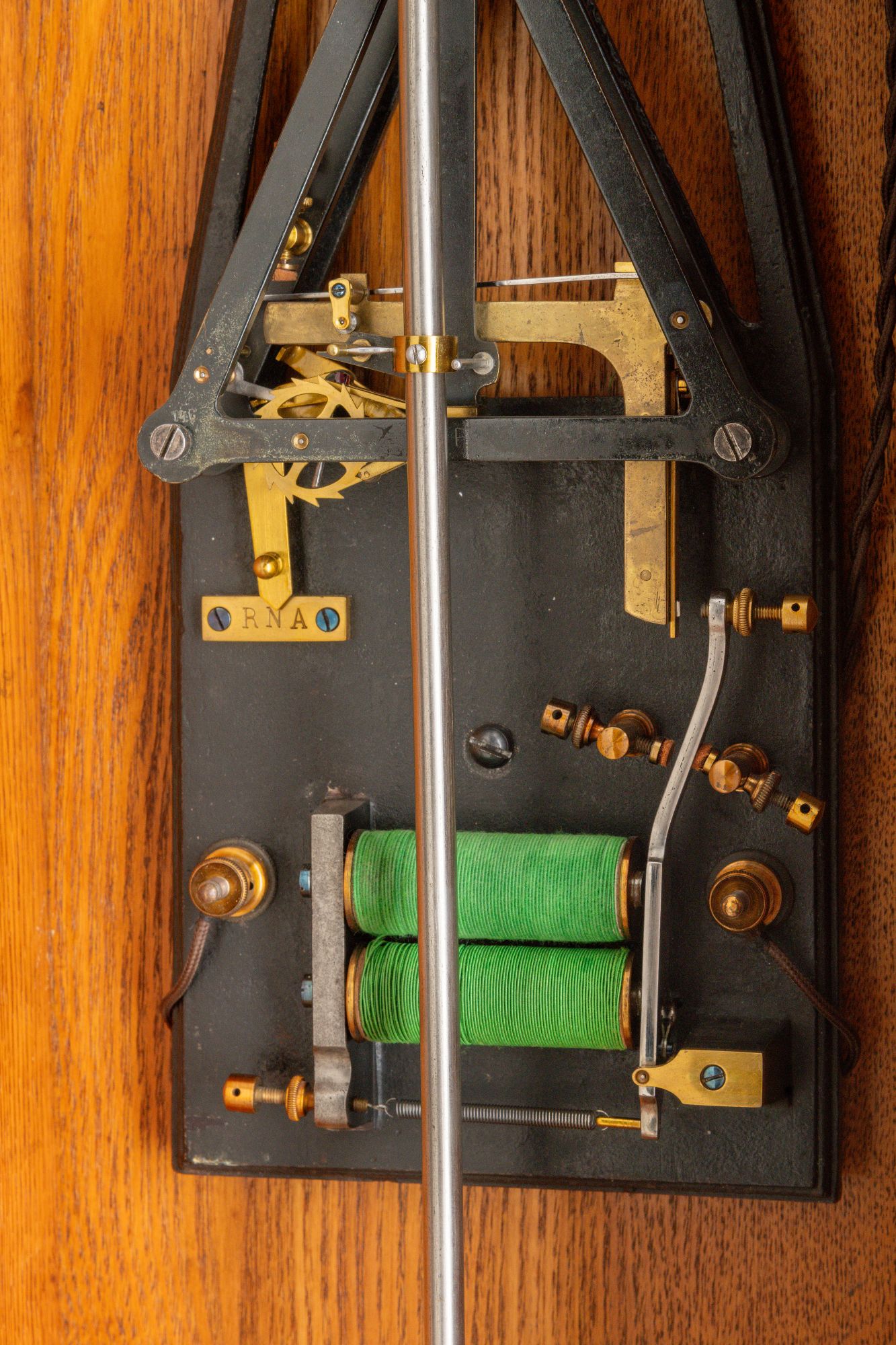
Synchronome controlling clock in a pediment case with the ‘triangle’ or ‘Double A frame’ movement patented by Synchronome collaborator William Hamilton Shortt in 1915. This was an experimental model which did not result in any great improvement in accuracy; since it was also difficult to set up and maintain, it is thought only about 150 were ever produced. This example is in the ‘false pediment’ case used in clocks produced from 1919 onwards: the top is flat, with a half-inch pediment at the front, the result of post-war austerity and shortage of labour; later cases (from c.1922) have a full front-to-back triangular pediment top.
The original Synchronome company was founded by Frank Hope-Jones and George Bennett Bowell in the final decade of the nineteenth century, though Bowell left to pursue his own path in 1899. Hope-Jones continued the business and a new Synchronome company was incorporated in 1912. By the 1920s it has achieved considerable market power in the field of electrical clock systems.
Inventory number
TCW 1055
Date
c.1919-20
Bibliography
Robert Miles, Synchronome: Masters of Electrical Timekeeping (Ticehurst, 2011), pp.79-81