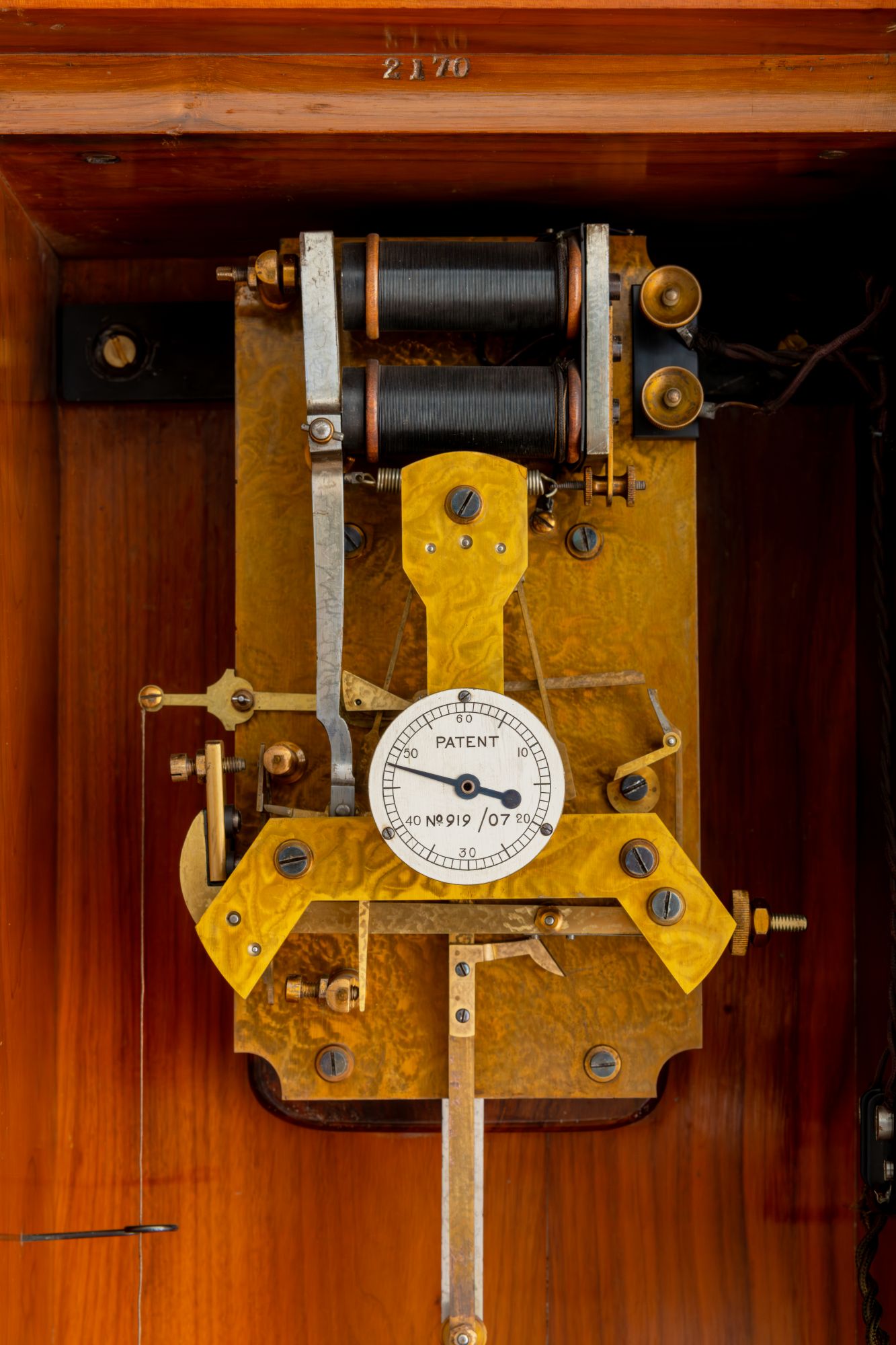
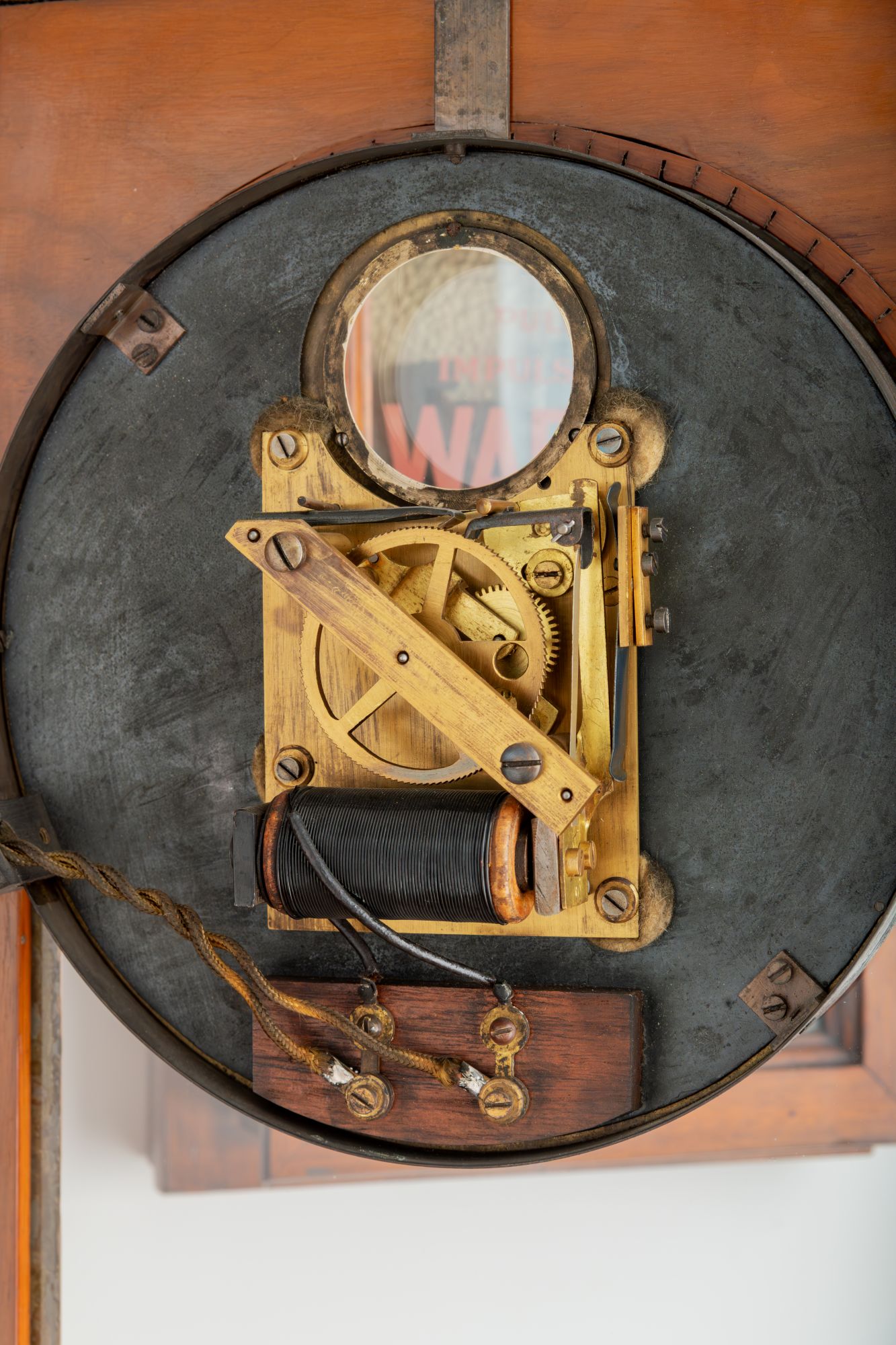
on dial: PATENT | No.19 /07 | PULSYNETIC |GENT & Co. LTD. LEICESTER| ELECTRIC and '2170' etched into top inside of case, behind the door. Inside caddy top, a label: '80/500/6/15 C.P. Do not attempt to alter the adjustments of this transmitter. These have been carefully set and must not be interfered with. if there is occasion for complaint report to the makers. No. 2170 Exd. 100 [?] Date: 20.2.23'
Provenance
British Steel; Hugh Kingwell collection from 1974; sold at Phillips, 28 May 2000, lot 358.
Overview
Along with the Synchronome Company, Gent were one of the major British manufacturers of electric clocks in the first half of the twentieth century. This is an example of their ‘Thornbridge’ movement, which was patented in 1904 and probably commenced manufacture the following year. The case is highly ornamented, incorporating a glazed door with reeded pilasters and serpentine support bracket as well as a silvered beat scale at the base: by tradition, it was displayed in the Board Room at British Steel in Manchester until 1974. It is possible that the clock began its life in one of the independent steelworks that merged to become the nationalised corporation in 1951.
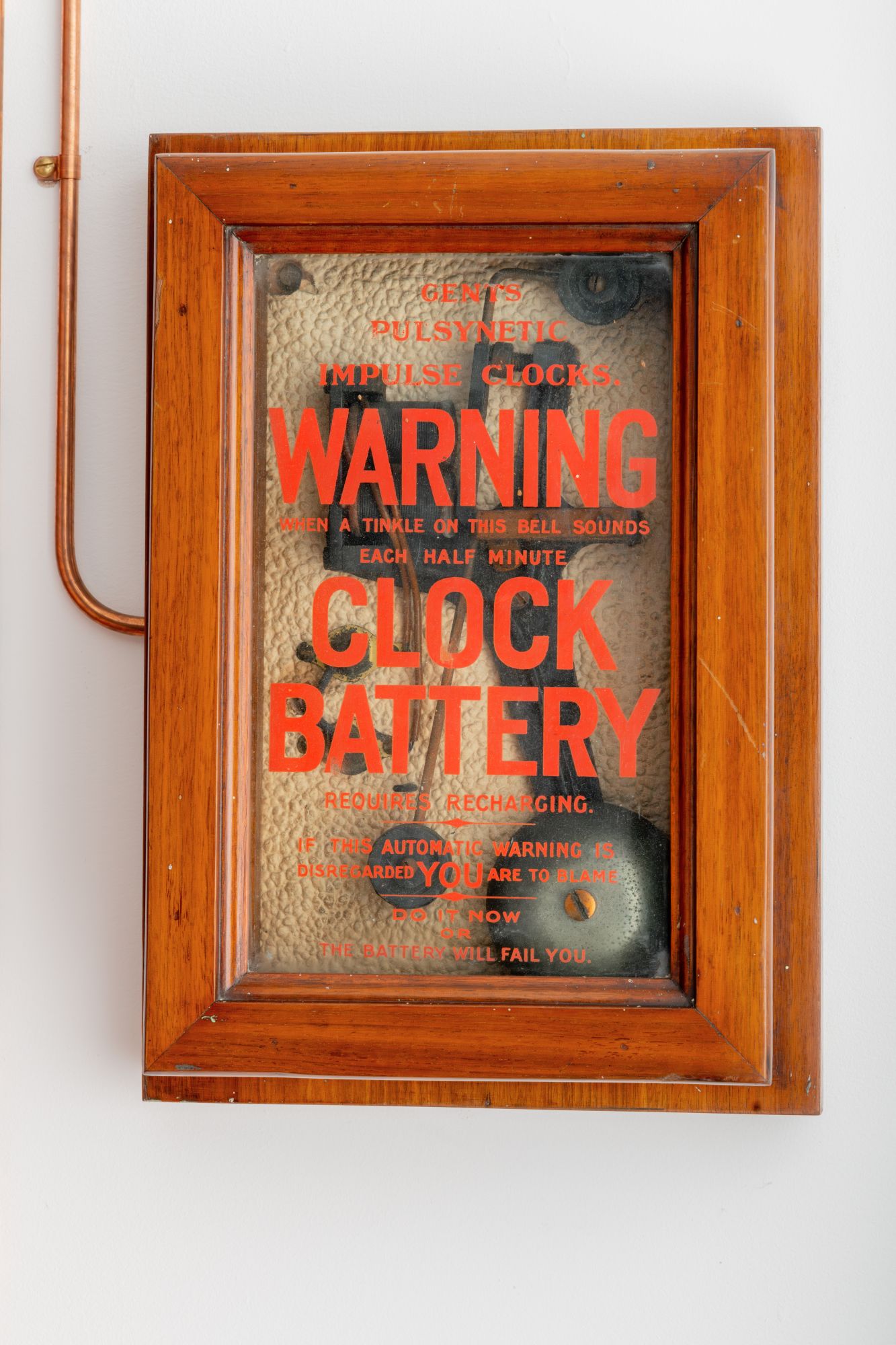
Named for a prestigious installation at Thornbridge Hall in the Peak District, the Thornbridge movement was superseded by a cheaper design c.1907, making this one – dated by a label inside the case to February 1923 – a rare late example. The battery warning indicator has the clock number in pencil in the rear and is therefore probably original to the clock: it testifies to an enduring popular suspicion of batteries, and to clock manufacturers’ endeavours to overcome it.
Inventory number
TCW 1023
Date
1923
Bibliography
R. H. Miles, ‘The Gent Thornbridge Transmitter’, AHS lecture, 31 March 1999
Derek J. Bird, ‘The “Pulsynetic” System and its place in the history of electric clocks: an introductory study’
Correspondence with Hugh Kingwell; Clockworks object file