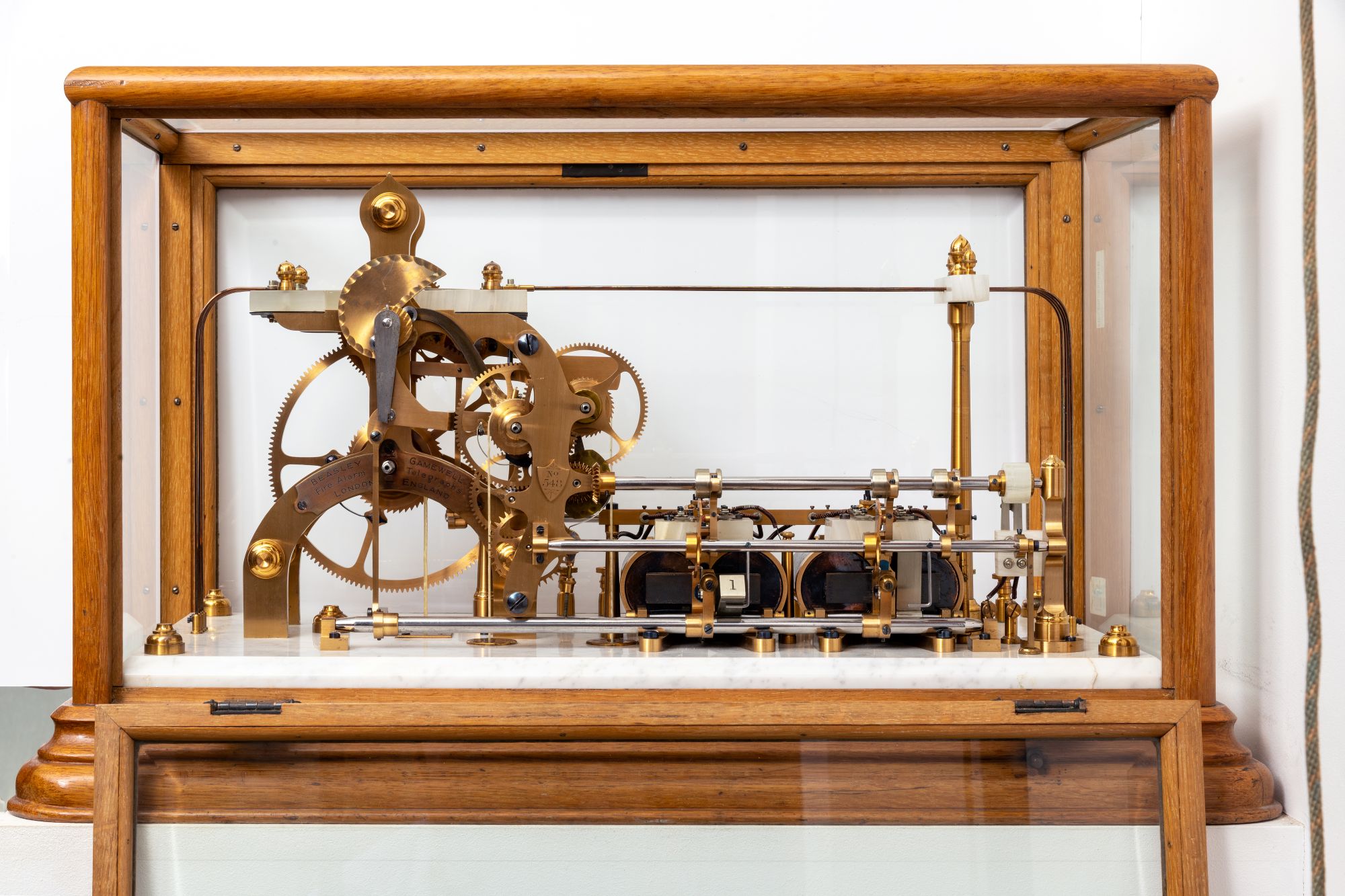
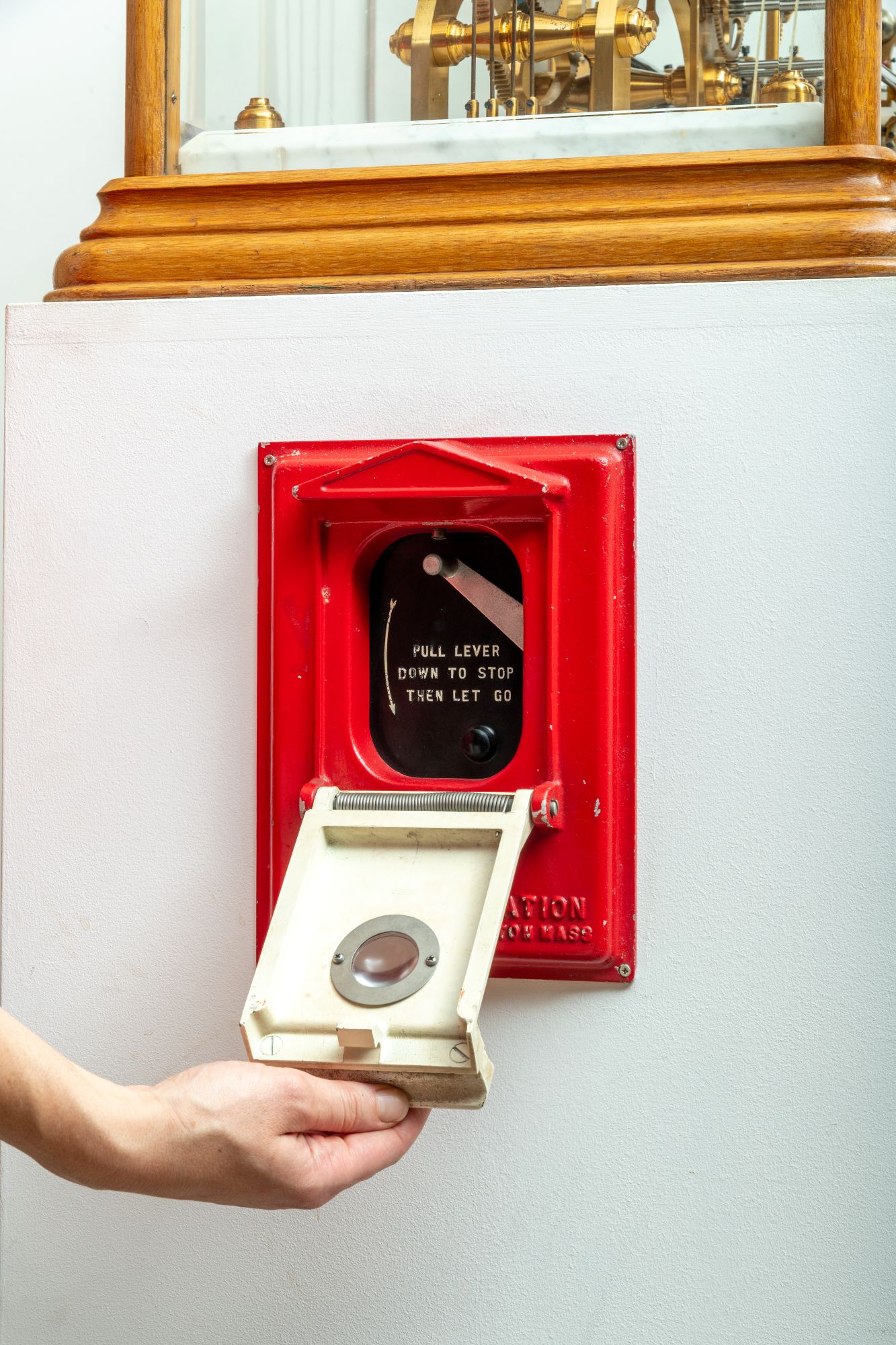
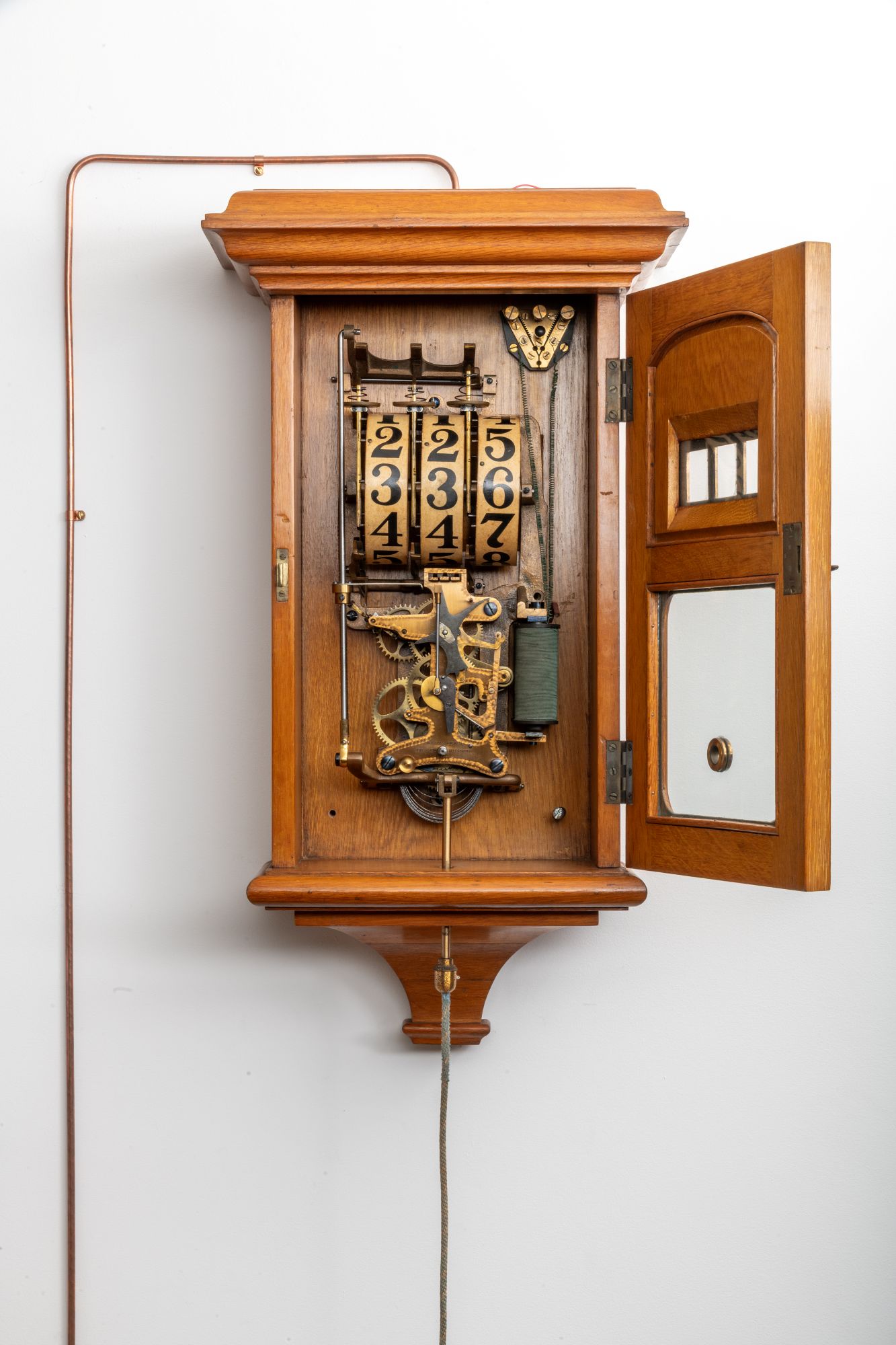
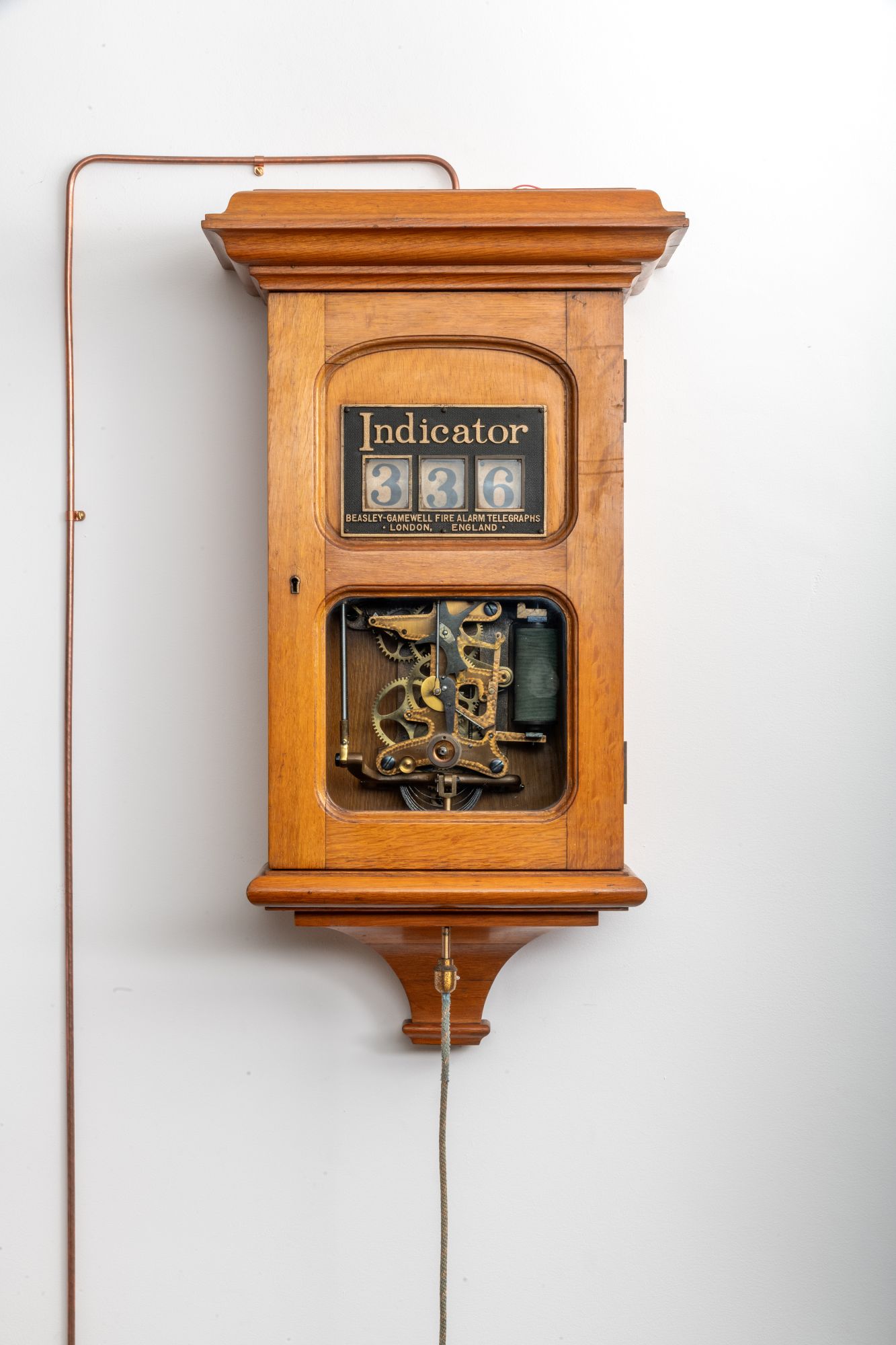
A fire alarm telegraph system comprising an alarm, a telegraph repeater, two indicators and a bell. This system was made by the major US manufacturer Beasley Gamewell, which went through several iterations and company names throughout the nineteenth century. Since the fire alarm itself is made from Herculite, rather than cast iron, it is possible to date this element to after 1926, but alarms survive in a wide range of designs and were often customised for particular areas and clients.
The principle of applying telegraphs to fire alarms dates back to 1844 and was first applied on a city-wide level in New York in 1847 with cities across the USA and internationally following piecemeal in the following decades. The system effectively collapsed the time between the activation of the alarm and the arrival of the firefighters: flipping the lever on the alarm activated a telegraphic signal wheel whose pattern was unique to its location. When the repeater received the unique signal code, it dispatched this in turn to an indicator located in the fire station. These indicators used numbered rolls controlled by electromagnets to convert the code to a three-digit number which corresponded to the location of the alarm. Precise geographical information was thus sent at speed, and across a distance.
Inventory number
TCW 5000
Date
c.1920s
Bibliography
Paul C. Roncallo, History of the Fire Alarm and Police Telegraph (Evansville, IA: M. T. Publishing Company, 2005)