
Acquisition and Disposal Policy
The Clockworks is not actively acquiring new collection items, but, where relevant, decisions about acquisition and disposal are governed by the below policy.
Background
The Clockworks collection has been developed since the 1980s, and aims to promote the research and understanding of the history of electrical horology between 1840 and 1970. Three themes predominate:
- precision timekeeping;
- distributed time;
- time synchronisation.
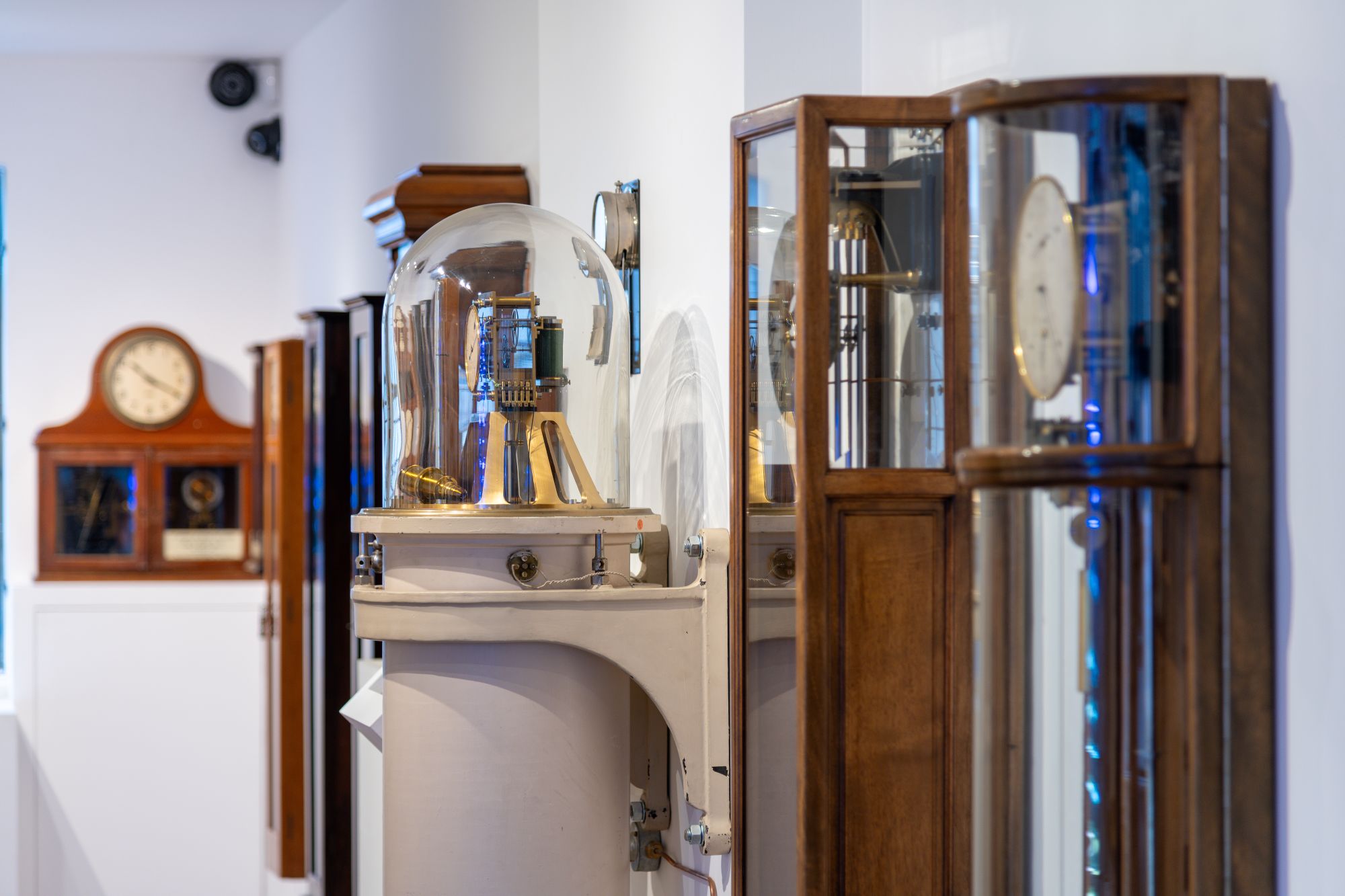
The collection is particularly strong in items relating to the development of electrical horology in the UK since the 1840s. It includes a wall clock by Alexander Bain, generally regarded as the pioneer in the field, but represented in only a few other national collections. The Clockworks also displays a representative selection of clocks made by all the main British firms involved in the development of impulse transmitter clocks from the 1890s through to the post-war period.
The collection includes major examples of observatory-grade time standards manufactured in Britain, France, Germany and Russia, and The Clockworks is one of very few public institutions where so many regulators of this type can be seen together.
A range of frequency control clocks, from Britain and the USA, demonstrate how UK and US power stations maintained a stable mains frequency in the pre-computer controlled era. There is also a representative selection of domestic electric clocks dating from the mid-nineteenth century onwards, and a significant group of early electricity meters.
Acquisitions
In view of the comprehensive nature of the collection, we are not actively adding to it. However, we will occasionally consider making acquisitions that accord with our mission to promote the research and understanding of electrical horology.
We use the following specific criteria to assess acquisitions:
- Our capacity to research, conserve and display the object appropriately in the public galleries. We do not maintain a significant reserve collection.
- The international historical importance of the object, either by itself or by association with other objects already in the collection.
- The object’s rarity and long-term value. We will consider items that are unique and / or represent a key milestone in the scientific, intellectual or historical development of electrical horology.
- The significance of the object’s contribution to our existing collection, and to our ability to research and promote awareness of the history of electrical horology.
Disposing of objects
On the rare occasion that any query arises about the long-term retention of objects in the collection, we use the following criteria to govern disposal:
- The item is of no ongoing assistance in our mission to promote the research and understanding of electrical horology.
- The item is more relevant to another collection.
- We are unable to care for and display the item on a long-term basis.
- The object is damaged or has deteriorated to a degree that makes it unable to be displayed.
- The object is a duplicate of an item or items already in the collection.
- The object was acquired for research purposes only and should never have been accessioned.
Any funds acquired as part of a disposal process will be directly reinvested into the maintenance and support of the core collection.
Updated May 2026