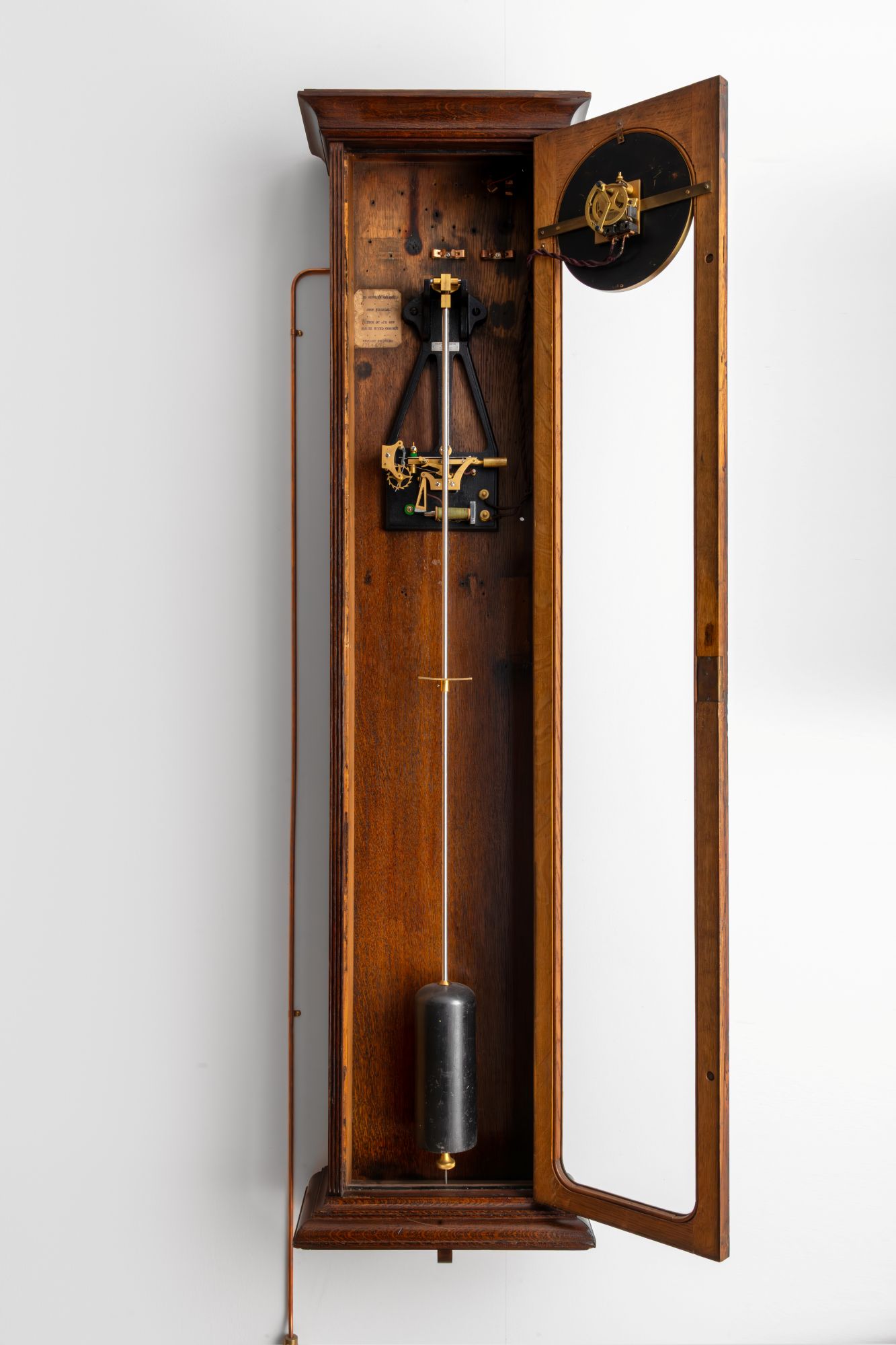
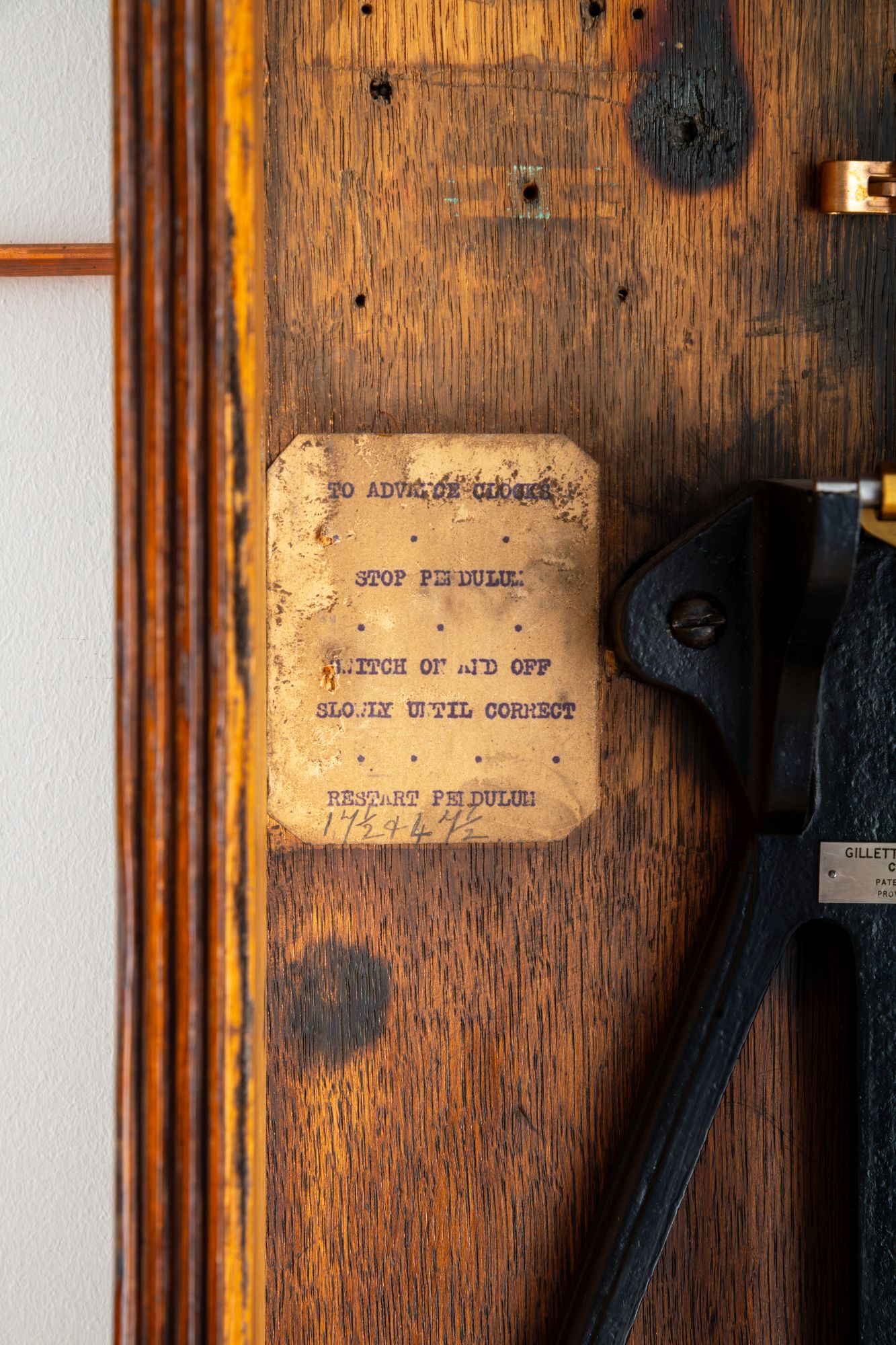
on dial: 'GILLETT & JOHNSTON | CROYDON'. Plaque on plate: GILLET & JOHNSTON | CROYDON | PATENT APPLIED FOR | PROV NO. 33372-1921. typewritten label inside case: TO ADVANCE CLOCKS | STOP PENDULUM | SWITCH ON AND OFF | SLOWLY UNTIL CORRECT | RESTART PENDULUM'. IN PENCIL: 17 1/2 + 47 1/2
Provenance
Jaime Wyss collection
Overview
Gillett & Johnston had started life as Gillett & Bland, manufacturing turret clocks from 1844, and adding bells and carillons on the arrival of Cyril Johnston in 1877. Their first patent for an electric clock system was taken out in 1921: unusually, this clock refers to the patent on the dial as ‘applied for’, making it an unusually early example.
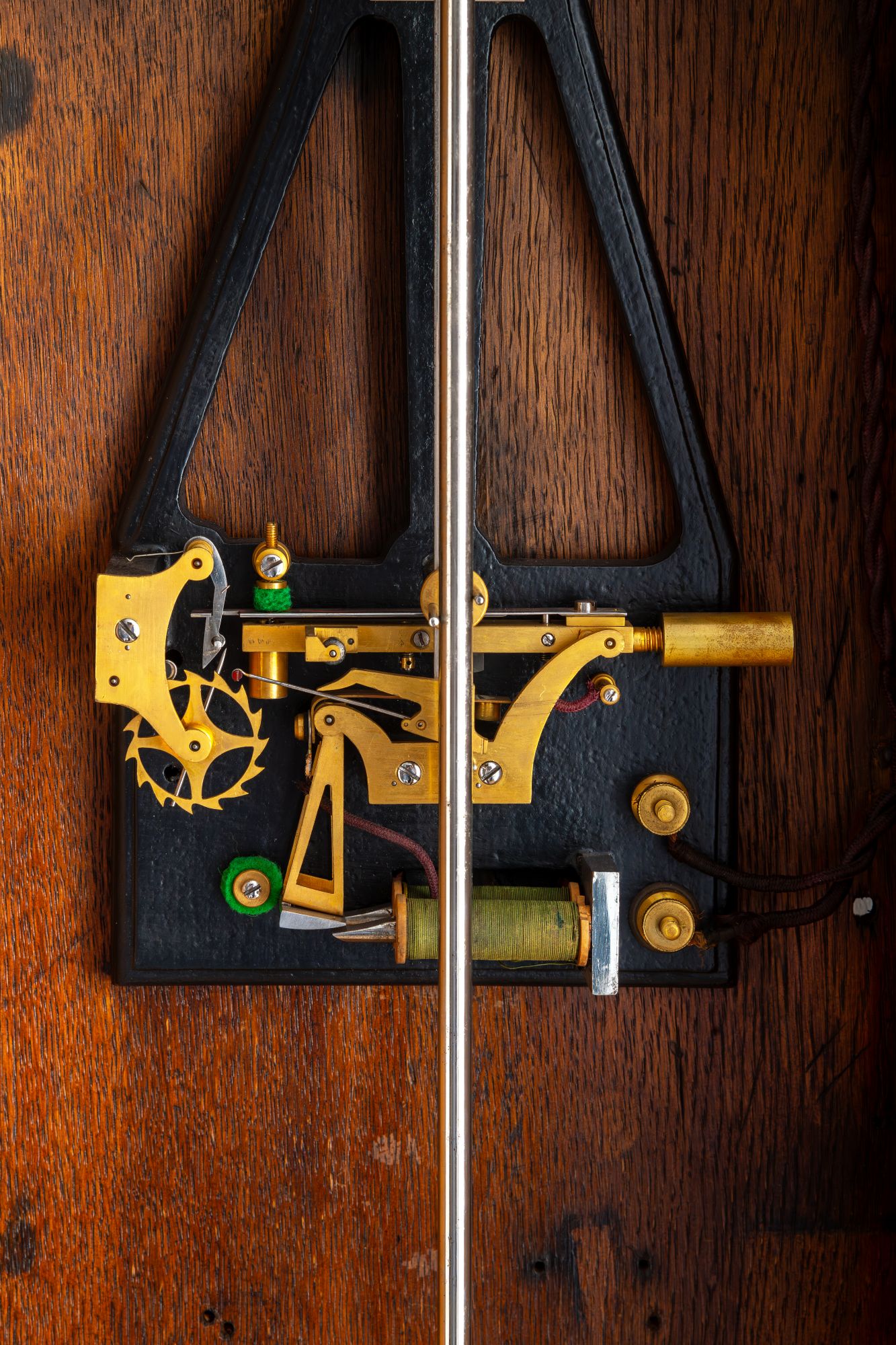
Electric clock networks were topical in the 1920s, and this design, with a glazed oak case, Invar rod and 7-inch dial, employs an electrically reset gravity escapement similar in function to the clocks manufactured during the same period by rival companies Synchronome and Gent. However, Gillett & Johnston emphasised the discretion of their swinging armature movement which – in contrast to the distinctive ‘clunk’ of a Synchronome or Gent reset action was ‘exceptionally quiet [and…] eminently suitable for hospitals, schools and similar institutions’, the latter category apparently also including (or aspiring to) domestic use.