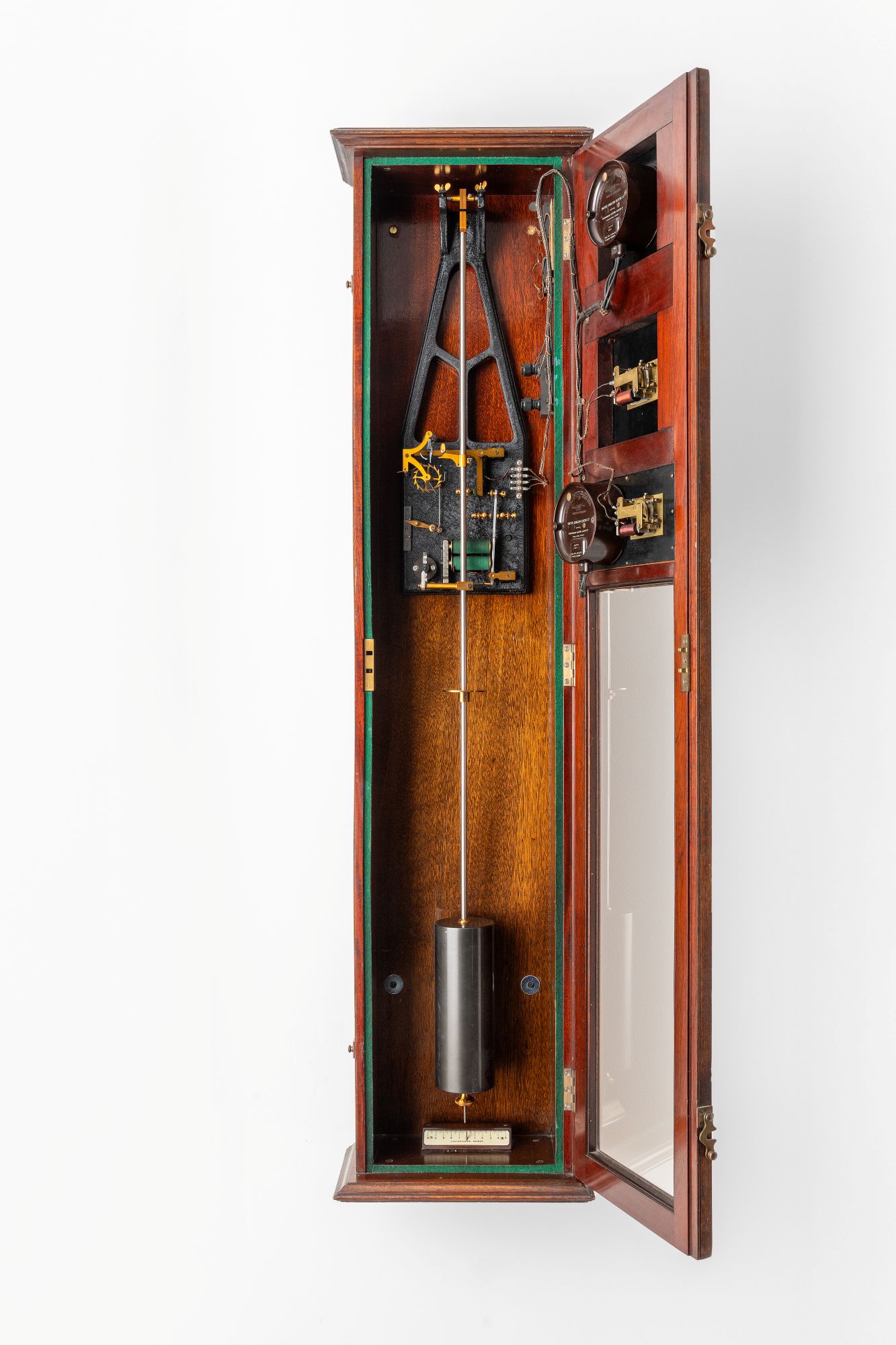
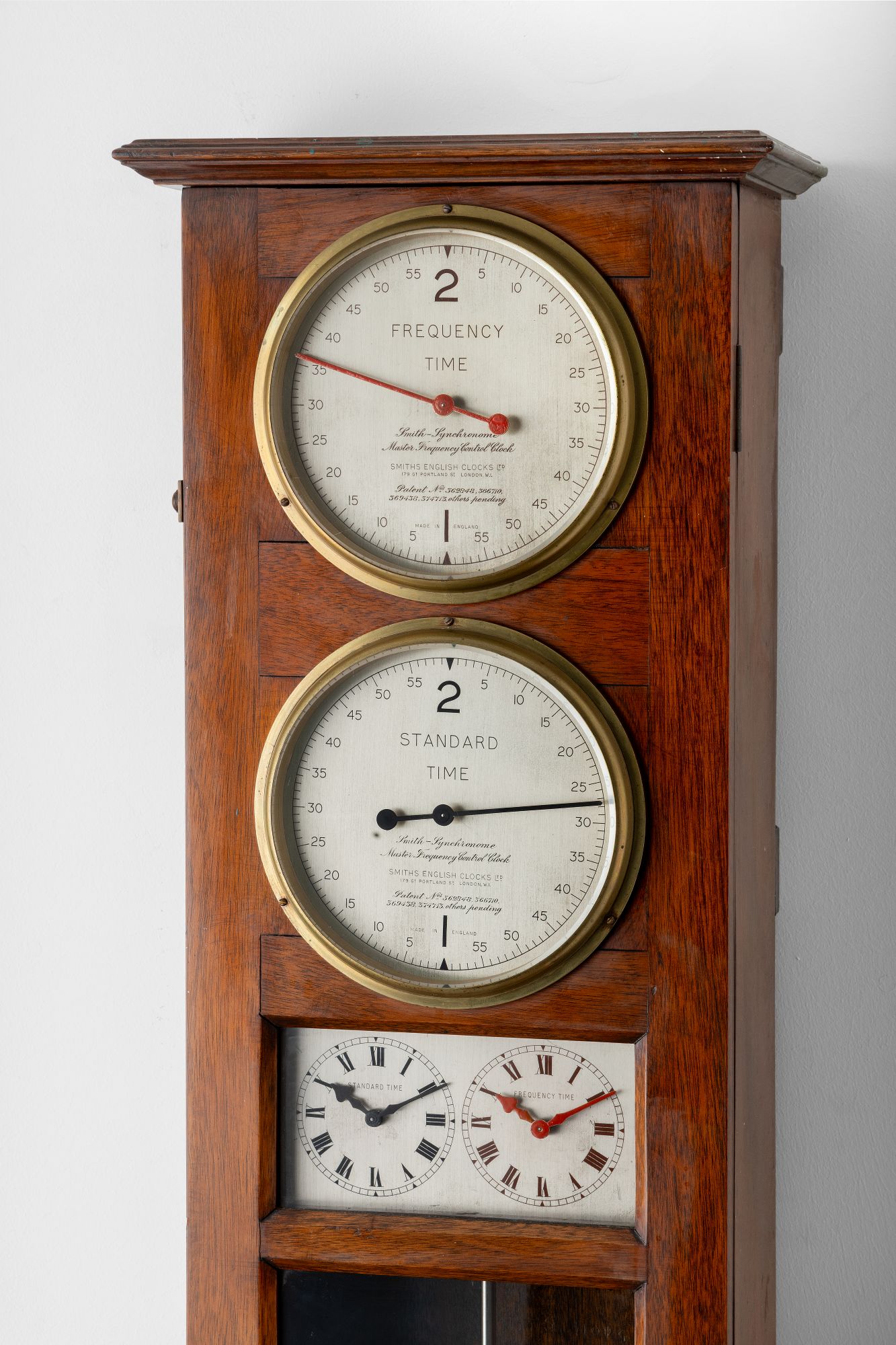
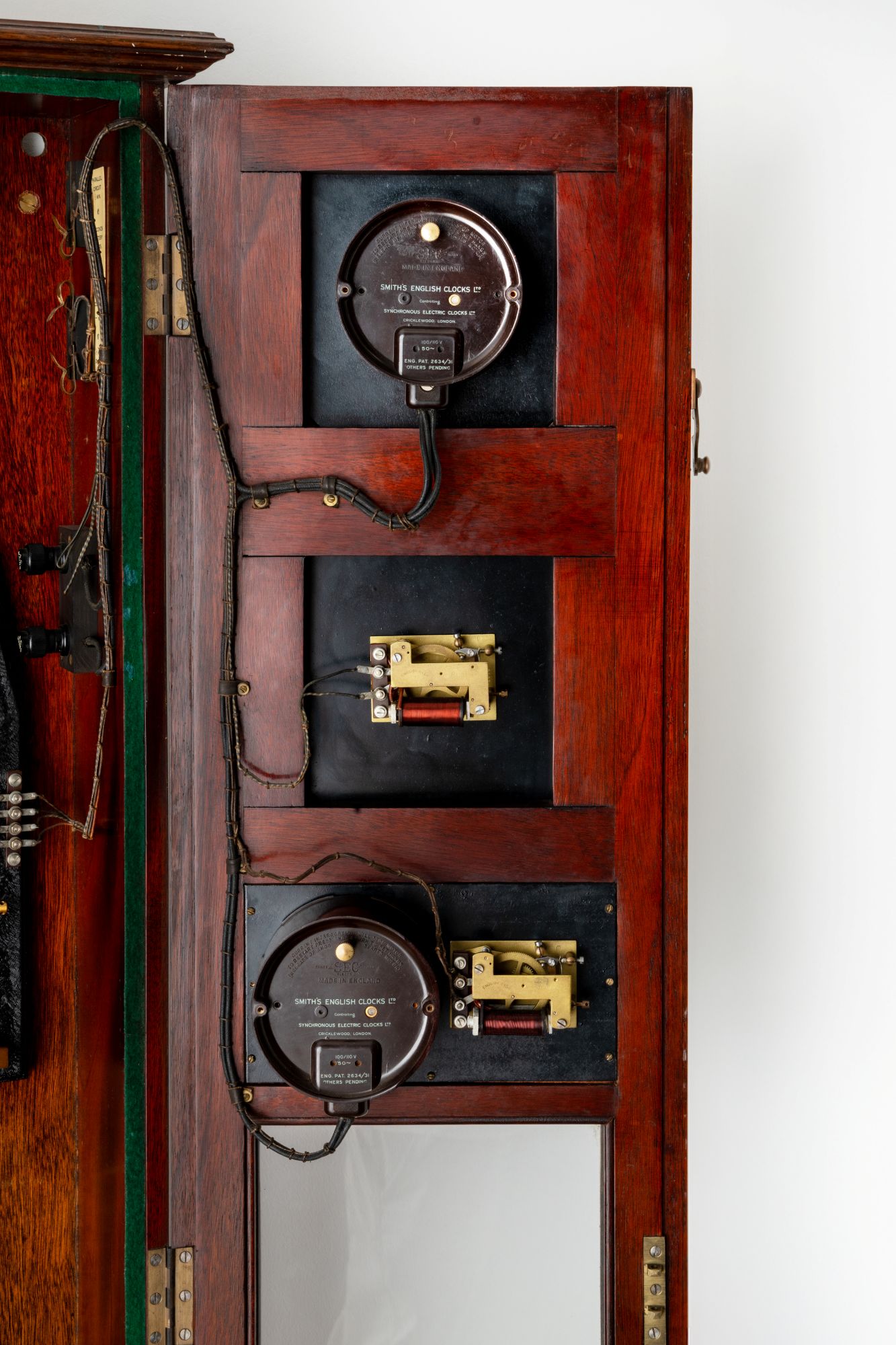
On top dial: '2 | FREQUENCY TIME | Smith - Stnchronome | Master frequency Control Clock | SMITHS ENGLISH CLOCKS LTD. | 179 GT. PORTLAND LONDON W1 | Patent No. 362848, 366710 | 369438, 374713, others pending |MADE IN ENGLAND' On lower dial: '2 | STANDARD TIME | Smith- Synchronome | Master Frequency Control Clock | SMITHS ENGLISH CLOCKS LTD. | 179 GT. PORTLAND ST. LONDON, W.1. | Patent Nos. 362848, 366710 | 369438, 374743, others pending | MADE IN ENGLAND'. On reverse of both movements: 'SMITH'S ENGLISH CLOCKS LTD. Controlling | SYNCHRONOUS ELECTRIC CLOCKS LTD. | CRICKLEWOOD, LONDON | 100/110 V | ENG. PAT. 2634/31 | OTHERS PENDING'. Scratched into back of case: 'S. HODGKINSON | POWER | HOUSE | ATTNT | 1953'.
Overview
With the development of a national grid in the UK and USA from the 1920s, there was a desire to restrict mains frequency to a regular rate – 50 cycles per second in the UK and 60 cycles per second in the USA. This was initially done using a pendulum clock. This is one of three frequency control clocks in the collection at The Clockworks: it was manufactured by Synchronome, with an additional movement by Smiths. It incorporates a standard Synchronome Coventry-series movement (at the top) with a crackle finish on its black painted A-frame, and a Smiths synchronous motor clock (below). The job of the power station attendant is to monitor the deviation between the two times displayed: if the electric clock runs slow, the turbines need to be sped up, and vice versa. In 1953, the responsible power station attendant seems to have been an ‘S. Hodgkinson’, who scratched his name, together with the year, in the back of the case.